
In this article
What Is Grenadian Red Blend from Grenada?
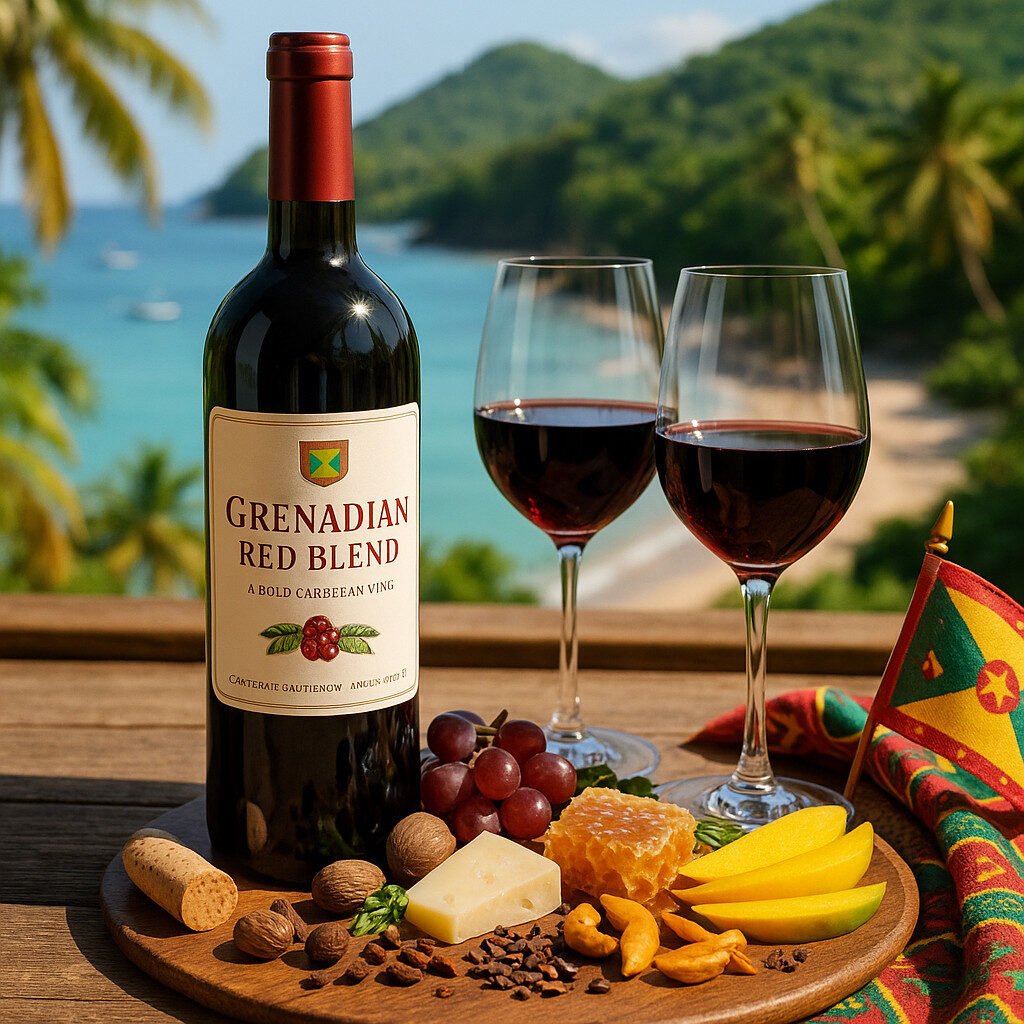
Grenadian Red Blend is a dry red wine crafted from a mix of grape varieties grown on the island of Grenada. It represents a modern approach to winemaking in the Caribbean, balancing fruit intensity with structural elegance.
- Colour: Deep ruby red to garnet.
- Wine style: Still wine.
- Main grape varieties: Typically a blend of Syrah, Merlot, and local hybrids.
- Sweetness level: Dry, with less than 4 grams per liter of residual sugar.
- Acidity: Medium to high, around 5-6 grams per liter titratable acidity.
- Tannin structure: Medium, with fine-grained tannins.
- Alcohol range: 12.5% to 14% alcohol by volume.
- Body: Medium-bodied.
- Typical serving temperature: 16°C to 18°C.
- Protected status: No formal PDO or PGI as far as current information suggests, but may follow local quality guidelines.
The blend often incorporates heat-tolerant grape varieties that thrive in Grenada’s humid conditions. Winemakers focus on achieving balance by harvesting grapes at optimal ripeness to preserve acidity and avoid over-alcoholization. This results in a wine that is both approachable and capable of expressing the island’s distinct terroir characteristics.
Where and How Grenadian Red Blend from Grenada Is Made
Grenadian Red Blend is produced primarily in the hilly inland regions of Grenada, such as the parishes of St. George and St. David. These areas benefit from well-drained volcanic soils and a tropical maritime climate with consistent temperatures and high rainfall. The production philosophy emphasizes sustainable viticulture, often using organic practices to manage the challenging growing environment.
Vineyards are typically planted on slopes to maximize sun exposure and air circulation, reducing disease pressure. Key appellations or designated areas are not formally established, but local wineries adhere to artisanal methods that highlight the fruit’s purity. The warm climate accelerates ripening, requiring careful canopy management to protect grapes from sunburn.
- Vineyard work involves year-round pruning, trellising, and organic pest control, with harvest timing critical to balance sugar and acidity.
- Grape selection occurs manually or mechanically, focusing on healthy clusters free from rot, usually harvested between January and March.
- Harvest is done early in the morning to retain freshness, with grapes transported quickly to the winery.
- Destemming and crushing are gentle to avoid excessive tannin extraction, often using pneumatic presses.
- Maceration lasts 5 to 10 days at 20°C to 25°C, extracting color and flavor from the skins.
- Fermentation takes place in stainless steel tanks or open vats at 24°C to 28°C, with selected yeasts for consistency.
- Malolactic fermentation is commonly induced to soften acidity, occurring in tank or barrel over 2 to 4 weeks.
- Maturation involves 6 to 12 months in neutral French oak barrels or stainless steel to preserve fruit character.
- Clarification uses light fining or filtration before bottling to ensure stability.
- Bottling is done with minimal sulfur additions, and wines may be aged briefly in bottle before release.
Traditional methods often involve longer maceration and native yeast fermentations, yielding more rustic profiles. In contrast, modern practices use temperature control and selected yeasts for cleaner, fruit-forward styles. Artisanal producers might age Grenadian Red Blend in larger, older barrels to minimize oak influence, while mass-market versions could rely on shorter maturation and additives for quicker market readiness.
Flavor Profile: What Makes Grenadian Red Blend from Grenada Special?
Grenadian Red Blend displays a vivid ruby color with moderate viscosity, indicating its medium body. On the nose, it offers intense aromas of ripe red fruits like cherry and plum, complemented by floral notes of violet and hints of spice such as black pepper. The palate is marked by bright acidity that cuts through the fruit sweetness, with medium tannins providing a smooth, rounded mouthfeel.
Factors like the blend of Syrah and Merlot contribute dark fruit flavors and a peppery edge, while the tropical climate enhances ripeness without losing acidity. Oak treatment, if used, adds subtle vanilla and toast nuances without overpowering the fruit. The finish is clean and moderately long, with lingering notes of red berries and a touch of earthiness from the volcanic soils, making Grenadian Red Blend both refreshing and complex.
Quality Labels and Certifications for Wine from Grenada
As far as can be verified at present, Grenada does not have a formal protected designation of origin system for wine like European PDO or PGI schemes. However, some local producers may adhere to organic or sustainable farming certifications, such as those aligned with Caribbean agricultural standards. These certifications, as far as current information suggests, focus on minimizing chemical inputs and promoting biodiversity in vineyard management.
Additionally, Grenadian wines might carry national quality marks that verify production within the country, though these are not widely recognized internationally. For Grenadian Red Blend, this means authenticity relies more on producer reputation than regulatory labels. It is advisable to check with individual wineries for any specific certifications they hold, as the landscape is evolving with increased interest in Caribbean viticulture.
Cheese Pairings
Grenadian Red Blend pairs excellently with semi-hard cheeses like Gouda or Edam, which have a creamy texture and mild saltiness that complement the wine’s medium body and red fruit notes. The wine’s acidity helps cut through the fat in these cheeses, while its subtle tannins cleanse the palate without bitterness. For a local twist, try it with Caribbean-inspired cheeses that incorporate spices, as the blend’s peppery undertones harmonize with herb-infused varieties.
In cooked dishes, aged cheddar or Manchego works well in gratins or baked pasta, where the wine’s fruitiness balances the cheese’s sharpness. The medium alcohol level of Grenadian Red Blend prevents it from overwhelming delicate goat cheeses, making it versatile for cheese boards. Avoid very strong blue cheeses, as they can dominate the wine’s delicate floral and spice aromas.
Suitable Fruit and Vegetables
Fresh fruits like tomatoes and bell peppers are ideal with Grenadian Red Blend, as their acidity and sweetness mirror the wine’s profile. In salads, roasted red peppers or grilled eggplant absorb the wine’s fruit flavors, while the blend’s tannins are softened by the vegetables’ natural oils. Dried fruits such as figs or dates add a contrast that highlights the wine’s spice notes without clashing.
Cooked vegetables like caramelized onions or mushroom dishes enhance the earthy elements in Grenadian Red Blend. The wine’s medium body pairs well with starchy vegetables like sweet potatoes, which provide a sweet counterpoint to its acidity. Avoid overly bitter greens like arugula, as they can amplify tannic bitterness, but lightly sautéed spinach works beautifully.
Suitable Meat and Fish dishes
For cold servings, Grenadian Red Blend complements charcuterie plates with cured meats like prosciutto or salami, where its acidity cuts through the fat. It also pairs well with beef carpaccio, as the wine’s red fruit notes accentuate the meat’s tenderness. In hot dishes, grilled lamb or pork roasts are excellent choices, as the blend’s tannins and spice elements stand up to the rich flavors.
Fish dishes like grilled tuna or salmon work surprisingly well with Grenadian Red Blend, especially if seasoned with herbs that echo its peppery aromas. Stews and casseroles with beef or game benefit from the wine’s structure, which integrates with slow-cooked sauces. Avoid delicate white fish, as the wine’s body might overpower them, but oily fish can handle the blend’s intensity.
Questions and Answers
How should I handle leftovers of Grenadian Red Blend?
Store leftover Grenadian Red Blend in a cool, dark place and consume within 3-5 days to enjoy its fresh character. Recork the bottle tightly or use a vacuum seal to minimize oxidation. Grenadian Red Blend is best enjoyed soon after opening for optimal flavor.
What is the aging potential of Grenadian Red Blend?
Grenadian Red Blend can age for 3-5 years in proper cellar conditions, developing more complex tertiary notes. Its medium tannin and acidity provide a good structure for short-term aging. Grenadian Red Blend is generally meant for early drinking but improves with brief bottle maturation.
What is the shelf life of Grenadian Red Blend after opening?
Once opened, Grenadian Red Blend stays fresh for up to 3 days if stored in a refrigerator. Its fruit-forward profile may fade quickly due to oxidation. Grenadian Red Blend is best consumed shortly after opening to preserve its vibrant aromas.
Where can I buy Grenadian Red Blend?
Grenadian Red Blend is available at specialty wine shops in the Caribbean and online retailers that focus on unique regional wines. It may also be found in gourmet stores in major cities. Grenadian Red Blend is gaining popularity, so check with importers for availability.
How does Grenadian Red Blend combine with food?
Grenadian Red Blend pairs well with grilled meats, spicy dishes, and hearty cheeses due to its balanced acidity and tannins. Its fruitiness complements Caribbean cuisine, such as jerk chicken. Grenadian Red Blend enhances meals without overwhelming delicate flavors.
How should I drink Grenadian Red Blend?
Drink Grenadian Red Blend at 16-18°C to appreciate its full flavor profile. Serve it in a standard red wine glass to allow aeration. Grenadian Red Blend is best enjoyed with food to highlight its structural balance.
Should I chill or temper Grenadian Red Blend?
Grenadian Red Blend should be served slightly cool, around 16-18°C, and does not require chilling beyond that. If stored in a warm place, let it sit for 10-15 minutes to reach ideal temperature. Grenadian Red Blend benefits from a brief rest before serving.
Do I need to decant Grenadian Red Blend?
Decanting Grenadian Red Blend for 30 minutes before serving can help open up its aromas and soften tannins. This is especially useful for younger bottles. Grenadian Red Blend does not require extensive decanting due to its approachable nature.
How should I serve Grenadian Red Blend?
Serve Grenadian Red Blend at 16-18°C in a large-bowled glass to enhance its aromatic expression. It does not need prolonged aeration. Grenadian Red Blend is ready to drink upon opening but benefits from a quick swirl.
How should I store Grenadian Red Blend?
Store Grenadian Red Blend in a cool, dark place with a consistent temperature of 12-15°C and moderate humidity. Keep bottles horizontal if cork-sealed to maintain moisture. Grenadian Red Blend is best consumed within a few years of release for peak freshness.
Similar Wines and Alternatives
If you enjoy Grenadian Red Blend, consider trying other Caribbean red blends from islands like Barbados or St. Lucia, which share a similar tropical fruit profile and medium body. These alternatives often use comparable grape varieties and exhibit bright acidity due to the warm climate. However, Grenadian Red Blend stands out for its distinct volcanic soil influence, giving it a more earthy character compared to the sandier soils of other regions.
From outside the Caribbean, a Côtes du Rhône blend from France offers similar spice and red fruit notes but with higher tannin and a more structured body. New World options like Australian Shiraz blends provide bolder fruit and alcohol, but lack the subtle acidity of Grenadian Red Blend. In terms of price and availability, Grenadian Red Blend may be less common in international markets, making it a unique find compared to widely distributed blends from Chile or South Africa.