
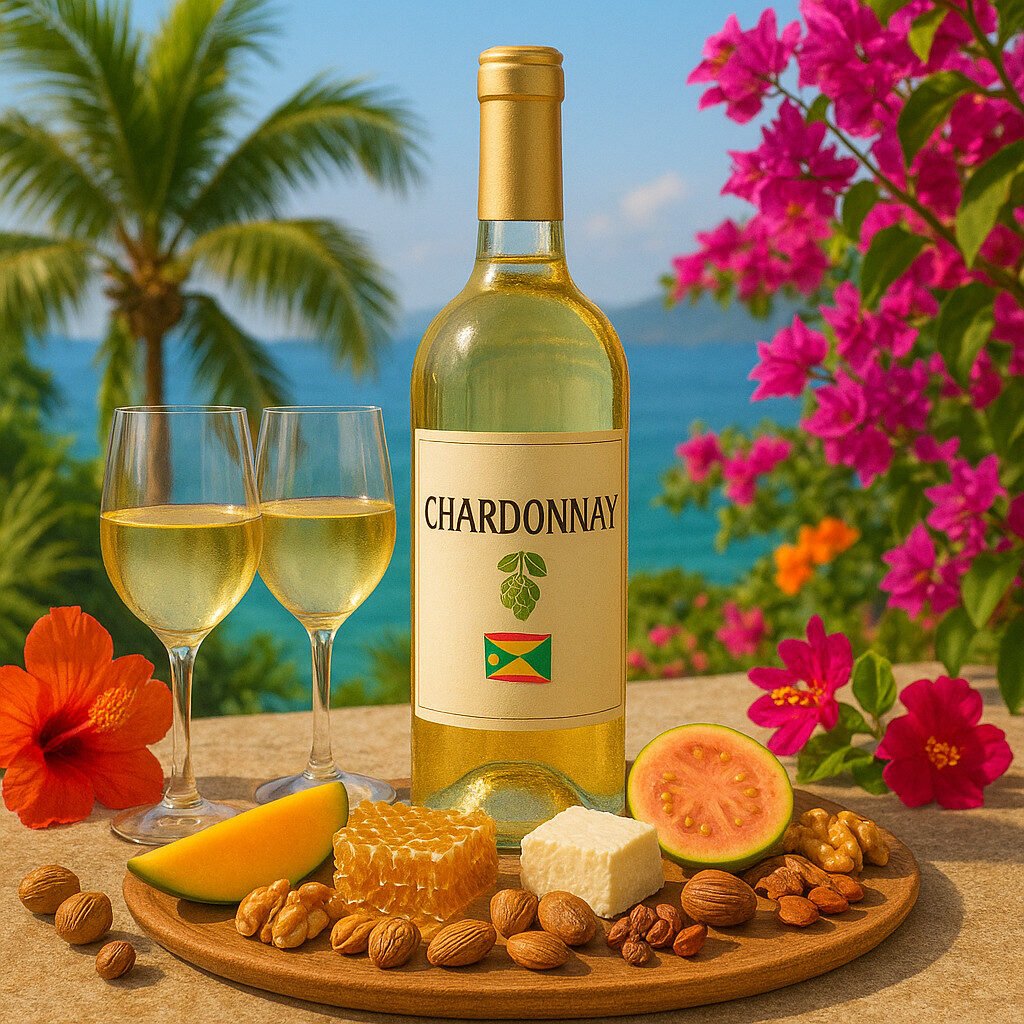
 Chardonnay from Grenada offers a vibrant and tropical interpretation of this classic grape. Its crisp acidity and exotic fruit notes reflect the island’s unique volcanic soils and warm climate, making it a compelling choice for sommeliers and enthusiasts exploring new wine horizons.
 In this article
Chardonnay of Grenada
Grenada’s wine culture is a small but growing segment of its agricultural sector, influenced by its Caribbean location and rich biodiversity. Chardonnay represents an exciting niche, showcasing how this versatile variety adapts to tropical conditions.
- Colour: Pale to medium gold with green reflections.
- Wine style: Still white wine.
- Main grape varieties: 100% Chardonnay.
- Sweetness level: Dry, with residual sugar typically under 4 grams per liter.
- Acidity: Medium to high, around 6-7 grams per liter tartaric acid.
- Tannin structure: Very low, as is typical for white wines.
- Alcohol range: 12.5% to 13.5% volume.
- Body: Medium-bodied with a rounded mouthfeel.
- Typical serving temperature: 10°C to 12°C.
- Protected status: No formal PDO or PGI exists for Grenadian wine as of current records.
Chardonnay from Grenada benefits from the island’s volcanic ash and clay soils, which impart mineral nuances to the wine. The warm, humid climate encourages early ripening, resulting in wines with lower alcohol and higher acidity compared to cooler regions. Local producers often harvest grapes in January or February to capture optimal freshness and avoid the peak rainy season.
Test Your Knowledge:
Where and How Chardonnay Is Made in Grenada
Chardonnay production in Grenada is concentrated in the elevated regions such as Grand Etang and the slopes of Mount St. Catherine. These areas offer cooler microclimates and well-drained volcanic soils, which help manage the tropical humidity. The basic philosophy focuses on sustainable practices and early harvesting to preserve acidity and aromatic intensity.
- Vineyard work involves careful canopy management and drip irrigation to combat high rainfall, with pruning typically done between May and July.
- Grape selection is done by hand to ensure only healthy clusters are picked, often in the early morning to retain cool temperatures.
- Harvest occurs from December to February, targeting a sugar level of 20-22 Brix and acidity around 7 g/L.
- Destemming and crushing are gentle processes, often using pneumatic presses to avoid bitterness from the skins.
- Maceration is brief or omitted, with juice cooled to 8°C for up to 12 hours to extract delicate aromas.
- Fermentation takes place in temperature-controlled stainless steel tanks at 16-18°C for 10-14 days, using selected yeast strains.
- Malolactic fermentation is usually prevented to maintain crisp acidity, though some producers allow partial conversion.
- Maturation occurs in stainless steel tanks or neutral oak barrels for 3-6 months, with regular lees stirring for texture.
- Clarification involves light fining with bentonite and cold stabilization before bottling.
- Bottling is done early, typically by June, to capture the wine’s youthful vibrancy.
Traditional methods in Grenada might include spontaneous fermentation and extended lees contact, while modern approaches emphasize temperature control and hygiene. Artisanal producers often use older oak for subtle complexity, whereas mass-market versions focus on stainless steel for fruit-forward styles. The challenging climate means that quality-focused vineyards invest in netting and organic sprays to protect against pests and fungi.
Flavor Profile: What Makes Chardonnay from Grenada Special?
Chardonnay from Grenada displays a pale gold colour with good viscosity, indicating its medium body. Aromas burst with tropical fruits like pineapple, guava, and ripe banana, complemented by citrus notes of lime and grapefruit. Floral hints of frangipani and a subtle mineral edge from volcanic soils add complexity to the nose.
On the palate, this Chardonnay offers bright acidity that balances its dry profile and moderate alcohol. Flavors of mango, passion fruit, and a touch of green apple lead to a clean, refreshing finish with slight saline notes. The absence of heavy oak treatment allows the pure fruit character to shine, making it distinct from richer, buttery styles found elsewhere.
Quality Labels and Certifications of Chardonnay from Grenada
As far as current information suggests, Grenada does not have specific appellation systems or protected designations for wine production. However, some local vineyards may adhere to general agricultural standards or informal quality guidelines. The Grenada Bureau of Standards oversees food and beverage regulations, but no dedicated wine certifications are widely recognized at present.
Organic or sustainable practices are occasionally employed by smaller producers, though verification is limited. As far as can be verified, imports and local sales rely on producer reputation rather than formal labels. This lack of certification highlights the emerging nature of Grenada’s wine industry and its potential for future development.
Cheese Pairings
Chardonnay from Grenada pairs excellently with soft, creamy cheeses like Brie or Camembert, which complement its medium body and crisp acidity. The wine’s bright fruit notes cut through the richness of these cheeses, while its mineral undertones enhance their savory flavors. Local Grenadian options such as fresh goat cheese or mild cheddar also work well, balancing the wine’s tropical character without overwhelming it.
For international pairings, try aged Gouda or Comté, where the wine’s acidity contrasts with the cheese’s saltiness and crystalline texture. In cooked dishes, incorporate Chardonnay into sauces for baked brie or cheese fondues, as its acidity helps cleanse the palate. Avoid strongly blue-veined cheeses, which can clash with the wine’s delicate fruit profile.
Suitable Regional Fruit and Vegetables
Fresh tropical fruits like mango, papaya, and pineapple are ideal companions for Chardonnay from Grenada, as their sweetness mirrors the wine’s fruit-forward notes. Grilled plantains or roasted sweet potatoes bring out the wine’s subtle mineral elements and add a savory contrast. In salads, incorporate citrus segments or avocado to balance the acidity and richness.
Cooked vegetables such as coconut-infused pumpkin or callaloo (a local leafy green) highlight the wine’s versatility in regional dishes. Dried fruits like apricots or figs can be used in chutneys, where their concentrated sweetness pairs with the wine’s crisp finish. The key is to match the intensity of the produce with the wine’s medium body and vibrant acidity.
Suitable Meat and Fish Dishes
Chardonnay from Grenada excels with light fish dishes such as grilled mahi-mahi or snapper, where its acidity complements the delicate flesh. Cold servings like ceviche or seafood salads allow the wine’s citrus notes to enhance the fresh, zesty flavors. For poultry, herb-roasted chicken or turkey breast pairs well, as the wine’s body matches the meat’s mild richness.
In hot dishes, consider pasta with cream-based sauces or grilled pork chops, where the wine’s acidity cuts through the fat. Local specialties like oil-down (a one-pot stew with salted meat and breadfruit) can be balanced by the wine’s refreshing finish. Avoid heavily spiced or smoked meats, which may overpower the Chardonnay’s subtle complexity.
Chardonnay from Grenada: Questions and Answers
How should I store Chardonnay from Grenada?
Store Chardonnay from Grenada in a cool, dark place with a consistent temperature of 12-14°C. Keep the bottle horizontal if cork-sealed to maintain moisture. Chardonnay from Grenada is best consumed within 1-2 years of release for optimal freshness.
What is the ideal serving temperature for Chardonnay from Grenada?
Serve Chardonnay from Grenada chilled between 10°C and 12°C. This temperature range highlights its crisp acidity and fruit flavors. Avoid over-chilling, as it can mute the aromatic complexity of Chardonnay from Grenada.
Should I decant Chardonnay from Grenada?
Decanting is generally not necessary for Chardonnay from Grenada, as it is meant to be enjoyed young and vibrant. However, a brief aeration of 10-15 minutes can open up its aromas. Chardonnay from Grenada benefits from gentle swirling in the glass instead.
How long does Chardonnay from Grenada last after opening?
Chardonnay from Grenada should be consumed within 2-3 days after opening if resealed and refrigerated. Use a vacuum pump to remove air and preserve its freshness. The wine’s high acidity helps it retain quality longer than richer styles.
Can Chardonnay from Grenada age well?
Chardonnay from Grenada is not typically intended for long-term aging due to its fresh, fruit-driven profile. It is best drunk within 2-3 years of the vintage. Aging potential is limited, so enjoy Chardonnay from Grenada in its youth.
What food pairs best with Chardonnay from Grenada?
Chardonnay from Grenada pairs well with seafood, grilled vegetables, and mild cheeses. Its acidity complements dishes like ceviche or roasted chicken. Avoid overly spicy foods to let the nuances of Chardonnay from Grenada shine.
Where can I buy Chardonnay from Grenada?
Chardonnay from Grenada is available at specialty wine shops in the Caribbean or through online retailers focusing on regional products. Local Grenadian markets and wineries often sell it directly. Importers may stock it in select international cities.
How do I handle leftovers of Chardonnay from Grenada?
For leftovers, recork Chardonnay from Grenada tightly and refrigerate it immediately. Use within a couple of days to prevent oxidation. Consider using leftover Chardonnay from Grenada in cooking, such as deglazing pans for sauces.
What is the alcohol content of Chardonnay from Grenada?
Chardonnay from Grenada typically has an alcohol content between 12.5% and 13.5% by volume. This moderate level supports its medium body and balanced structure. Always check the label for specific details on Chardonnay from Grenada.
Is Chardonnay from Grenada suitable for vegans?
Chardonnay from Grenada may be vegan if no animal-based fining agents are used, but confirm with the producer. Many modern winemaking practices avoid such products. Always verify the production methods for Chardonnay from Grenada if dietary restrictions apply.
Similar Wines and Alternatives
If you enjoy Chardonnay from Grenada, consider trying unoaked Chardonnays from other tropical regions like Brazil or Thailand, which share similar vibrant acidity and fruit intensity. These alternatives often exhibit notes of pineapple and citrus but may have slightly higher alcohol due to warmer climates. They are generally affordable and available in international markets, making them accessible substitutes.
For a different profile, look to Chenin Blanc from South Africa or Verdelho from Australia, which offer comparable acidity and medium body without the tropical dominance. These wines typically cost between $15 and $25 USD and pair well with similar foods. Chardonnay from cooler areas like Burgundy or California will be richer and more oaky, providing a contrast in style and price point.