
In this article
What Is Tokaji Aszú from Hungary?
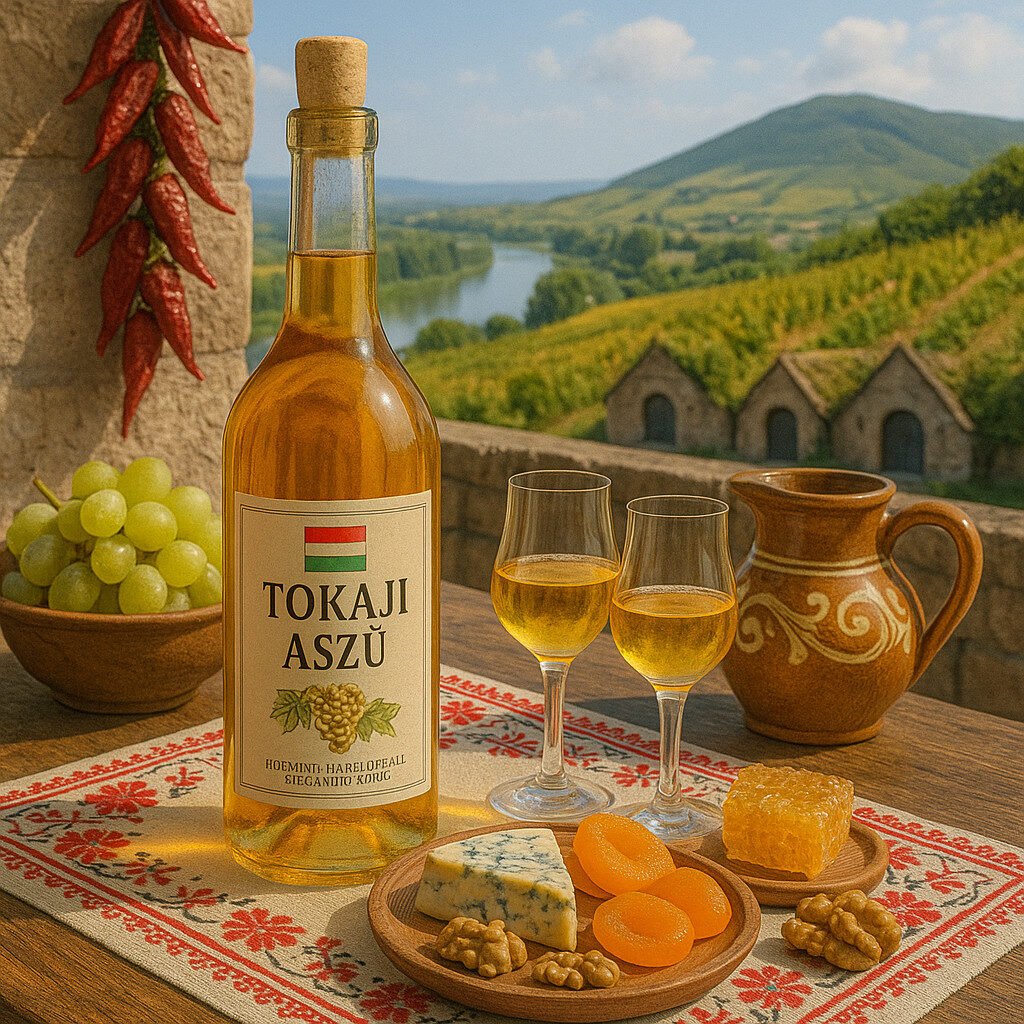
Tokaji Aszú is a historic sweet wine from Hungary’s Tokaj region, crafted using grapes affected by noble rot. It holds a revered status among dessert wines globally for its balance of sweetness and acidity.
- Colour: Deep gold to amber hues.
- Wine style: Still, sweet wine.
- Main grape varieties: Primarily Furmint, Hárslevelű, and sometimes Sárga Muskotály.
- Sweetness level: Ranges from 3 to 6 puttonyos, indicating sugar content.
- Acidity: High, vibrant acidity.
- Tannin structure: Low to negligible tannins.
- Alcohol range: Typically 10% to 14% by volume.
- Body: Full-bodied and luscious.
- Typical serving temperature: 10°C to 12°C.
- Protected status: PDO (Protected Designation of Origin) under EU law.
The puttonyos system quantifies the sweetness of Tokaji Aszú by measuring the amount of aszú paste added to the base must. Higher puttonyos levels, such as 5 or 6, result in richer, more concentrated wines with greater aging potential. This method ensures consistency and quality across vintages, making Tokaji Aszú a benchmark for sweet wines. Traditional production emphasizes slow fermentation and extended barrel aging, which enhances its complexity and longevity.
Where and How Tokaji Aszú from Hungary Is Made
Tokaji Aszú originates exclusively from the Tokaj wine region in northeastern Hungary, characterized by its volcanic soils and continental climate. The area experiences warm summers and humid autumns, ideal for the development of Botrytis cinerea, or noble rot, on the grapes. Key appellations within Tokaj include vineyards like Szarvas and Mézes Mály, which are renowned for producing high-quality aszú berries. The production philosophy centers on meticulous grape selection and traditional methods that have been refined over centuries.
- Vineyard work involves careful canopy management and organic practices to promote air circulation, reducing disease pressure and encouraging noble rot. Workers monitor the vines from spring through autumn, ensuring optimal grape health.
- Grape selection occurs manually, with pickers harvesting only individual botrytized aszú berries, often in multiple passes through the vineyards. This labor-intensive process ensures that only the best-quality grapes are used.
- Harvest typically takes place from late September to October, when the grapes have reached high sugar concentrations and noble rot has fully developed. Timing is critical to capture the desired balance of sweetness and acidity.
- Destemming and crushing are done gently to avoid extracting harsh tannins from the skins. The aszú berries are then mashed into a paste-like consistency.
- Maceration involves mixing the aszú paste with a base wine or must, often from non-botrytized grapes, and allowing it to steep for 12 to 48 hours. This step extracts flavors, sugars, and aromas from the berries.
- Fermentation proceeds slowly in oak barrels or tanks at controlled temperatures of 15°C to 18°C, lasting several weeks to months. Natural yeasts are commonly used to preserve regional character.
- Malolactic fermentation is generally avoided in Tokaji Aszú to maintain its bright acidity and prevent buttery notes that could clash with the sweet profile.
- Maturation occurs in small oak barrels, often made from Hungarian oak, for a minimum of two years and up to several decades. This aging process adds complexity through oxidative notes and integration of flavors.
- Clarification is achieved through natural settling or light filtration before bottling, ensuring the wine remains clear without stripping its character.
- Bottling takes place after maturation, with the wine often aged further in bottle to develop additional nuances before release.
Traditional producers adhere to methods using small oak barrels and extended aging, resulting in wines with pronounced oxidative and honeyed notes. Modern approaches may incorporate temperature-controlled fermentation in stainless steel to preserve fruit freshness, appealing to contemporary palates. Artisanal winemakers focus on low yields and hand-harvesting, while mass-market versions might use shortcuts like added sugars, sacrificing depth for quicker production.
Flavor Profile: What Makes Tokaji Aszú from Hungary Special?
Tokaji Aszú displays a radiant golden to amber colour with notable viscosity, coating the glass in thick legs. Its aroma profile bursts with layers of dried apricot, orange marmalade, and honey, complemented by floral hints of acacia and subtle earthy notes from noble rot. The high acidity cuts through the sweetness, creating a vibrant and refreshing palate that avoids cloying sensations.
On the palate, Tokaji Aszú delivers intense flavors of candied citrus, peach, and figs, with spicy undertones of ginger and cinnamon from oak aging. The wine’s full body and low tannins provide a smooth, velvety texture, while the finish is exceptionally long, lingering with nuances of caramel and toasted nuts. Factors like grape variety, with Furmint contributing zesty acidity, and extended barrel maturation enhance its complexity, making each sip a dynamic experience.
Quality Labels and Certifications for Wine from Hungary
As far as current information suggests, Tokaji Aszú holds a Protected Designation of Origin (PDO) under European Union regulations, ensuring it is produced exclusively in the Tokaj region with strict methods. This label guarantees the wine’s authenticity, geographical origin, and adherence to traditional practices, such as the use of botrytized grapes and specified aging periods. The puttonyos classification system, ranging from 3 to 6, further certifies sugar content and quality levels, providing consumers with clear indicators of sweetness and concentration.
Additionally, Hungarian national laws reinforce these standards, with oversight from bodies like the Tokaj Wine Region Product Council. As far as can be verified at present, some producers may also pursue organic or sustainable certifications, though these are not mandatory for the PDO status. These efforts highlight a growing trend toward environmentally conscious viticulture in the region, aligning with global demands for traceability and quality assurance in winemaking.
Cheese Pairings
Tokaji Aszú pairs excellently with strong, blue-veined cheeses like Roquefort or Gorgonzola, where its sweetness contrasts with the saltiness and pungency of the cheese. The wine’s high acidity cleanses the palate from the rich fat content, while its full body stands up to the intense flavors without overpowering them. In cooked dishes, incorporating Tokaji Aszú into sauces for baked Brie or Camembert enhances the creamy texture and adds a luxurious sweetness that balances the cheese’s earthy notes.
Classic local pairings include Hungarian cheeses such as Pálpusztai or aged Trappista, which complement the wine’s honeyed and spicy characteristics. For international options, try with firm, nutty cheeses like Comté or Manchego, where the wine’s acidity cuts through the salt and fat, creating a harmonious balance. The interaction between Tokaji Aszú’s sweetness and the cheese’s texture ensures a satisfying experience, whether served on a board or in gourmet recipes.
Suitable Fruit and Vegetables
Fresh fruits like figs, apricots, and peaches highlight Tokaji Aszú’s inherent stone fruit flavors, making them ideal for salads or desserts. The wine’s sweetness mirrors the natural sugars in these fruits, while its acidity prevents the combination from becoming overly sweet. Dried fruits, such as dates or raisins, also work well, adding a chewy texture that contrasts with the wine’s smooth mouthfeel and enhances its spicy undertones.
In vegetable-based dishes, roasted root vegetables like carrots or sweet potatoes caramelize during cooking, echoing the wine’s honeyed notes. Bitter greens such as endive or radicchio can be balanced by Tokaji Aszú’s sweetness in vinaigrettes or warm side dishes. The wine’s vibrant acidity cuts through the earthiness of mushrooms or grilled asparagus, creating a refined pairing that complements both raw and cooked preparations.
Suitable Meat and Fish Dishes
For cold servings, Tokaji Aszú pairs wonderfully with rich charcuterie like foie gras or duck pâté, where its sweetness offsets the savory, fatty profiles. The wine’s acidity cleanses the palate between bites, making it a classic choice for appetizers or cheese boards. In hot dishes, roasted poultry such as turkey or chicken with fruit-based glazes allows the wine’s flavors to meld with the meat’s juiciness, enhancing the overall dining experience.
Grilled fish like salmon or sea bass, especially when prepared with sweet sauces or citrus marinades, harmonizes with Tokaji Aszú’s acidity and fruitiness. Heavier meat dishes, such as pork tenderloin with apricot stuffing or lamb stew, benefit from the wine’s full body and sweet contrast to the savory elements. These pairings showcase Tokaji Aszú’s versatility, from light starters to hearty main courses, always maintaining balance and depth.
Questions and Answers
How should I store Tokaji Aszú?
Store Tokaji Aszú in a cool, dark place with consistent temperatures around 12°C to 15°C. Keep the bottles horizontal to keep the cork moist. Proper storage preserves Tokaji Aszú’s complexity for decades.
What is the ideal serving temperature for Tokaji Aszú?
Serve Tokaji Aszú chilled between 10°C and 12°C to highlight its acidity and sweetness. Avoid over-chilling, as it can mute the aromas. This temperature range ensures Tokaji Aszú tastes balanced and refreshing.
Should I decant Tokaji Aszú before serving?
Decanting Tokaji Aszú is generally not necessary, as it can expose delicate aromas to oxygen. For older vintages, a gentle decant may help separate sediment. Always taste Tokaji Aszú first to decide if aeration is needed.
How long does Tokaji Aszú last after opening?
Tokaji Aszú can be enjoyed for up to two weeks after opening if recorked and refrigerated. Its high sugar and acidity act as natural preservatives. For best quality, consume Tokaji Aszú within a few days.
Can Tokaji Aszú be aged in the bottle?
Yes, Tokaji Aszú has excellent aging potential, often improving for 20 years or more. Higher puttonyos levels tend to age better. Properly stored Tokaji Aszú develops deeper honey and spice notes over time.
What foods pair best with Tokaji Aszú?
Tokaji Aszú pairs well with blue cheese, foie gras, and fruit-based desserts. Its sweetness contrasts with salty and fatty foods. Experiment with Tokaji Aszú and spicy dishes for a unique combination.
Where can I buy authentic Tokaji Aszú?
Purchase Tokaji Aszú from specialized wine shops, online retailers, or directly from Hungarian producers. Look for PDO labels to ensure authenticity. Tokaji Aszú is widely available in markets that feature premium wines.
How do I handle leftovers of Tokaji Aszú?
For leftover Tokaji Aszú, transfer it to a smaller bottle to minimize air exposure and refrigerate. Use it in cooking, such as deglazing pans for sauces. Tokaji Aszú leftovers can enhance sweet or savory recipes.
What is the alcohol content range for Tokaji Aszú?
Tokaji Aszú typically has an alcohol content between 10% and 14% by volume. This range supports its full body and sweet profile. The exact level depends on the vintage and puttonyos rating of Tokaji Aszú.
Can Tokaji Aszú be served with ice?
Serving Tokaji Aszú with ice is not recommended, as it dilutes the flavors and aromas. Instead, chill it properly before serving. Enjoy Tokaji Aszú neat to appreciate its full complexity and texture.
Similar Wines and Alternatives
If you enjoy Tokaji Aszú, consider Sauternes from France, which shares a similar production using botrytized grapes and offers comparable sweetness and acidity. However, Sauternes often features more pronounced oak and citrus notes, whereas Tokaji Aszú tends toward apricot and honey flavors. Another alternative is German Trockenbeerenauslese, which is even sweeter and more concentrated, but with higher acidity that mirrors Tokaji Aszú’s vibrant profile. These wines provide similar luxurious experiences but may differ in price and availability, with Tokaji Aszú often being more accessible in Eastern European markets.
From Hungary, other sweet wines like Szamorodni offer a less sweet version with similar grape varieties, making them a lighter alternative to Tokaji Aszú. Internationally, Italian Passito di Pantelleria or Austrian Beerenauslese can serve as substitutes, though they may have lower acidity and different fruit profiles. Tokaji Aszú’s unique balance of sweetness and acidity sets it apart, but these alternatives are excellent for exploration, especially if you seek variations in body or aging potential at different price points.