
In this article
What Is Savatiano?
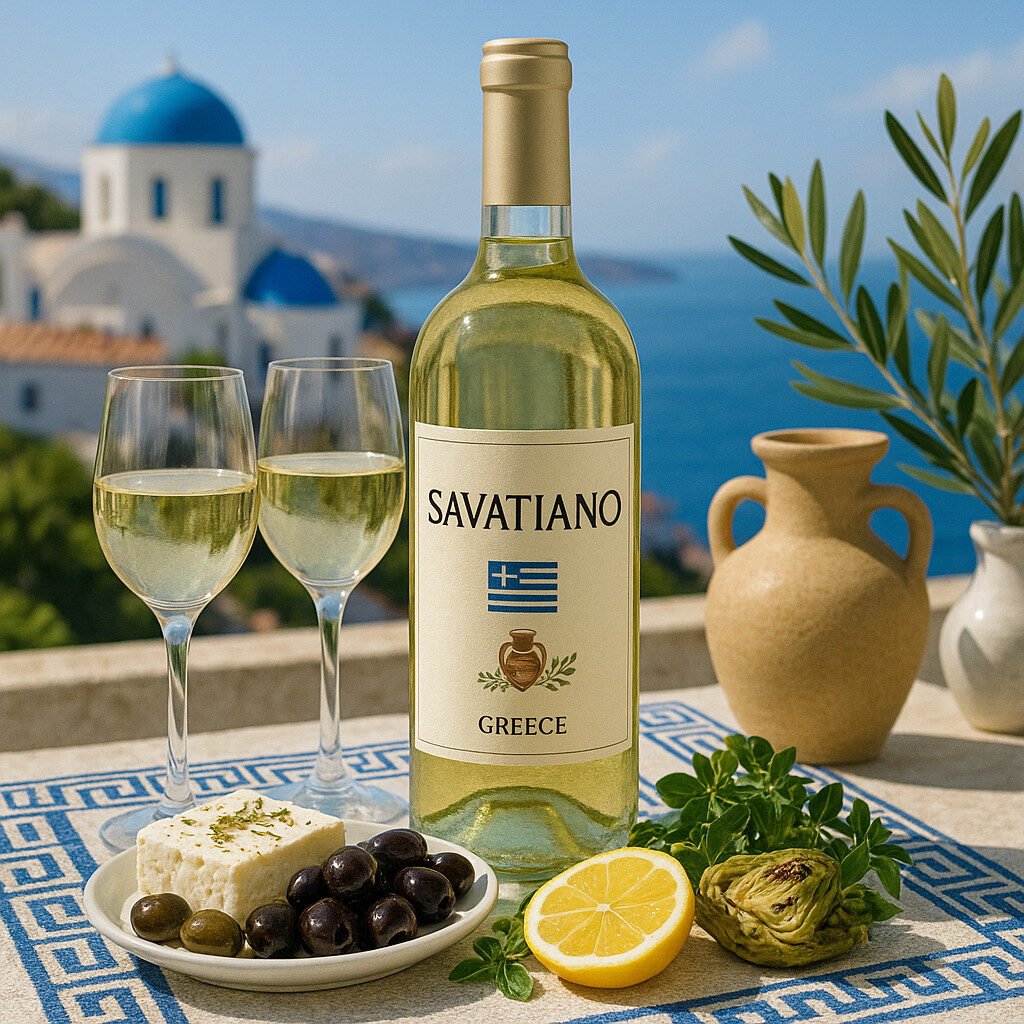
Savatiano is a white grape variety indigenous to Greece, primarily cultivated in the Attica region. It is most famous for its role in Retsina production but also shines in unoaked dry white wines.
- Colour: Pale yellow with green reflections
- Wine style: Still white wine
- Main grape varieties: Savatiano dominates, occasionally blended with Roditis
- Sweetness level: Typically dry, with less than 4 grams per liter residual sugar
- Acidity: Medium to high, with pH around 3.2 to 3.4
- Tannin structure: Low, as is common in white wines
- Alcohol range: 11.5% to 13.5% by volume
- Body: Light to medium-bodied
- Typical serving temperature: 8 to 10 degrees Celsius
- Protected status: Protected Designation of Origin (PDO) in Attica, Greece
Savatiano vines exhibit strong drought resistance, thriving in Greece’s hot summers. The grapes typically achieve full ripeness by mid-September, yielding wines with crisp apple and citrus notes. Many modern producers avoid oak aging to preserve the variety’s fresh, approachable character.
Test Your Knowledge:
Where and How Savatiano Is Made
Savatiano originates mainly from central Greece, with Attica being the heartland of production. The Mediterranean climate features long, hot summers and mild winters, ideal for this hardy grape. Soils are often sandy, calcareous, and well-draining, which promote concentrated flavors in the berries.
Key appellations include PDO Attica, where regulations ensure traditional methods and geographic authenticity. Winemakers prioritize preserving natural acidity through canopy management and selective harvesting. The philosophy often embraces minimal intervention to highlight the terroir and grape purity.
- Vineyard work: Winter pruning controls yields, while spring canopy management improves air flow. Sustainable practices reduce irrigation needs due to the grape’s drought tolerance.
- Grape selection: Harvest occurs from early to mid-September, often by hand for premium batches. Brix levels target 19 to 22 for optimal sugar-acid balance.
- Harvest: Grapes are picked in cool morning hours to retain freshness. Temperature-controlled transport to the winery prevents oxidation.
- Destemming and crushing: Most wineries destem and gently crush to avoid harsh tannins. Some use whole-bunch pressing for finer textures.
- Maceration: Cold maceration may last 4 to 12 hours at 8-10°C for aroma extraction. This step enhances floral and citrus notes.
- Fermentation: Stainless steel tanks maintain temperatures at 14-18°C for 10-15 days. Selected yeasts emphasize fruit character without masking varietal traits.
- Malolactic fermentation: Typically blocked to preserve acidity, but occasionally allowed for rounded mouthfeel. This decision depends on the desired style.
- Maturation: Wines age on fine lees for 2-6 months in tank or neutral oak. This adds texture without introducing oak flavors.
- Clarification: Bentonite fining or cross-flow filtration ensures stability. The process removes solids while retaining aroma compounds.
- Bottling: Bottles are filled under inert gas to prevent oxidation. Closures range from cork to screw cap based on market preferences.
Traditional Savatiano winemaking includes resin addition for Retsina, imparting a distinct pine aroma. Modern artisanal producers focus on pure varietal expressions using temperature control and low sulfur. Mass-market versions often use higher yields and simpler techniques, resulting in less complex wines.
Flavor Profile: What Makes Savatiano Special?
Savatiano wines display a pale straw color with green tints and moderate viscosity. Aromas burst with citrus fruits like lemon and lime, complemented by white flowers and fresh herbs. The palate offers crisp acidity, flavors of green apple and pear, and a clean, mineral-driven finish.
Grape ripeness at harvest directly influences the balance between fruit sweetness and zesty acidity. Oak treatment is rare, but when used, it adds subtle spice notes without overpowering the core characteristics. The light to medium body and refreshing finish make Savatiano exceptionally versatile with food.
Quality Labels and Certifications for Savatiano
As far as current information suggests, Savatiano wines often hold Protected Designation of Origin (PDO) status in regions like Attica. This certification guarantees production within defined geographic areas using approved methods. It also controls grape sourcing and ensures traditional winemaking practices are followed.
Some producers pursue organic certifications, which prohibit synthetic pesticides and fertilizers in the vineyard. Sustainability labels are emerging in Greek viticulture, promoting water conservation and biodiversity. However, the adoption of these certifications varies widely among wineries as far as can be verified at present.
Cheese Pairings with Savatiano
Savatiano excels with brined Greek cheeses like feta and halloumi, as its bright acidity cuts through their saltiness and fat. The wine’s citrus and herbal notes enhance the tangy profile of these cheeses, creating a harmonious balance. For cooked applications, baked feta with herbs or fried saganaki allows Savatiano to refresh the palate between bites.
Internationally, soft cheeses such as fresh goat cheese or brie pair well, as Savatiano’s lightness complements their creamy textures. Aged cheeses like pecorino can work if the wine has more body, but generally, milder cheeses prevent overwhelming the delicate aromas. The key is matching intensity to avoid masking the wine’s crisp character.
Suitable Fruit and Vegetables for Savatiano
Fresh citrus fruits like lemons and limes accentuate Savatiano’s zesty acidity in salads or ceviche. Vegetables such as cucumbers, bell peppers, and Kalamata olives from Mediterranean cuisine highlight its herbal undertones. Grilled or roasted vegetables like zucchini and eggplant allow the wine’s minerality to complement their smoky flavors.
Dried fruits such as apricots or figs in tagines or platters balance Savatiano’s dryness with their natural sweetness. Bitter greens like arugula or radicchio in salads are tempered by the wine’s crispness, creating a refreshing contrast. Cooked dishes with artichokes or spinach benefit from the wine’s ability to cut through earthy tones.
Suitable Meat and Fish Dishes for Savatiano
For cold servings, Savatiano pairs beautifully with seafood like grilled octopus or shrimp cocktail, its acidity cleansing the palate. Charcuterie boards featuring mild sausages or prosciutto are elevated by the wine’s fruity notes. Traditional Greek meze such as dolmades or taramasalata match well with its refreshing profile.
Hot dishes include lemon-herb roasted chicken or baked fish, where Savatiano’s citrus elements mirror the seasoning. Lighter stews with rabbit or lamb allow the wine’s medium body to support without dominating. Pasta with white clam sauce or vegetarian moussaka are excellent matches, highlighting the wine’s versatility.
Questions and Answers About Savatiano
This article addresses common queries about Savatiano wine, providing practical guidance for storage, serving, and enjoyment. Each answer draws on expert knowledge to help sommeliers and enthusiasts make informed decisions. Understanding these details enhances the overall experience with this Greek classic.
How should I store Savatiano wine?
Store Savatiano in a cool, dark place with a stable temperature of 12-14°C. Keep bottles horizontal if sealed with cork to maintain cork moisture. Protect the wine from light and vibrations to preserve its fresh qualities for up to three years.
What is the ideal serving temperature for Savatiano?
Serve Savatiano chilled between 8 and 10 degrees Celsius for optimal enjoyment. This temperature range highlights its crisp acidity and aromatic fruit notes. Avoid over-chilling, which can mute the delicate flavors of Savatiano.
Does Savatiano need decanting?
Decanting is generally not necessary for Savatiano, as it is meant to be consumed young and fresh. However, a brief aeration of 10-15 minutes can open up subtle aromas in some bottles. This step is optional and depends on personal preference for Savatiano.
Should Savatiano be chilled before serving?
Yes, chill Savatiano in the refrigerator for about two hours before serving. This brings out its refreshing character and balances the acidity. Serving Savatiano too warm can emphasize alcohol and diminish its vibrancy.
How long can I keep an opened bottle of Savatiano?
An opened bottle of Savatiano stays fresh for 2-3 days if re-corked and refrigerated. Use a vacuum pump to remove air and slow oxidation. Consume it quickly to enjoy the primary fruit flavors of Savatiano.
What foods pair best with Savatiano?
Savatiano pairs excellently with Mediterranean dishes like Greek salads and grilled seafood. Its acidity complements fatty foods like cheese and olive oil-based recipes. Lighter meats and vegetable platters also harmonize well with Savatiano.
Can Savatiano age well?
Savatiano is best consumed within 2-3 years of vintage for peak freshness. Some high-quality examples can develop honeyed notes with short-term aging. However, most Savatiano wines are not intended for long cellaring.
Where can I buy Savatiano wine?
Purchase Savatiano from Greek specialty wine shops or online retailers focusing on Mediterranean wines. Many importers stock it in Europe and North America. Check local liquor stores with diverse selections for availability of Savatiano.
How does Savatiano compare to other Greek white wines?
Savatiano is lighter and more aromatic than Assyrtiko, which has higher acidity and minerality. It shares a similar profile with Roditis but often exhibits more citrus notes. Savatiano is generally more approachable and less intense than many Greek whites.
What are the best vintages for Savatiano?
Recent vintages like 2021 and 2022 have produced excellent Savatiano due to balanced growing conditions. Avoid years with excessive heat or rain, which can dilute flavors. Always check producer notes for specific vintage quality of Savatiano.
Similar Wines and Alternatives to Savatiano
Savatiano finds parallels in other Greek whites like Moschofilero, which offers floral aromas but higher acidity. Internationally, Pinot Grigio from Italy provides a similar light body and crisp finish, though with less herbal complexity. For a fuller alternative, Verdejo from Spain shares citrus notes but has a richer texture.
In terms of accessibility and price, Savatiano is often affordable, comparable to mass-market Pinot Grigio. Artisanal versions may cost slightly more but remain budget-friendly. Other substitutes include Albariño from Spain or Grüner Veltliner from Austria, which match Savatiano’s food-pairing versatility.