
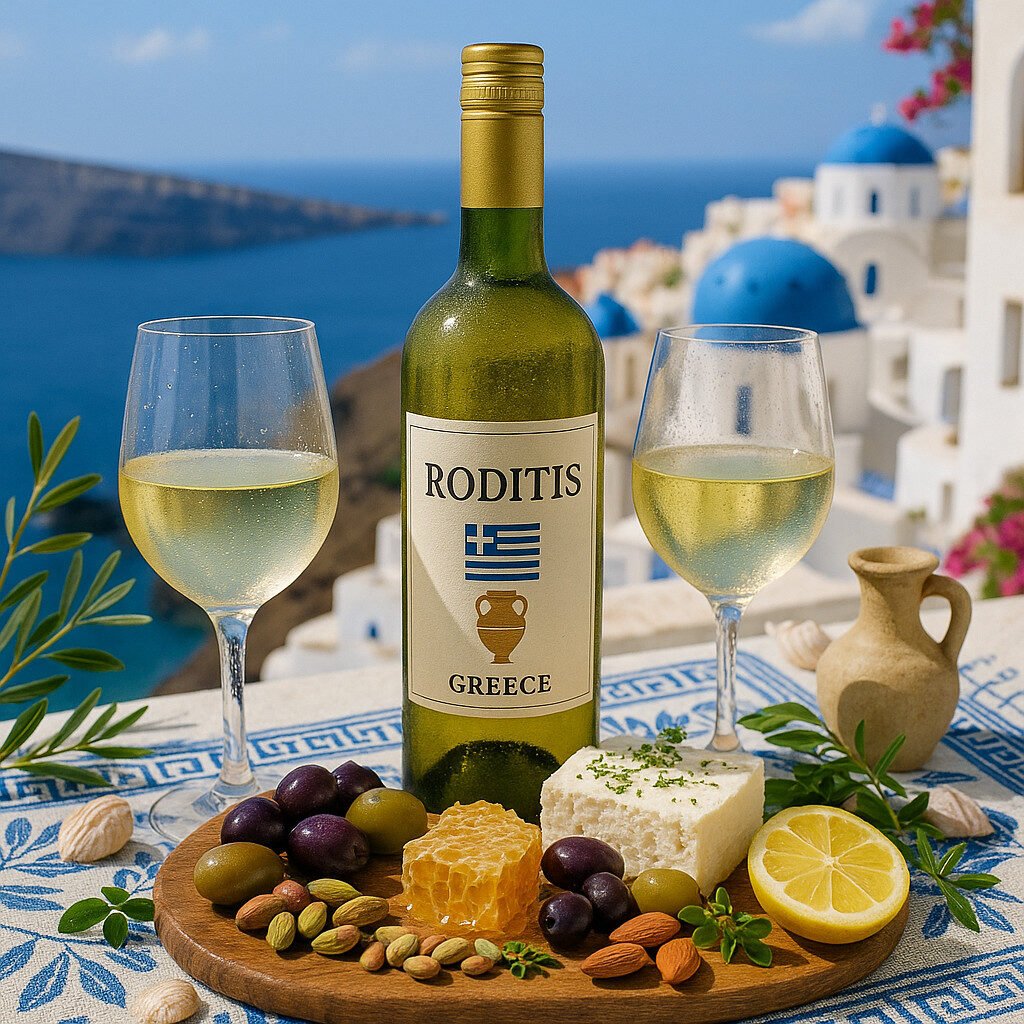
Roditis is a historic Greek white wine grape celebrated for its vibrant acidity and aromatic complexity. This versatile variety produces refreshing wines ideal for pairing with a wide range of foods, from seafood to salads.
In this article
What Is Roditis?
Roditis is a pink-skinned grape variety primarily used to produce dry white wines in Greece. It is one of the most widely planted grapes in the country, known for its adaptability and consistent quality.
- Colour: Pale yellow to light gold.
- Wine style: Still white wine.
- Main grape varieties: Roditis is often a single-varietal wine or blended with other Greek grapes like Savatiano.
- Sweetness level: Typically dry, but some versions can be off-dry.
- Acidity: High acidity, providing crispness.
- Tannin structure: Low tannins, as it is a white wine.
- Alcohol range: 11.5% to 13.5% ABV.
- Body: Light to medium body.
- Typical serving temperature: 8°C to 10°C.
- Protected status: Often falls under PDO (Protected Designation of Origin) appellations like Patras or PGI (Protected Geographical Indication) zones in Greece.
Roditis grapes have a distinct pink hue, but the wines are white due to minimal skin contact during production. The variety thrives in various Greek regions, contributing to its diverse expressions across different terroirs. Winemakers value Roditis for its ability to retain acidity even in warm climates, making it a reliable choice for balanced and refreshing wines.
Test Your Knowledge:
Where and How Roditis Is Made
Roditis is cultivated across many parts of Greece, with significant plantings in the Peloponnese, Central Greece, and Macedonia. Key appellations include PDO Patras and PGI Peloponnese, where the Mediterranean climate with hot, dry summers and mild winters idealizes grape growing. Soils vary from limestone to clay, influencing the wine’s minerality and structure.
Vineyards are often planted on slopes to maximize sun exposure and drainage. The production philosophy emphasizes preserving the grape’s natural acidity and aromatic qualities, with many winemakers adopting sustainable practices.
- Vineyard work: Pruning occurs in winter to control yield and ensure quality. Canopy management in spring helps with air circulation and sun exposure.
- Grape selection: Harvest typically in late August to September, with hand-picking for premium wines to select only ripe, healthy grapes.
- Harvest: Grapes are harvested in the cool early morning to preserve acidity and freshness.
- Destemming and crushing: Grapes are destemmed and gently crushed to avoid bitter tannins from skins, as Roditis has pink skins but is used for white wine.
- Maceration: Minimal skin contact, often none, to extract delicate flavors without color.
- Fermentation: Conducted at controlled temperatures of 14°C to 18°C in stainless steel tanks to retain fruity aromas, lasting 10 to 15 days.
- Malolactic fermentation: Usually prevented to maintain high acidity, but some producers may allow it for complexity.
- Maturation: Aged on lees in tanks or occasionally in neutral oak for a few months to enhance texture, typically 3 to 6 months.
- Clarification: Fining and filtering before bottling to ensure stability and clarity.
- Bottling: Wines are bottled young, within 6 to 12 months after harvest, to preserve freshness.
Traditional methods involve minimal intervention and aging in amphorae or large old barrels, resulting in wines with more oxidative notes. Modern practices focus on temperature-controlled fermentation and stainless steel aging for brighter, fruit-forward profiles. Artisanal producers might use wild yeasts and extended lees contact, while mass-market versions prioritize consistency and early drinkability.
Flavor Profile: What Makes Roditis Special?
Roditis wines display a pale yellow color with green reflections and moderate viscosity. Aromas range from citrus fruits like lemon and grapefruit to white flowers such as jasmine and orange blossom. Herbal notes of thyme and mint often complement the fruitiness, with occasional hints of peach or apricot in riper examples.
On the palate, Roditis offers high acidity that balances its light to medium body, leading to a crisp, refreshing finish. Flavors echo the aromas, with dominant citrus and mineral undertones from the limestone soils. Oak treatment is rare, but when used, it adds subtle vanilla or toast notes without overpowering the wine’s delicate character.
The grape’s natural acidity is influenced by cool night temperatures during ripening, enhancing its vibrancy. Aging potential is limited, with most Roditis wines best consumed young to enjoy their freshness. However, some premium versions can develop honeyed nuances after a year or two in bottle.
Quality Labels and Certifications
Roditis in Greek Appellations
As far as current information suggests, Roditis is commonly associated with several PDO appellations in Greece, such as PDO Patras and PDO Nemea, though Nemea is more famous for red wines. These designations ensure that the wine meets specific production standards, including permitted grape varieties and winemaking techniques. PGI labels, like PGI Peloponnese, offer more flexibility but still guarantee geographical origin.
Organic certifications are increasingly popular among Roditis producers, with labels indicating adherence to EU organic farming standards. Sustainability initiatives, such as those from certifying bodies, promote environmentally friendly practices. As far as can be verified at present, these certifications help consumers identify wines made with minimal chemical inputs and respect for terroir.
Cheese Pairings
Classic Roditis Cheese Matches
Roditis pairs excellently with fresh, mild cheeses like feta and goat cheese, which are staples in Greek cuisine. The wine’s high acidity cuts through the fat and saltiness of these cheeses, enhancing their creaminess. For international options, young Gouda or Mozzarella work well, as their mild flavors do not overwhelm the wine’s delicate aromas.
Aged cheeses such as Pecorino or Manchego can also complement Roditis, especially if the wine has some residual sweetness. The saltiness of these cheeses balances the wine’s acidity, creating a harmonious pairing. In cooked dishes, Roditis can be served with cheese-based pastas or soufflés, where its crispness refreshes the palate.
Suitable Fruit and Vegetables
Roditis with Fresh Produce
Fresh fruits like citrus, apples, and pears highlight Roditis’s zesty acidity and fruity notes. Salads with bitter greens such as arugula or radicchio benefit from the wine’s crispness, which balances the bitterness. Grilled vegetables like zucchini and eggplant pair well, as their smoky flavors are complemented by the wine’s herbal undertones.
Dried fruits such as apricots or figs can be served with Roditis in cheese plates, adding a touch of sweetness that contrasts with the wine’s dryness. Cooked dishes like ratatouille or stuffed peppers allow the wine’s acidity to cut through the richness. The light body of Roditis makes it suitable for vegetable-based appetizers and main courses.
Suitable Meat and Fish dishes
Roditis Pairings with Proteins
Roditis is ideal with light fish dishes such as grilled sea bass or baked salmon, where its acidity enhances the seafood’s freshness. Cold servings like seafood salads or ceviche allow the wine’s citrus notes to shine. For meat, lean options like chicken or turkey breast work well, especially when prepared with herbs like oregano or lemon.
Heavier meat dishes such as lamb kebabs or pork souvlaki can be paired with Roditis if the wine has enough body and acidity to balance the richness. Charcuterie plates with prosciutto or salami are excellent matches, as the wine cuts through the fat. Pasta with white meat sauces or light tomato-based dishes also complement Roditis’s profile.
Questions and Answers about Roditis
How should I store Roditis?
Store Roditis in a cool, dark place with a consistent temperature of around 12°C to 15°C. Keep the bottle horizontal if corked to prevent the cork from drying out. Roditis is best consumed within 1-2 years of purchase for optimal freshness.
What is the ideal serving temperature for Roditis?
Serve Roditis chilled between 8°C and 10°C to highlight its crisp acidity and aromatic qualities. This temperature range ensures the wine remains refreshing without muting its flavors. Roditis should be served in a standard white wine glass to allow the aromas to develop.
Does Roditis need decanting?
Roditis generally does not require decanting, as it is a young, fresh white wine meant to be enjoyed immediately. Decanting could cause it to lose its delicate aromas and vibrancy. However, if you have an older bottle of Roditis, a brief decant might help open up any developed notes.
How long can I keep an opened bottle of Roditis?
An opened bottle of Roditis should be consumed within 2-3 days if stored in the refrigerator with a cork or stopper. The wine’s high acidity helps preserve it slightly longer, but flavors will start to fade. For best enjoyment, finish Roditis soon after opening to appreciate its freshness.
What foods pair best with Roditis?
Roditis pairs well with light Mediterranean dishes like Greek salads, grilled fish, and seafood pasta. Its acidity complements salty cheeses and herbal flavors in dishes. Roditis also works with appetizers such as olives and dolmades for a authentic Greek experience.
Can Roditis age in the bottle?
Roditis is typically not suited for long-term aging and is best drunk young within 1-3 years of vintage. Some premium Roditis wines may develop subtle honey notes after a year or two, but most retain their vibrant character when consumed early. Aging Roditis beyond this period can lead to a loss of acidity and fruitiness.
Where can I buy Roditis?
Roditis is available in wine shops, supermarkets, and online retailers specializing in Greek wines. Look for imports from reputable producers in regions like Patras or Nemea. Roditis can also be found in restaurants with Mediterranean-focused wine lists.
How is Roditis different from other Greek white wines?
Roditis is distinct for its pink-skinned grapes and high acidity, often producing lighter-bodied wines compared to Assyrtiko. It typically has more floral and herbal notes rather than the intense minerality of Santorini wines. Roditis is also more widely planted and versatile in blending than many other Greek varieties.
What is the alcohol content of Roditis?
Roditis wines usually have an alcohol content between 11.5% and 13.5% ABV, making them moderate in strength. This range supports the wine’s light to medium body and refreshing character. The alcohol level can vary slightly based on ripeness and winemaking style.
Are there sweet versions of Roditis?
Sweet versions of Roditis are rare but can be found as off-dry or lightly sweetened styles, often labeled as demi-sec. These are produced by halting fermentation early or adding grape must. Roditis is primarily known for its dry expressions, which dominate the market.
Similar Wines and Alternatives
Wines Similar to Roditis
Roditis shares similarities with other high-acidity white wines like Assyrtiko from Santorini, which also offers citrus and mineral notes but often with more intensity and salinity. From Italy, Vermentino or Greco di Tufo provide comparable crispness and floral aromas, making them good alternatives. These wines typically have alcohol levels between 11.5% and 13.5%, similar to Roditis, and pair well with Mediterranean dishes.
For those seeking different regions, Sauvignon Blanc from New Zealand or France offers vibrant acidity and herbaceous notes, though it may be more aromatic than Roditis. Albariño from Spain is another option, with its peach and citrus flavors and refreshing finish. Roditis is generally more affordable and accessible in Greek markets, while alternatives might vary in price and availability internationally.