
In this article
What Is Retsina?
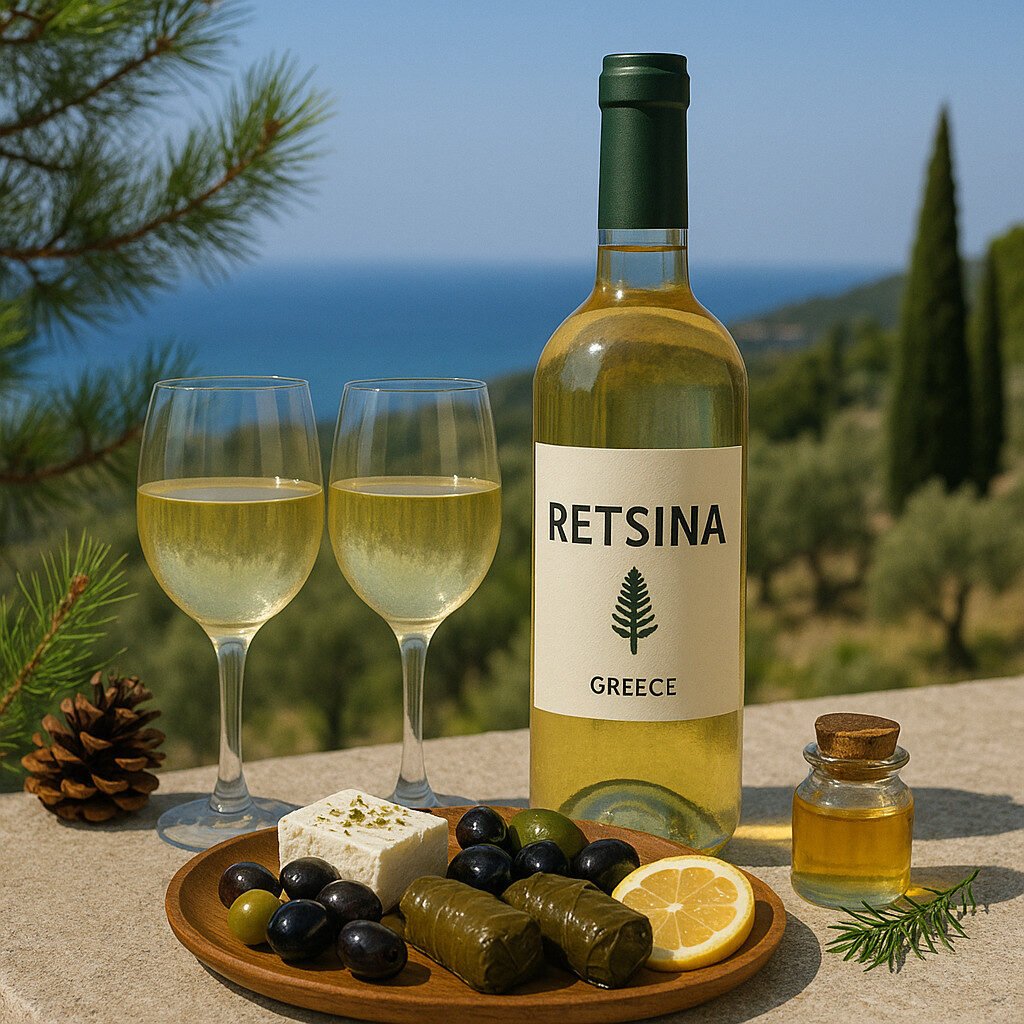
Retsina is a traditional Greek wine defined by its intentional addition of pine resin during fermentation. It holds a special place in Greek viticulture and dining culture.
- Colour: Pale straw to light gold.
- Wine style: Still white wine, occasionally rosé.
- Main grape varieties: Savatiano, Roditis, Assyrtiko.
- Sweetness level: Typically dry to off-dry.
- Acidity: Medium to high.
- Tannin structure: Low to negligible.
- Alcohol range: 11% to 13% ABV.
- Body: Light to medium.
- Typical serving temperature: 8°C to 10°C.
- Protected status: PDO (Protected Designation of Origin) for specific Greek regions.
The resin used is typically from the Aleppo pine tree, which imparts a characteristic aromatic quality. Modern Retsina producers focus on balancing the resin notes with the wine’s natural fruit character. This wine is best consumed young to appreciate its vibrant freshness and unique profile.
Test Your Knowledge:
Where and How Retsina Is Made
Retsina production is centered in mainland Greece and certain Aegean islands, with key PDO zones including Attica and Central Greece. The Mediterranean climate with hot, dry summers and mild winters promotes optimal grape ripening. Soils are often sandy or limestone-based, which helps retain acidity in the grapes.
Vineyards are typically planted on slopes to maximize sun exposure and air circulation. The production philosophy emphasizes preserving the traditional resin character while ensuring wine quality and drinkability.
- Vineyard work involves careful canopy management and minimal irrigation to stress the vines, concentrating flavors. Harvest usually occurs in late August to early September.
- Grape selection prioritizes healthy, ripe clusters of Savatiano, Roditis, or Assyrtiko. Hand harvesting is common for premium batches.
- Destemming and crushing happen quickly after harvest to prevent oxidation. The must is then transferred to fermentation vessels.
- Maceration is brief or skipped for white styles, but resin addition occurs at fermentation start. Resin pieces are added directly to the must.
- Fermentation takes place in stainless steel tanks at controlled temperatures of 16°C to 18°C for about 10 to 15 days. This preserves aromatic compounds.
- Malolactic fermentation is usually prevented to maintain crisp acidity. The wine remains in tank after fermentation.
- Maturation occurs in stainless steel or neutral containers for several months. Oak aging is rare to avoid overpowering the resin notes.
- Clarification involves light filtration or fining to stabilize the wine without stripping flavors.
- Bottling happens within six to twelve months of harvest to capture freshness. The wine is typically bottled under inert gas to prevent oxidation.
Traditional Retsina production uses larger resin quantities and longer contact times, yielding stronger pine notes. Modern artisanal producers use smaller, high-quality resin additions and temperature control for a cleaner, more balanced profile. Mass-market versions may use resin extracts or shortcuts, resulting in a less complex wine.
Flavor Profile: What Makes Retsina Special?
Retsina displays a pale straw colour with good clarity and moderate viscosity. Its aroma bursts with pine resin, lemon zest, and herbal notes like rosemary and thyme. The palate offers bright acidity, light body, and flavors of green apple, pear, and a lingering resinous finish.
Grape variety influences the base fruit character, with Savatiano providing soft citrus and Roditis adding stone fruit notes. Ripeness levels affect the balance between acidity and subtle sweetness. The absence of oak aging keeps the profile fresh and direct, highlighting the unique resin infusion.
Retsina Quality Labels and Certifications
Retsina holds a Protected Designation of Origin (PDO) status in the European Union for specific Greek regions, as far as current information suggests. This PDO ensures the wine is produced using traditional methods within designated areas like Attica and Viotia. The certification mandates the use of allowed grape varieties and resin from Aleppo pine.
Some producers also pursue organic certifications, adhering to EU organic farming standards, as far as can be verified at present. Sustainability labels are less common but emerging in artisanal Retsina production. These certifications help consumers identify wines made with environmental and quality considerations.
Retsina Cheese Pairings
Retsina pairs excellently with salty, brined cheeses like Greek Feta and Halloumi. The wine’s crisp acidity cuts through the fat and salt, while the resin notes complement the herbal qualities in the cheese. For cooked dishes, Retsina enhances baked Feta with tomatoes and herbs, balancing the dish’s richness.
Internationally, try Retsina with fresh goat cheese or young Pecorino for a contrast of textures and flavors. The wine’s lightness prevents overpowering delicate cheeses, and its pine aroma echoes the earthy notes in aged varieties. Avoid very creamy or blue cheeses, as they can clash with Retsina’s distinctive profile.
Retsina with Fruit and Vegetables
Fresh vegetables like tomatoes, cucumbers, and olives in Greek salads harmonize with Retsina’s acidity and herbal notes. The wine’s resin character enhances dishes with grilled vegetables such as bell peppers and zucchini. Adding lemon juice or olive oil to vegetable preparations amplifies the pairing success.
Fruits like lemons, green apples, and figs work well in both fresh and cooked forms. A fig and arugula salad with a citrus vinaigrette highlights Retsina’s fruitiness. Dried apricots or dates can be served alongside for a sweet-savory contrast that complements the wine’s off-dry potential.
Retsina with Meat and Fish
For cold servings, Retsina pairs beautifully with Greek meze like octopus salad or lamb meatballs. The wine’s brightness cleanses the palate between bites of oily fish or charcuterie. Its resin notes echo the smokiness in grilled sardines or anchovies.
Hot dishes such as grilled chicken souvlaki, pork kebabs, or baked fish with herbs are ideal matches. Retsina’s acidity balances the richness of lamb stews or tomato-based pasta with seafood. Avoid heavily spiced or sweet sauces to maintain harmony with the wine’s profile.
Questions and Answers About Retsina
How should I store Retsina? Store Retsina in a cool, dark place at 12°C to 15°C, away from light and vibrations. Keep bottles upright to minimize cork contact if sealed with cork.
What is the best serving temperature for Retsina? Serve Retsina chilled between 8°C and 10°C to enhance its crispness and aromatic intensity.
Does Retsina need decanting? Retsina generally does not require decanting, as it is meant to be enjoyed young and fresh. Decanting may dissipate its delicate resin aromas.
How long can I keep an opened bottle of Retsina? An opened bottle of Retsina stays fresh for 2 to 3 days if recorked and refrigerated. Its vibrant character diminishes quickly after opening.
Can Retsina age in the bottle? Retsina is best consumed within 1 to 2 years of bottling, as it does not benefit from extended aging. Drink it young to appreciate its unique qualities.
What foods pair best with Retsina? Retsina pairs excellently with Greek meze, grilled seafood, salty cheeses, and vegetable dishes. Its acidity and resin notes complement Mediterranean flavors.
Where can I buy authentic Retsina? Authentic Retsina is available at Greek specialty shops, online wine retailers, and some well-stocked supermarkets. Look for PDO labels to ensure quality.
Is Retsina suitable for cooking? Retsina can be used in cooking to deglaze pans or in marinades for fish and poultry. Its resin flavor adds a distinctive Greek touch to dishes.
What is the alcohol content of Retsina? Retsina typically has an alcohol content between 11% and 13% ABV, making it a light to medium-bodied wine.
How does Retsina compare to other white wines? Retsina is unique due to its resin infusion, setting it apart from other whites. It offers a crisp, aromatic profile unlike typical Sauvignon Blanc or Chardonnay.
Similar Wines and Alternatives to Retsina
If you enjoy Retsina, consider Greek Assyrtiko from Santorini, which shares high acidity and mineral notes but lacks the resin character. Other Mediterranean whites like Vermentino from Italy or Albariño from Spain offer similar crispness and citrus profiles without the pine aroma. These alternatives provide a comparable refreshing quality for seafood pairings.
For a closer match in uniqueness, explore skin-contact white wines or orange wines, which have tannic structure and oxidative notes. Retsina alternatives from other countries are rare, but some New World producers experiment with resin-infused wines. In terms of price and availability, Retsina is often more affordable and accessible in regions with Greek imports, while alternatives may vary widely.