
In this article
What Is Olaszrizling from Hungary?
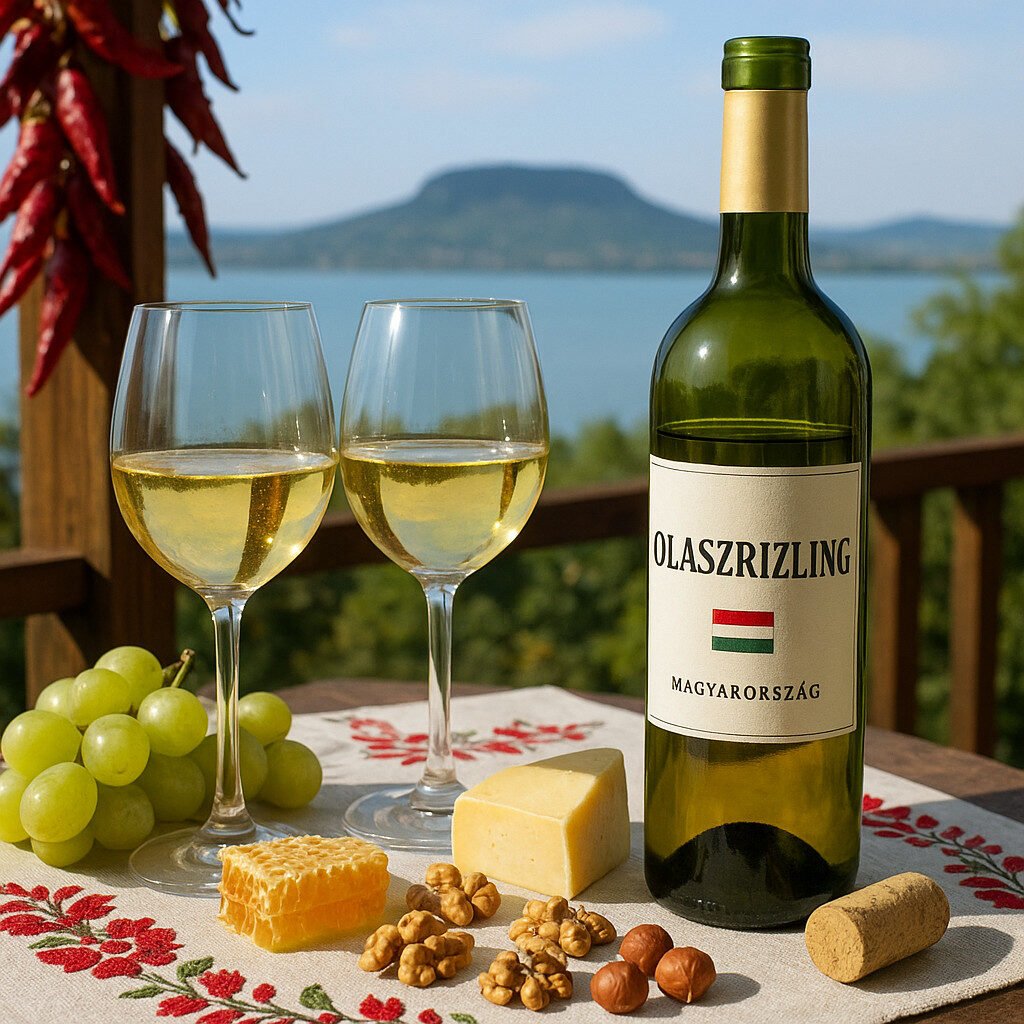
Olaszrizling is a white grape variety that forms the backbone of Hungarian white wine production. It yields primarily dry, aromatic wines celebrated for their food-friendly nature and regional expression.
- Colour: Pale straw yellow, sometimes with greenish reflections.
- Wine style: Still white wine.
- Main grape varieties: 100% Olaszrizling (also known regionally as Welschriesling).
- Sweetness level: Typically dry, though some late-harvest or off-dry versions exist.
- Acidity: Pronounced and vibrant, contributing to its freshness.
- Tannin structure: Virtually nonexistent, as is typical for white wines.
- Alcohol range: Commonly between 11.5% and 13.5% by volume.
- Body: Light to medium-bodied.
- Typical serving temperature: 8°C to 10°C.
- Protected status: Often produced under Hungarian PDO (Oltalom alatt álló eredetmegjelölés) designations such as Badacsony, Somló, or Villány.
Olaszrizling demonstrates remarkable adaptability to various Hungarian mesoclimates and soil types. Its high natural acidity allows it to retain freshness even in warmer vintages. Many top examples undergo minimal oak influence to highlight pure fruit and mineral characters.
Where and How Olaszrizling from Hungary Is Made
Olaszrizling cultivation spans several key Hungarian wine regions, each imparting distinct characteristics. The Badacsony region on Lake Balaton’s north shore features volcanic soils that yield wines with pronounced mineral notes. Somló’s unique volcanic hill provides a cool microclimate ideal for preserving acidity.
Villány in the south produces fuller-bodied Olaszrizling with riper fruit profiles due to its warmer continental climate. The fundamental production philosophy prioritizes harvesting at optimal ripeness to balance sugar accumulation with acid retention. Most producers focus on expressing varietal purity through careful vineyard management and gentle winemaking.
- Vineyard work involves winter pruning to control yields and spring shoot thinning for better air circulation. Canopy management continues through summer to ensure adequate sun exposure and disease prevention.
- Grape selection occurs through hand-harvesting for premium batches or mechanical harvesting for larger volumes. Harvest timing is critical, usually in mid to late September, targeting 19-21° Brix sugar levels.
- Post-harvest, grapes undergo immediate destemming and gentle crushing. Many producers use whole-bunch pressing to minimize phenolic extraction and preserve delicate aromas.
- Maceration is typically avoided, though some winemakers practice short skin contact at 8-10°C for 2-6 hours to enhance texture.
- Fermentation takes place in temperature-controlled stainless steel tanks between 16-18°C for 10-21 days. Selected yeast strains are often used to ensure fermentation reliability and aroma development.
- Malolactic fermentation is usually prevented to maintain the wine’s crisp acidity. This is achieved through temperature control and sulfur dioxide additions post-fermentation.
- Maturation occurs primarily in stainless steel tanks or neutral oak barrels for 3-8 months. This stage allows the wine to integrate flavors and stabilize naturally.
- Clarification involves light fining with bentonite or casein, followed by sterile filtration before bottling. This ensures brilliance and microbiological stability.
- Bottling happens relatively early, typically 4-10 months after harvest, to capture primary fruit characters. Wines are bottled under inert gas to prevent oxidation.
Traditional Hungarian Olaszrizling often sees extended lees contact in large, old oak barrels, adding texture and complexity. Modern interpretations favor stainless steel fermentation and early bottling to emphasize crisp, fruit-forward profiles. Artisanal producers might use spontaneous fermentation and minimal intervention, while commercial operations focus on consistency and technical precision.
Flavor Profile: What Makes Olaszrizling from Hungary Special?
Olaszrizling from Hungary presents a pale straw colour with green hues and moderate viscosity. Its aromatic profile bursts with primary notes of green apple, ripe pear, and citrus zest, often accompanied by white floral hints of acacia and elderflower. Secondary aromas can include subtle herbal tones like fresh-cut grass or mint, while mineral undertones reflect the volcanic or limestone soils of its origin.
On the palate, Olaszrizling offers medium flavour intensity with a dry taste profile and pronounced, racy acidity. The alcohol level typically ranges from 11.5% to 13.5%, contributing to a light to medium body without noticeable tannins. The finish is clean and refreshing, often lingering with citrus and stony minerality, influenced by cool fermentation and the absence of malolactic conversion.
Quality Labels and Certifications for Wine from Hungary
As far as current information suggests, Hungarian Olaszrizling often falls under protected designations of origin (PDO), known locally as Oltalom alatt álló eredetmegjelölés. Key appellations include Badacsony, Somló, and Villány, where specific regulations govern yield limits, grape varieties, and production methods. These designations help ensure authenticity and quality by mandating geographic origin and traditional practices.
Additionally, protected geographical indications (PGI), or Oltalom alatt álló földrajzi jelzés, cover broader regions and allow more flexibility. As far as can be verified at present, some producers also pursue organic certification, adhering to EU organic standards that prohibit synthetic pesticides and fertilizers. Sustainability initiatives are gaining traction, though formal national eco-labels for wine are less common compared to other European countries.
Cheese Pairings
Olaszrizling pairs excellently with semi-soft Hungarian cheeses like Trappista or Pannonia cheese, where the wine’s acidity cuts through the fat and enhances the creamy texture. The wine’s citrus notes complement the mild saltiness of these cheeses, creating a balanced palate experience. For international options, young goat cheese works well, as the wine’s crispness contrasts the cheese’s tangy profile without overwhelming it.
Aged sheep’s milk cheeses such as Hungarian Kőröser or Italian Pecorino offer a more robust pairing, with the wine’s mineral undertones mirroring the cheese’s salty, crystalline qualities. In cooked dishes, Olaszrizling can accompany baked Camembert or cheese soufflés, where its acidity balances the richness and prevents heaviness. Avoid strongly blue-veined cheeses, as their intense flavors can dominate the wine’s delicate aromatics.
Suitable Fruit and Vegetables
Fresh fruits like green apples, pears, and white peaches harmonize with Olaszrizling’s core fruit flavors and accentuate its acidity. Citrus segments in salads brighten the wine’s profile, while dried apricots or figs can complement off-dry versions by matching their subtle sweetness. Vegetable-based dishes featuring asparagus, zucchini, or green beans benefit from the wine’s herbal notes and crisp finish.
Roasted root vegetables such as carrots or parsnips develop caramelized sugars that contrast nicely with the wine’s vibrant acidity. Leafy greens like spinach or arugula in salads work well, especially with a citrus-based dressing that echoes the wine’s zestiness. Avoid overly bitter vegetables like radicchio, which can clash with Olaszrizling’s delicate fruit character.
Suitable Meat and Fish dishes
Olaszrizling pairs beautifully with light meat dishes such as roast chicken, turkey, or pork tenderloin, where its acidity cleanses the palate from richer flavors. Grilled fish like sea bass or pike-perch from Lake Balaton are classic matches, as the wine’s mineral notes enhance the seafood’s freshness. For cold servings, chicken salad or ham-based charcuterie plates allow the wine’s aromatics to shine without competition.
In Hungarian cuisine, Olaszrizling complements traditional dishes like chicken paprikash or stuffed cabbage, cutting through the creamy or tomato-based sauces. Pasta with white clam sauce or lemon-infused shrimp scampi also pair well, leveraging the wine’s citrus and herbal components. Heavier red meats or strongly spiced dishes are less ideal, as they can overwhelm the wine’s moderate body and delicate structure.
Questions and Answers
How should I store Olaszrizling?
Store Olaszrizling in a cool, dark place with a consistent temperature of 12-14°C and humidity around 70%. Keep bottles horizontally if cork-sealed to prevent drying. Avoid vibrations and strong odors that could affect Olaszrizling’s delicate aromas.
What is the ideal serving temperature for Olaszrizling?
Serve Olaszrizling chilled between 8°C and 10°C to highlight its freshness and acidity. Over-chilling can mute Olaszrizling’s aromatic complexity, so allow it to warm slightly in the glass if needed.
Does Olaszrizling benefit from decanting?
Young Olaszrizling rarely requires decanting, as it is best enjoyed for its primary fruit characters. For older or more complex Olaszrizling, a brief decant of 15-30 minutes can help open up subtle aromas.
How long can I chill Olaszrizling before serving?
Chill Olaszrizling in a refrigerator for 2-3 hours before serving or in an ice bucket for 20-30 minutes. Avoid freezing Olaszrizling, as extreme cold can damage its structure and flavor.
What is the best way to drink Olaszrizling?
Drink Olaszrizling young to appreciate its vibrant fruit and acidity, typically within 2-4 years of vintage. Use a standard white wine glass to concentrate Olaszrizling’s aromas and allow proper aeration.
What foods pair best with Olaszrizling?
Olaszrizling pairs well with light dishes like grilled fish, poultry, and vegetable-based meals. Its acidity also complements creamy sauces and soft cheeses, making Olaszrizling a versatile dining companion.
Where can I buy authentic Olaszrizling?
Purchase Olaszrizling from specialized wine shops, Hungarian importers, or reputable online retailers. Look for labels indicating Hungarian PDO regions to ensure authenticity of Olaszrizling.
What is the shelf life of Olaszrizling after opening?
Once opened, Olaszrizling retains good quality for 2-3 days if recorked and refrigerated. Use a vacuum pump to remove air and slow oxidation, preserving Olaszrizling’s freshness longer.
Does Olaszrizling have aging potential?
High-quality Olaszrizling from top regions can age gracefully for 5-8 years, developing honeyed and nutty notes. Most commercial Olaszrizling, however, is best consumed young to enjoy its fruity vibrancy.
How should I handle leftover Olaszrizling?
Store leftover Olaszrizling in a sealed container in the refrigerator and consume within 2 days. Use leftover Olaszrizling in cooking, such as deglazing pans or making white wine sauces, to avoid waste.
Similar Wines and Alternatives
For similar profiles within Hungary, Furmint from Tokaj offers comparable acidity and mineral depth, though it often presents more citrus and apple notes with potential for oak aging. Irsai Olivér provides a more aromatic and floral alternative but with lower acidity and a lighter body than Olaszrizling. Both share Olaszrizling’s food-friendly nature and are typically priced in the same mid-range category in shops.
Internationally, Austrian Welschriesling closely resembles Olaszrizling in flavor and structure, often displaying green apple and herbal characteristics. Italian Pinot Grigio serves as a substitute with its crisp, dry profile, though it generally has less aromatic intensity and minerality. French Muscadet from the Loire Valley matches Olaszrizling’s high acidity and briny notes, making it a good alternative for seafood pairings, often at similar price points.