
In this article
What Is Muscat of Samos from Greece?
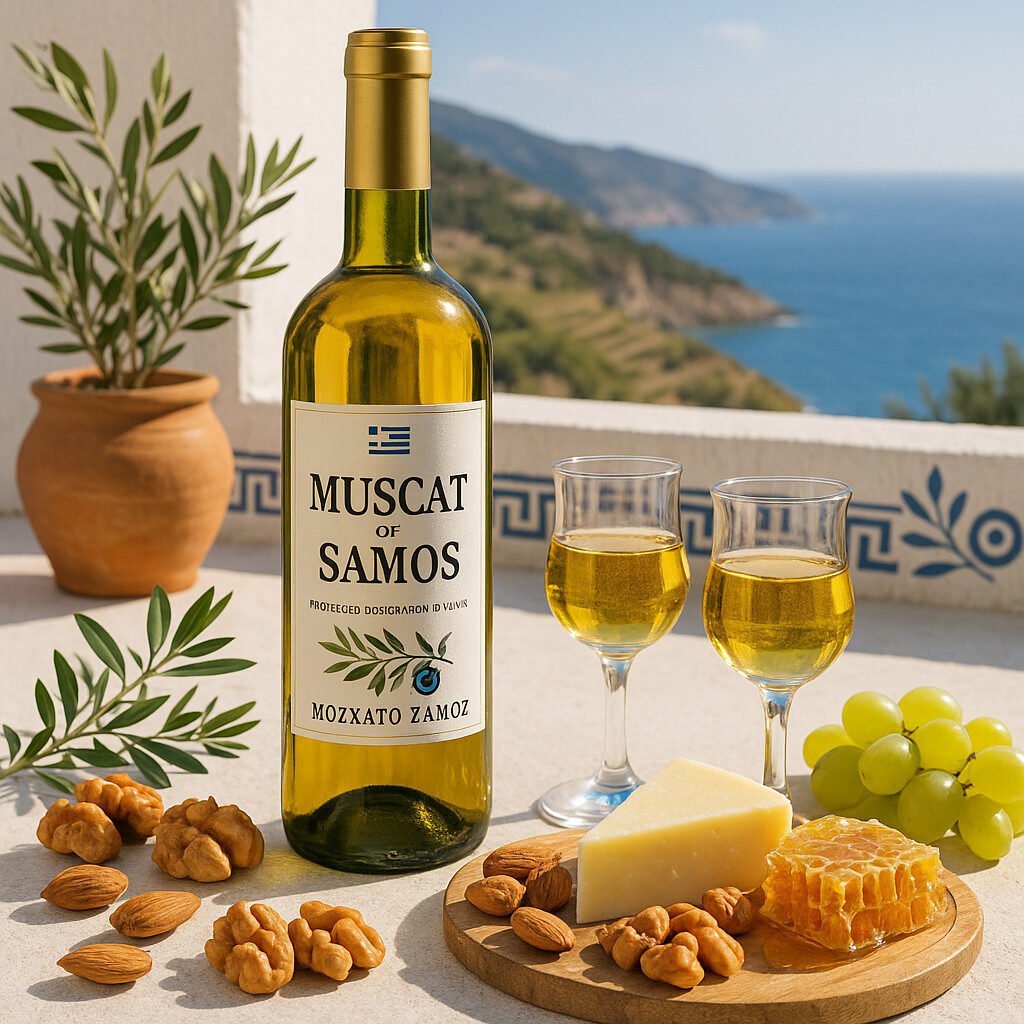
Muscat of Samos is a sweet white wine produced exclusively on the Greek island of Samos. It is crafted predominantly from the Muscat Blanc à Petits Grains grape variety.
- Colour: Pale gold to deep amber.
- Wine style: Still, often fortified.
- Main grape varieties: Muscat Blanc à Petits Grains.
- Sweetness level: Sweet to very sweet.
- Acidity: High.
- Tannin structure: Low to negligible.
- Alcohol range: 15% to 20% vol.
- Body: Medium to full-bodied.
- Typical serving temperature: 8°C to 12°C.
- Protected status: PDO (Protected Designation of Origin) in the European Union.
Muscat of Samos achieves its characteristic sweetness through partial fermentation or fortification methods. The wine’s high natural acidity provides a refreshing counterpoint to its rich sugar content. This balance prevents cloying sensations and enhances drinkability.
Where and How Muscat of Samos from Greece Is Made
Muscat of Samos is produced exclusively on the island of Samos in the northeastern Aegean Sea. The vineyards thrive on steep, terraced slopes at altitudes up to 900 meters above sea level. The Mediterranean climate features hot, dry summers and mild winters, ideal for grape ripening. Soils are predominantly schist and limestone, which impart mineral nuances to the wine. The production philosophy emphasizes preserving the pure expression of the Muscat grape.
Vineyards are often bush-trained to protect grapes from excessive sun exposure. Harvest typically occurs in late August to early September to ensure optimal sugar accumulation. Artisanal producers focus on low yields and hand-harvesting for quality control.
- Vineyard work involves meticulous canopy management and organic practices where possible. Growers prune vines to control yields and ensure good air circulation.
- Grape selection is done manually in the vineyard and again at the winery. Only healthy, fully ripe clusters are chosen for production.
- Harvest takes place early in the morning to preserve acidity and aromas. Pickers hand-select grapes to avoid bruising.
- Destemming and crushing are gentle processes to minimize skin contact if making lighter styles. Some producers use whole-cluster pressing for premium cuvées.
- Maceration is brief or omitted for fresher styles, lasting a few hours. For richer versions, skin contact may extend up to 24 hours.
- Fermentation occurs in stainless steel tanks or old oak barrels at controlled temperatures of 16°C to 18°C. It may be stopped early by fortification with neutral grape spirit.
- Malolactic fermentation is typically prevented to retain acidity. Winemakers use sulfur dioxide additions to inhibit bacterial activity.
- Maturation happens in a variety of vessels including stainless steel, concrete tanks, or large old oak casks. Aging periods range from several months to many years for late-harvest versions.
- Clarification is achieved through natural settling or light filtration. Fining agents like bentonite may be used for protein stability.
- Bottling occurs under inert gas to protect against oxidation. Wines are often bottled young to preserve freshness, but some are aged in bottle before release.
Traditional methods involve sun-drying grapes for passito-style wines, concentrating sugars and flavors. Modern practices may include temperature-controlled fermentation for cleaner fruit profiles. Mass-market versions might use cultivated yeasts and faster production cycles. Artisanal producers often rely on indigenous yeasts and extended lees contact for complexity.
Flavor Profile: What Makes Muscat of Samos from Greece Special?
Muscat of Samos displays a brilliant pale gold to amber hue with noticeable viscosity. Its aroma bursts with intense floral notes of orange blossom and rose petals. Stone fruit scents like apricot, peach, and nectarine dominate the bouquet. Hints of citrus zest, honey, and spice add layers of complexity. The palate is rich and unctuous with a pronounced sweetness balanced by crisp acidity.
Flavors of ripe pear, lychee, and candied orange peel are common in younger bottlings. Aged examples develop nuances of dried fig, walnut, and toffee. The wine’s low tannin level contributes to a smooth, silky mouthfeel. Its full body and long, honeyed finish make it exceptionally persistent. Oak influence is minimal, allowing the grape’s intrinsic character to shine through.
Quality Labels and Certifications for Wine from Greece
Muscat of Samos holds a Protected Designation of Origin (PDO) status under European Union law, as far as current information suggests. This PDO, known as “Samos,” strictly regulates production zones, grape varieties, and winemaking techniques. It ensures that only wines from specific vineyards on Samos island using Muscat Blanc à Petits Grains can bear the name. The appellation covers both naturally sweet and fortified styles, with rules on minimum alcohol and residual sugar levels.
Some producers also adhere to organic certification standards, as far as can be verified at present. These include restrictions on synthetic pesticides and fertilizers in the vineyard. Sustainable viticulture practices are increasingly promoted within the region. The PDO system guarantees authenticity and quality for consumers seeking genuine Muscat of Samos.
Cheese Pairings
Muscat of Samos pairs beautifully with blue cheeses like Roquefort or Gorgonzola. The wine’s sweetness contrasts with the saltiness and pungency of these cheeses. Its high acidity cuts through the rich fat content, cleansing the palate. Creamy, bloomy-rind cheeses such as Brie or Camembert also work well. The wine’s fruit notes complement the buttery texture and mild flavors of these cheeses.
Local Greek pairings include aged Graviera and salty Feta cheese. Muscat of Samos balances the salt and acidity in Feta when served in salads or pastries. For international options, try with Stilton or aged Cheddar. The wine’s body stands up to robust cheese flavors without overwhelming them. In cooked dishes, it enhances cheese-based sauces for pasta or gratins.
Suitable Fruit and Vegetables
Fresh fruits like peaches, apricots, and melons highlight the wine’s stone fruit character. Their natural sweetness mirrors the wine’s profile while adding juiciness. Citrus fruits such as oranges and lemons in salads provide a refreshing acidity that aligns with the wine. Dried fruits like figs, dates, and raisins intensify the honeyed notes in Muscat of Samos. They work well in compotes or as part of a cheese board.
Vegetables with subtle sweetness, such as roasted carrots or caramelized onions, pair harmoniously. Their caramelized sugars echo the wine’s richness without clashing. Bitter greens like arugula in salads can be balanced by the wine’s sweetness. Grilled vegetables like peppers and zucchini offer smoky flavors that contrast nicely. Incorporate these into Mediterranean dishes for a cohesive pairing experience.
Suitable Meat and Fish Dishes
For cold servings, Muscat of Samos complements delicate fish carpaccio or smoked salmon. The wine’s acidity cuts through the oiliness and enhances the fish’s freshness. Charcuterie plates with prosciutto or salami benefit from the wine’s sweetness balancing the salt. Foie gras is a classic pairing, where the wine’s richness matches the luxurious texture. These combinations highlight the wine’s versatility as an aperitif or starter accompaniment.
Hot dishes like roasted duck or glazed ham work excellently with Muscat of Samos. The wine’s sweetness caramelizes with the meat’s juices, creating depth. Grilled fish such as sea bass or monkfish pair well, especially with citrus-based sauces. Pasta dishes with cream or mushroom sauces are elevated by the wine’s acidity and body. Stews and casseroles with root vegetables gain complexity from the wine’s fruit notes.
Questions and Answers
How should I store Muscat of Samos?
Store Muscat of Samos in a cool, dark place with a consistent temperature of 12°C to 15°C. Keep the bottle upright to minimize cork contact if it has a cork closure. Avoid exposure to light and vibrations to preserve its aromatic integrity.
What is the ideal serving temperature for Muscat of Samos?
Serve Muscat of Samos chilled between 8°C and 12°C for optimal enjoyment. Lighter styles can be served cooler, while richer versions benefit from slightly warmer temperatures. Chilling enhances the wine’s freshness and balances its sweetness.
Should I decant Muscat of Samos?
Decanting Muscat of Samos is generally not necessary for young bottles. Older vintages may benefit from aeration to open up aromas. Pour it gently to avoid disturbing any sediment in aged examples.
How long can I keep an opened bottle of Muscat of Samos?
An opened bottle of Muscat of Samos can last up to two weeks if recorked and refrigerated. Its high sugar and alcohol content act as preservatives. Use a wine preserver to extend its life further.
What is the aging potential of Muscat of Samos?
Muscat of Samos can age gracefully for 10 to 20 years or more for high-quality examples. Fortified styles develop nutty and dried fruit characteristics over time. Store it properly to maximize its evolution.
Can I cook with Muscat of Samos?
Yes, Muscat of Samos is excellent for deglazing pans or making sauces for desserts. Its sweetness and aroma enhance fruit-based dishes and reductions. Use it in recipes where a floral, sweet wine is desired.
Where is the best place to buy Muscat of Samos?
Buy Muscat of Samos from specialized wine shops or online retailers with Greek wine selections. Look for reputable importers to ensure authenticity. Wine auctions may offer rare aged vintages.
How does Muscat of Samos pair with spicy food?
Muscat of Samos can pair with mildly spicy Asian or Indian dishes. Its sweetness cools the heat, while acidity refreshes the palate. Avoid very spicy foods that may overwhelm the wine’s delicate aromas.
Is Muscat of Samos suitable for vegans?
Many producers of Muscat of Samos use vegan-friendly fining agents, but check the label. Some may use animal-derived products, so consult the winery for confirmation. Organic versions are more likely to be vegan.
What glassware is best for serving Muscat of Samos?
Serve Muscat of Samos in a standard white wine glass or a smaller dessert wine glass. This concentrates the aromas and allows the sweetness to be appreciated. Avoid large bowls that can dissipate the delicate scents.
Similar Wines and Alternatives
If you enjoy Muscat of Samos, consider other Greek sweet wines like Mavrodaphne of Patras or Vinsanto from Santorini. Mavrodaphne offers darker fruit notes and a fuller body due to its red grape base. Vinsanto shares a similar sun-dried grape process but often has higher acidity and a leaner profile. Both provide the same level of sweetness and complexity as Muscat of Samos.
International alternatives include French Muscat de Beaumes-de-Venise or Italian Moscato d’Asti. Muscat de Beaumes-de-Venise is a fortified wine with comparable floral aromas and sweetness. Moscato d’Asti is lighter, fizzier, and lower in alcohol, making it a fresher option. Australian Liqueur Muscat from Rutherglen offers richer, fortified styles with intense raisin and spice flavors. These wines are widely available and often more affordable than premium Muscat of Samos.