
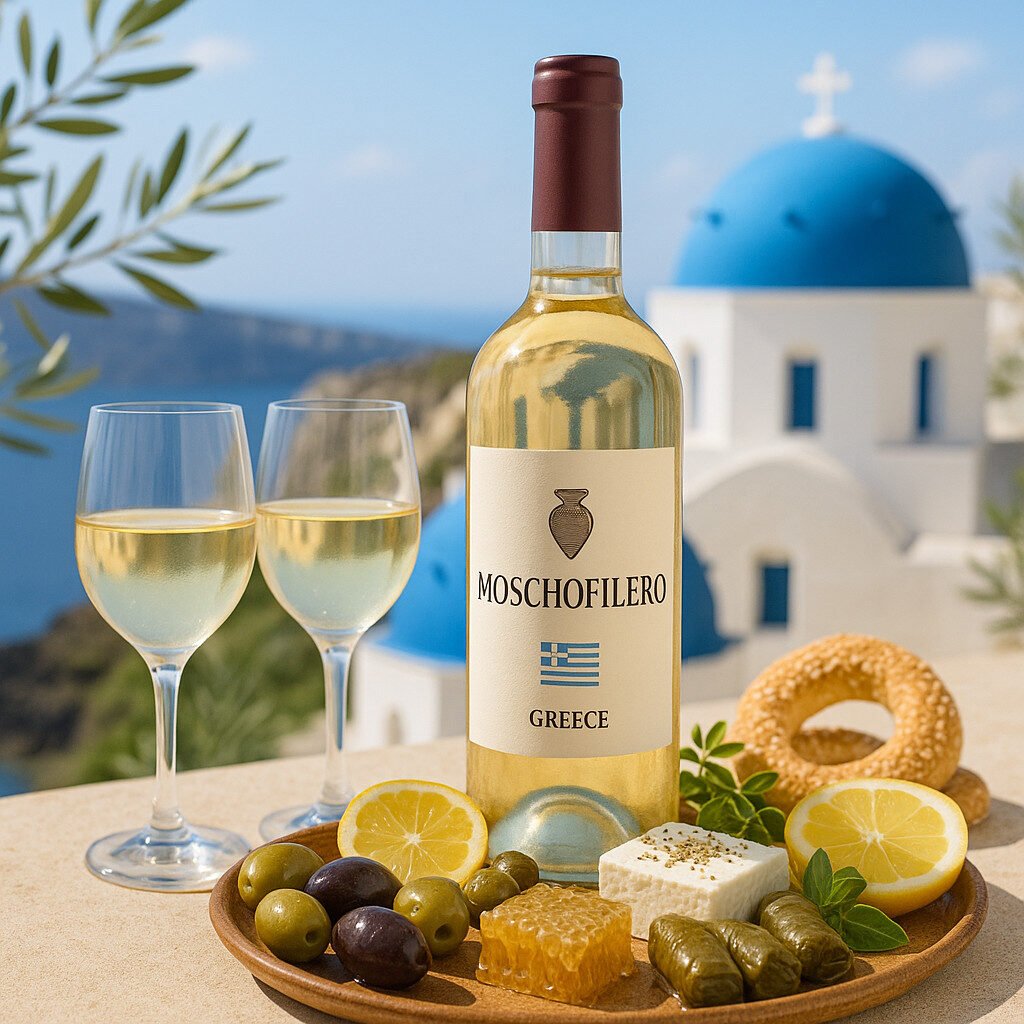
Moschofilero is a vibrant Greek white wine celebrated for its aromatic intensity and refreshing character. This wine captivates sommeliers and enthusiasts with its unique floral notes and crisp finish from the Peloponnese region.
In this article
What Is Moschofilero?
Moschofilero is a white wine grape variety native to Greece, primarily grown in the Mantinia region. It produces aromatic wines known for their distinctive floral and spicy profiles.
- Colour: Pale yellow with occasional pinkish tones.
- Wine style: Still, white wine.
- Main grape varieties: Moschofilero.
- Sweetness level: Typically dry.
- Acidity: High.
- Tannin structure: Low.
- Alcohol range: 11% to 13% ABV.
- Body: Light to medium.
- Typical serving temperature: 8°C to 10°C.
- Protected status: PDO Mantinia.
Moschofilero thrives in high-altitude vineyards above 600 meters in elevation. The cool climate preserves its natural acidity and aromatic compounds. Many winemakers use stainless steel fermentation to highlight the grape’s fresh fruit character.
Test Your Knowledge:
Where and How Moschofilero Is Made
Moschofilero is predominantly cultivated in the Mantinia appellation of Greece’s Peloponnese peninsula. This region features a continental climate with cold winters and warm summers. Sandy and clay soils dominate the vineyards, aiding water retention and vine health.
Vineyards sit at elevations between 600 and 900 meters, ensuring cool nights that maintain grape acidity. Producers blend traditional techniques with modern technology to achieve quality. The PDO Mantinia regulations specify strict geographic and production standards for authenticity.
- Vineyard work involves winter pruning and spring canopy management for optimal sun exposure and air flow.
- Grape selection includes hand-harvesting in late September to capture peak ripeness and aroma development.
- Harvest occurs early in the morning to keep grapes cool and preserve delicate flavors.
- Destemming and crushing are done gently to avoid extracting harsh tannins from the skins.
- Maceration is brief or skipped to maintain a pale color and fresh profile in the juice.
- Fermentation takes place at controlled temperatures of 14°C to 18°C, often in stainless steel tanks.
- Malolactic fermentation is typically prevented to retain the wine’s natural high acidity.
- Maturation lasts three to six months in neutral vessels like tanks or used barrels.
- Clarification uses light filtration or fining to achieve clarity without stripping flavors.
- Bottling happens within a year of harvest to preserve the wine’s youthful vibrancy and aromatics.
Traditional Moschofilero production focuses on minimal intervention and early bottling for freshness. Modern methods may include temperature-controlled fermentation and occasional oak aging for complexity. Artisanal producers often adopt organic practices, while larger wineries prioritize consistency through technology.
Flavor Profile: What Makes Moschofilero Special?
Moschofilero presents a pale yellow hue with subtle pink reflections and moderate viscosity. Its aroma bursts with floral notes of rose and orange blossom, complemented by citrus and white pepper. The palate offers bright acidity that balances flavors of lemon, peach, and a hint of spice.
This wine’s profile is shaped by the high altitude and cool climate of Mantinia. Minimal oak use allows the grape’s natural perfumes to dominate. The finish is crisp and lingering, making Moschofilero ideal as an aperitif or with light meals.
Quality Labels and Certifications
As far as current information suggests, Moschofilero from Mantinia holds a Protected Designation of Origin (PDO) under EU law. This PDO ensures production within defined geographic boundaries using specified methods. It guarantees authenticity and quality for consumers seeking genuine Greek wines.
Some producers pursue organic certifications, which limit synthetic pesticides and fertilizers. Sustainability labels are emerging in the region to promote eco-friendly practices. These certifications help differentiate artisanal Moschofilero wines in global markets.
Cheese Pairings
Moschofilero pairs excellently with fresh cheeses like feta and goat cheese due to its high acidity cutting through fat. The wine’s floral notes enhance the saltiness of Greek halloumi, creating a harmonious balance. For international options, try it with brie or camembert to complement creamy textures with its crisp finish.
In cooked dishes, Moschofilero works well with baked cheeses in pastries or gratins. The acidity balances rich, melted cheeses without overwhelming them. Avoid strongly aged or blue cheeses, as their intense flavors can clash with the wine’s delicate aromatics.
Suitable Fruit and Vegetables
Fresh fruits like citrus segments and stone fruits such as peaches align with Moschofilero’s vibrant profile. Salads with arugula and cherry tomatoes benefit from the wine’s acidity, which cleanses the palate. Grilled vegetables like zucchini and eggplant gain complexity when paired with this aromatic white.
Dried fruits such as apricots or figs can be used in tagines or stuffings to echo the wine’s subtle sweetness. Roasted root vegetables like carrots and parsnips develop caramelized notes that harmonize with Moschofilero’s spice. Always consider the dish’s acidity and texture to ensure a complementary match.
Suitable Meat and Fish dishes
For cold servings, Moschofilero complements seafood carpaccio and light charcuterie like prosciutto. Its acidity cuts through the richness of smoked salmon, enhancing the experience. Grilled white fish such as sea bass or cod pairs beautifully, allowing the wine’s flavors to shine.
Hot dishes like chicken souvlaki or pork tenderloin with herbs work well with Moschofilero’s medium body. Stews with rabbit or lamb in tomato-based sauces benefit from the wine’s balancing acidity. Avoid heavy, spicy meats that might overwhelm its delicate character.
Questions and Answers about Moschofilero
How should I store Moschofilero?
Store Moschofilero in a cool, dark place at a constant temperature of 12°C to 15°C. Keep bottles horizontal if corked to maintain seal integrity. Moschofilero is best consumed within two years to enjoy its fresh aromas.
What is the ideal serving temperature for Moschofilero?
Serve Moschofilero chilled between 8°C and 10°C. This temperature highlights its crisp acidity and floral notes. Avoid over-chilling Moschofilero, as it can mute the delicate flavors.
Should I decant Moschofilero?
Decanting Moschofilero is generally unnecessary due to its youthful and fresh nature. If the wine seems closed, aerate it for 10 minutes to enhance aromas. Moschofilero benefits more from proper chilling than decanting.
How can I chill Moschofilero quickly?
To chill Moschofilero rapidly, place the bottle in an ice bucket with water and salt for 15-20 minutes. Avoid freezing, as it can damage the wine’s structure. Moschofilero should be served cool but not ice-cold.
What foods pair best with Moschofilero?
Moschofilero pairs excellently with Greek meze, seafood, and light poultry dishes. Its acidity complements oily fish and fresh salads. Avoid heavy, spicy foods that can overpower Moschofilero.
Where can I buy Moschofilero?
You can buy Moschofilero from specialty wine shops, online retailers, or directly from Greek wineries. Look for labels indicating PDO Mantinia for authenticity. Moschofilero is increasingly available in international markets.
What is the shelf life after opening Moschofilero?
After opening, Moschofilero can last 2-3 days in the refrigerator with a cork or stopper. Use a vacuum pump to remove air and preserve freshness. Moschofilero is best consumed soon after opening.
Can Moschofilero age well?
Moschofilero is typically meant for early consumption within 1-3 years of vintage. Some premium versions can age for up to 5 years, developing honeyed notes. However, most Moschofilero wines retain their vibrancy when drunk young.
How should I handle leftovers of Moschofilero?
Store leftover Moschofilero in a sealed bottle in the fridge. Use it within a couple of days for cooking or drinking. Moschofilero can be used in sauces or marinades to add flavor.
What are common mistakes when serving Moschofilero?
Common mistakes include serving Moschofilero too warm or with overly powerful foods. Always chill it properly and pair with light dishes. Avoid using large glasses that can dissipate its delicate aromas in Moschofilero.
Similar Wines and Alternatives
If you enjoy Moschofilero, consider Assyrtiko from Santorini, which shares high acidity and mineral notes but has more citrus intensity. Gewürztraminer from Alsace offers similar floral aromas but with higher alcohol and sweetness. Riesling from Germany provides comparable acidity and fruitiness, often at a lower price point.
Within Greece, Roditis and Malagousia are alternatives with lighter bodies and different aromatic profiles. Internationally, Pinot Grigio can be a substitute for its crispness, though it lacks the spice of Moschofilero. These wines vary in availability, with Moschofilero being more niche but gaining popularity in shops.