
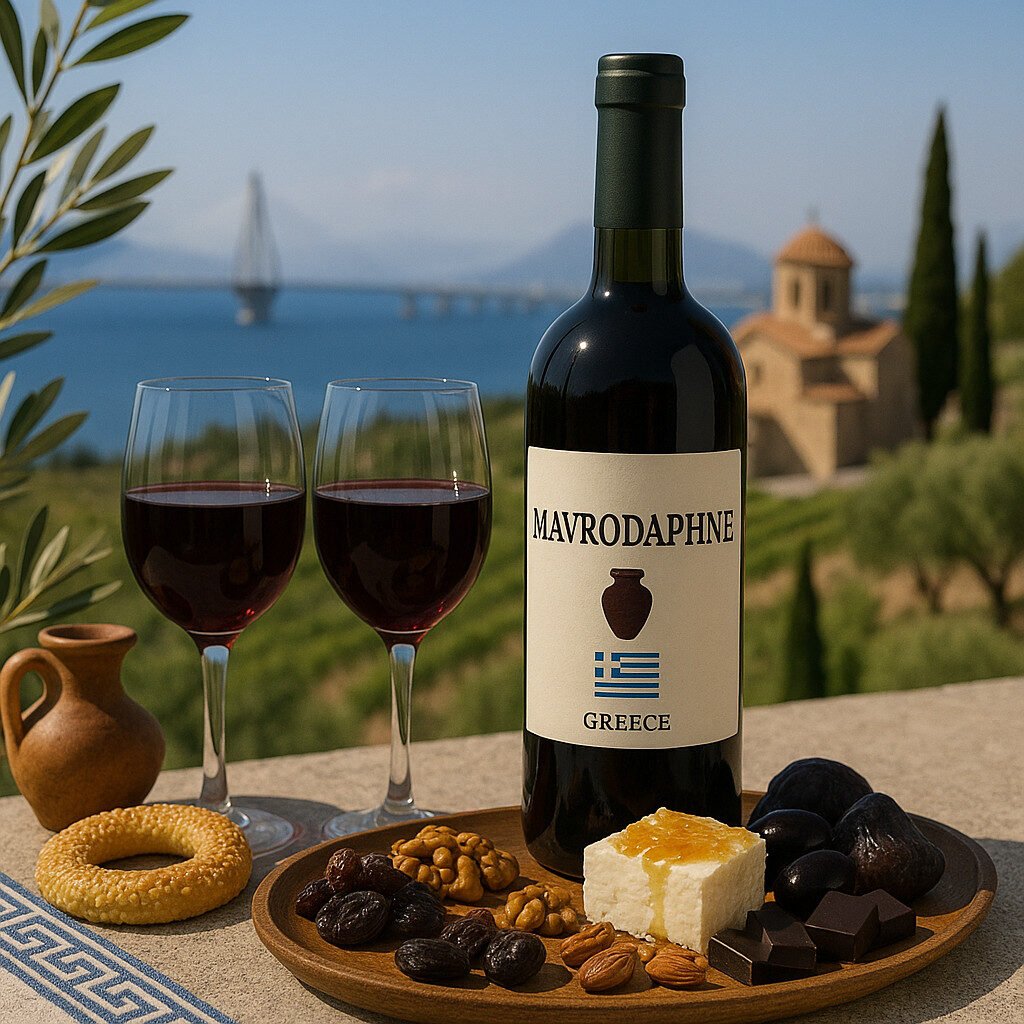
Mavrodaphne is a legendary Greek fortified wine known for its deep red color and rich, sweet profile. This wine combines intense fruit flavors with a velvety texture, making it a favorite for dessert courses and cheese pairings.
In this article
What Is Mavrodaphne?
Mavrodaphne is a fortified red wine originating from Greece, specifically the Peloponnese region. It is celebrated for its sweet character and robust structure, often compared to Port wines.
- Colour: Deep ruby red to nearly black.
- Wine style: Fortified and sweet.
- Main grape varieties: Primarily the Mavrodaphne grape.
- Sweetness level: Sweet, with residual sugar.
- Acidity: Moderate to high.
- Tannin structure: Medium to high.
- Alcohol range: 15% to 20% ABV.
- Body: Full-bodied.
- Typical serving temperature: 12°C to 14°C.
- Protected status: PDO (Protected Designation of Origin) in Patras and Cephalonia.
Mavrodaphne undergoes extended aging in oak barrels, which enhances its complexity and smoothness. The wine often exhibits notes of dried fruits, chocolate, and spices due to this maturation process. Its fortified nature comes from the addition of grape spirit during fermentation, halting it to retain sweetness.
Test Your Knowledge:
Where and How Mavrodaphne Is Made
Mavrodaphne is primarily produced in the Peloponnese and Ionian Islands of Greece, with key appellations in Patras and Cephalonia. The Mediterranean climate with hot, dry summers and mild winters promotes optimal grape ripening. Soils in these regions range from limestone to clay, contributing to the wine’s minerality and depth.
Vineyards are often planted on slopes to maximize sun exposure and drainage. Traditional methods emphasize hand-harvesting and natural fermentation, while modern approaches may use temperature-controlled tanks. The production philosophy balances heritage techniques with consistency for quality.
- Vineyard work includes pruning in winter and canopy management in spring to ensure air circulation and sun exposure.
- Grape selection occurs in late summer, focusing on fully ripe Mavrodaphne clusters with high sugar content.
- Harvest typically happens in September, with hand-picking to avoid bruising the grapes.
- Destemming and crushing follow immediately, though some producers may include whole clusters for complexity.
- Maceration lasts 5 to 10 days at 25°C to 30°C to extract color and tannins from the skins.
- Fermentation starts with native yeasts in stainless steel or oak vats, lasting 7 to 14 days.
- Fortification with 96% ABV grape spirit occurs mid-fermentation to stop yeast activity and preserve sweetness.
- Malolactic fermentation is rarely used, as the wine’s high alcohol and sweetness stabilize it naturally.
- Maturation takes place in large oak casks for 3 to 20 years, depending on the style desired.
- Clarification involves fining with egg whites or bentonite before bottling without filtration for some artisanal versions.
Traditional Mavrodaphne production relies on oxidative aging in old oak, creating nutty and caramelized notes. Modern methods may use inert tanks to preserve fruit freshness, appealing to broader markets. Artisanal producers often blend vintages for consistency, while mass-market versions focus on shorter aging for quicker turnover.
Flavor Profile: What Makes Mavrodaphne Special?
Mavrodaphne displays a deep, opaque red color with violet hints and noticeable viscosity on the glass. Its aroma profile bursts with dried figs, raisins, and black cherries, complemented by floral notes of violets and herbal touches of thyme. Oak aging introduces layers of dark chocolate, vanilla, and toasted nuts, while its high alcohol contributes a warm, lingering finish.
The palate is rich and sweet, balanced by vibrant acidity that prevents cloyingness. Tannins are firm yet velvety, providing structure without astringency, and the full body coats the mouth smoothly. Factors like grape ripeness enhance fruit concentration, while extended barrel aging deepens the spicy and earthy undertones, making each sip complex and memorable.
Mavrodaphne Quality Labels and Certifications
Mavrodaphne holds PDO status in specific Greek regions, such as Patras and Cephalonia, as far as current information suggests. This designation ensures the wine is made from Mavrodaphne grapes grown in defined areas with traditional methods. Producers must adhere to strict regulations on grape yields, alcohol content, and aging periods to maintain authenticity and quality.
Some wineries also pursue organic certifications, avoiding synthetic pesticides and additives, as far as can be verified at present. Sustainability labels are emerging, promoting eco-friendly practices in vineyards and wineries. These certifications help consumers identify wines that meet high standards of origin and production integrity.
Mavrodaphne Cheese Pairings
Mavrodaphne pairs excellently with aged hard cheeses like Kefalotyri or Graviera, which have high salt and fat content. The wine’s sweetness contrasts with the saltiness, while its acidity cuts through the richness, cleansing the palate. Blue cheeses such as Roquefort or Gorgonzola enhance the wine’s dried fruit notes, creating a harmonious balance of flavors.
Softer cheeses like Brie or Camembert work well when served at room temperature, as their creamy texture melds with Mavrodaphne’s velvety body. In cooked dishes, incorporating the wine into cheese sauces for pasta or gratins amplifies the umami elements. International pairings include Stilton from England or Manchego from Spain, where the wine’s tannins and sweetness complement the cheese’s intensity.
Suitable Fruit and Vegetables
Fresh figs and dates are ideal with Mavrodaphne, as their natural sweetness mirrors the wine’s profile and adds a juicy texture. Roasted vegetables like eggplants or bell peppers develop caramelized notes that align with the wine’s spicy undertones. In salads, bitter greens such as radicchio or arugula provide a contrast that highlights the wine’s acidity and fruitiness.
Dried fruits such as apricots or prunes can be incorporated into stuffings or compotes to accompany the wine. Cooked dishes with tomatoes or onions benefit from Mavrodaphne’s sweetness, which balances their acidity. For desserts, poached pears or berry tarts pair seamlessly, as the wine’s richness enhances the fruit’s vibrant colors and flavors.
Suitable Meat and Fish Dishes
Mavrodaphne complements rich meat dishes like lamb stew or beef braised with herbs, where its sweetness offsets the savory notes. Charcuterie plates with salami or prosciutto allow the wine’s acidity to cut through the fat, refreshing the palate. Grilled meats such as pork chops or sausages gain depth from the wine’s smoky and spicy characteristics.
For fish, oily varieties like salmon or mackerel stand up to Mavrodaphne’s body when prepared with robust sauces. In pasta dishes, seafood risottos or squid ink pasta pair well, as the wine’s tannins and sweetness balance the briny flavors. Cold servings like beef carpaccio or smoked fish platters benefit from the wine’s vibrant acidity and fruit-forward profile.
Questions and Answers about Mavrodaphne
How should I store Mavrodaphne?
Store Mavrodaphne in a cool, dark place with a consistent temperature of 12°C to 16°C. Keep the bottles upright to prevent cork damage from the high alcohol content. Avoid exposure to light and vibrations to maintain the wine’s integrity over time.
Mavrodaphne can age well for decades if stored properly, developing more complex flavors. Use a wine cellar or a dedicated fridge for long-term storage. Check the cork periodically for signs of deterioration to ensure optimal conditions.
What is the best way to serve Mavrodaphne?
Serve Mavrodaphne slightly chilled at 12°C to 14°C to balance its sweetness and alcohol. Use a large-bowled glass to aerate the wine and release its aromas. Pour small portions to allow the wine to warm gradually in the glass, enhancing its complexity.
Decanting Mavrodaphne for 30 minutes before serving can soften its tannins and open up the flavors. Avoid over-chilling, as it can mute the wine’s aromatic profile. Always handle the bottle gently to prevent disturbing any sediment.
Does Mavrodaphne need decanting?
Decanting Mavrodaphne is recommended for older vintages to separate sediment and aerate the wine. Pour it slowly into a decanter, leaving any solids behind. This process enhances the wine’s bouquet and smooths out the texture for a better drinking experience.
Younger Mavrodaphne wines also benefit from decanting to accelerate the opening of flavors. Allow it to breathe for at least 20 minutes before serving. Use a clean decanter to avoid any off-flavors affecting the wine.
Should Mavrodaphne be chilled or served at room temperature?
Mavrodaphne is best served lightly chilled between 12°C and 14°C, not at room temperature. Chilling helps balance the high alcohol and sweetness, making it more refreshing. If the wine is too warm, it can taste overly alcoholic and heavy.
To chill Mavrodaphne, place it in the refrigerator for about 30 minutes before serving. Avoid ice buckets, as rapid temperature changes can shock the wine. Let it sit for a few minutes after chilling to reach the ideal serving temperature.
What foods pair best with Mavrodaphne?
Mavrodaphne pairs wonderfully with desserts like chocolate cake or fruit tarts due to its sweetness. Rich cheeses and charcuterie boards highlight its complexity and acidity. Hearty meat dishes such as game or stews complement the wine’s robust structure and tannins.
For vegetarian options, try mushroom-based dishes or roasted vegetables with herbs. The wine’s flavor profile enhances umami and earthy notes. Always consider the intensity of the food to match Mavrodaphne’s full body and sweetness.
Where can I buy Mavrodaphne?
Mavrodaphne is available at specialty wine shops, online retailers, and importers focusing on Greek wines. Look for reputable producers from PDO regions like Patras for authenticity. Many wineries offer direct sales through their websites for international shipping.
Check local wine stores with a diverse selection or attend Greek food and wine festivals. Online platforms often provide customer reviews and ratings to guide your purchase. Ensure the seller stores the wine properly to guarantee quality upon delivery.
How long does Mavrodaphne last after opening?
Mavrodaphne can last up to four weeks after opening if stored in a cool, dark place with a cork or stopper. Its high alcohol and sugar content act as preservatives, slowing oxidation. Recork the bottle tightly and consider using a vacuum pump to extend its life.
For best quality, consume within two weeks and avoid frequent temperature changes. The flavors may evolve over time, becoming more muted, but it remains drinkable. Use leftover Mavrodaphne in cooking or sauces to minimize waste.
What is the aging potential of Mavrodaphne?
Mavrodaphne has excellent aging potential, often improving for 20 years or more in the bottle. Older vintages develop tertiary notes of leather, tobacco, and molasses. Proper storage conditions are crucial to realize this potential without deterioration.
Young Mavrodaphne wines are fruit-forward and can be enjoyed immediately upon release. Aging softens the tannins and integrates the flavors for a smoother experience. Consult producer notes for specific vintage recommendations on aging timelines.
How do I handle leftovers of Mavrodaphne?
For leftover Mavrodaphne, transfer it to a smaller bottle to reduce air exposure and recork tightly. Store it in the refrigerator to slow oxidation and preserve freshness. Use it within a month for drinking or in culinary applications like deglazing pans.
Leftover Mavrodaphne can be used in sauces, marinades, or desserts to add depth and sweetness. Avoid freezing, as it can alter the texture and flavor profile. If the wine shows signs of vinegar-like notes, it is best discarded.
Can Mavrodaphne be used in cooking?
Mavrodaphne is excellent in cooking, especially for reducing into syrups or glazes for meats. Its sweetness and complexity enhance dishes like stews, sauces, and desserts. Use it to deglaze pans or marinate fruits for a rich, flavorful result.
Incorporate Mavrodaphne into recipes that benefit from a fortified wine, such as braised dishes or chocolate-based desserts. The alcohol cooks off, leaving behind concentrated flavors. Always taste as you cook to balance the sweetness with other ingredients.
Similar Wines and Alternatives
If you enjoy Mavrodaphne, consider Portuguese Port wines like Tawny or Ruby Port, which share a sweet, fortified style and similar alcohol levels around 19% ABV. These alternatives offer dried fruit and spice notes but may have higher tannins and a different acidity profile. Greek wines such as Samos Muscat provide a lighter-bodied option with floral aromas, while Italian Recioto della Valpolicella mirrors the sweetness and richness with cherry and chocolate flavors.
For a more affordable choice, look for Australian Liqueur Muscat or Spanish Pedro Ximénez sherry, both offering comparable sweetness and complexity. These wines are widely available in international markets and often cost less than premium Mavrodaphne. Differences include serving temperatures and food pairings, so experiment to find the best match for your palate.