
In this article
What Is Juhfark from Hungary?
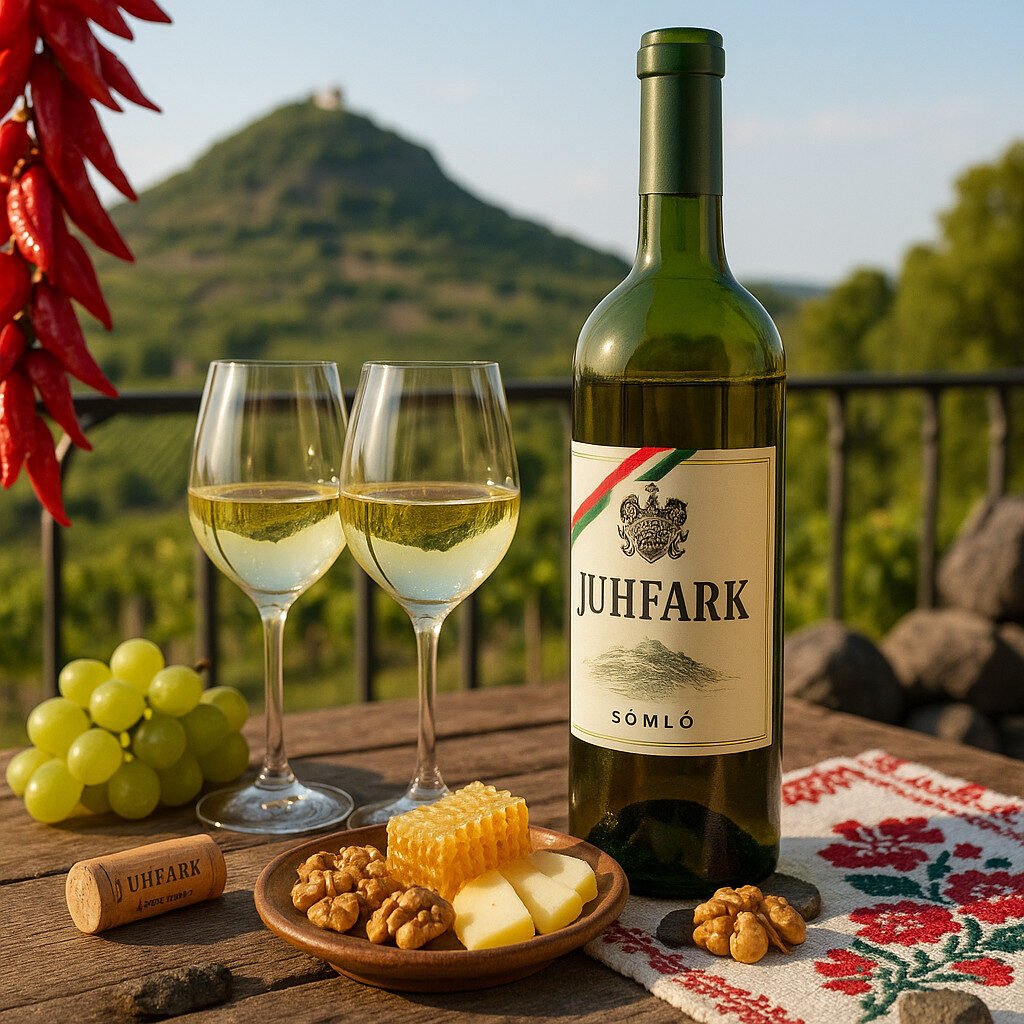
Juhfark is a native Hungarian white grape variety that produces aromatic and structured wines. It is primarily cultivated in the historic Somló appellation, where it expresses intense terroir characteristics.
- Colour: Pale straw to golden yellow
- Wine style: Still wine
- Main grape varieties: Juhfark (often 100%)
- Sweetness level: Dry
- Acidity: High
- Tannin structure: Low
- Alcohol range: 12-13.5% by volume
- Body: Medium to full-bodied
- Typical serving temperature: 10-12°C
- Protected status: Somló PDO (Protected Designation of Origin)
Juhfark wines are celebrated for their aging potential, often developing honeyed and nutty notes over time. The grape’s name means ‘sheep’s tail’ in Hungarian, referring to the shape of its grape clusters. Winemakers value Juhfark for its ability to reflect the volcanic and basalt soils of its growing region.
Where and How Juhfark from Hungary Is Made
Juhfark is almost exclusively grown in the Somló wine region of western Hungary. This small appellation features volcanic hills with basalt and tuff soils, which impart a distinct minerality to the wines. The climate is continental with cool nights, helping to retain acidity in the grapes. Vineyards are often planted on steep slopes to maximize sun exposure and drainage.
- Vineyard work includes winter pruning and spring canopy management to ensure optimal sunlight penetration and air circulation. This reduces disease pressure and promotes even ripening throughout the growing season.
- Grape selection involves hand-harvesting in late September to early October when sugars and acids are balanced. Workers carefully choose clusters to avoid botrytis or underripe fruit, ensuring quality.
- Harvest is typically done by hand to preserve grape integrity and minimize damage. This manual approach allows for selective picking based on ripeness levels in different vineyard plots.
- Destemming and crushing are performed gently to avoid extracting bitter compounds from the skins. Modern presses operate at low pressure to yield clean juice with minimal phenolics.
- Maceration may include cold soaking for 6-12 hours at 8-10°C to enhance aromatic extraction. This step boosts the wine’s floral and citrus notes without increasing tannin levels.
- Fermentation occurs in stainless steel tanks or large oak barrels at controlled temperatures of 16-18°C. The process lasts 2-3 weeks, with native or selected yeasts influencing the final aroma profile.
- Malolactic fermentation is often prevented to maintain the wine’s crisp acidity, though some producers allow partial conversion for added complexity. This decision impacts the buttery notes in the final product.
- Maturation involves aging on lees in tanks or barrels for 6-12 months, with occasional batonnage to enrich texture. Oak aging adds subtle vanilla and spice nuances without overpowering the fruit.
- Clarification uses light fining with bentonite or filtration to achieve brightness and stability. This step ensures the wine is clear and free from sediment before bottling.
- Bottling takes place after 1-2 years of aging, with some premium Juhfark wines aged longer to develop complexity. Bottles are sealed with corks or screw caps based on market preferences.
Traditional producers in Somló favor large, neutral oak barrels for fermentation and aging, which add subtle oxidative notes and roundness. Modern winemakers often use temperature-controlled stainless steel to preserve primary fruit flavors and freshness. Artisanal methods emphasize minimal intervention, while mass-produced versions may involve more technological inputs to achieve consistency.
Flavor Profile: What Makes Juhfark from Hungary Special?
Juhfark displays a pale straw color with green reflections, indicating youth and vibrancy. Its aroma profile features intense citrus notes like lemon and grapefruit, complemented by green apple, white flowers, and flinty minerality. The palate is marked by high acidity, a medium to full body, and a long, crisp finish that echoes the volcanic terroir.
Oak aging introduces subtle vanilla, toast, and spice elements, while extended lees contact enhances texture and richness. As Juhfark matures, it develops complex flavors of honey, almond, and dried fruits, making it suitable for cellaring. The wine’s balance of fruit intensity and mineral drive sets it apart from other Hungarian whites, appealing to those who appreciate structured, age-worthy wines.
Quality Labels and Certifications for Wine from Hungary
Juhfark’s Protected Designation of Origin
As far as current information suggests, Juhfark wines from the Somló region hold a Protected Designation of Origin (PDO) status under Hungarian wine law. This certification ensures that the wine is produced using specific methods within the defined geographical area, preserving its traditional character. The PDO system mandates strict controls on grape growing, yields, and winemaking practices to maintain quality.
Additionally, some Juhfark producers may adhere to organic or sustainable practices, though formal certifications vary. As far as can be verified at present, the Hungarian national quality scheme includes categories like “Minőségi Bor” for quality wine and “Különleges Minőségű Bor” for superior quality. These labels help consumers identify wines that meet rigorous standards, with Somló PDO being a key marker for authentic Juhfark.
Cheese Pairings
Juhfark with Hungarian Cheeses
Juhfark pairs excellently with semi-hard cheeses like Hungarian Trappista or Pálpusztai, as its high acidity cuts through the fat and enhances the creamy texture. The wine’s mineral notes complement the saltiness of aged cheeses, creating a harmonious balance on the palate. For local traditions, serve Juhfark with Liptauer or other fresh sheep’s milk cheeses to highlight its citrus and herbal undertones.
In cooked dishes, Juhfark can accompany baked Camembert or cheese fondues, where its acidity balances the richness and prevents cloying. International pairings include Dutch Gouda or French Comté, as the wine’s body and crisp finish stand up to bold flavors. Blue cheeses like Roquefort or Stilton work well too, with the saltiness amplifying Juhfark’s fruit intensity and complexity.
Suitable Fruit and Vegetables
Juhfark and Fresh Produce
Fresh fruits like green apples, pears, and citrus segments highlight Juhfark’s crisp acidity and zesty flavors in salads or raw preparations. Vegetables such as grilled asparagus, steamed artichokes, or roasted fennel pair well due to the wine’s mineral undertones and herbal notes. The slight bitterness of radicchio or endive can be balanced by Juhfark’s fruitiness, making it ideal for composed vegetable dishes.
Dried fruits like apricots or figs in grain salads or stuffings echo the wine’s potential honeyed notes as it ages. Cooked dishes with roasted root vegetables, such as carrots or parsnips, enhance the earthy aspects of Juhfark and add sweetness contrast. For a refreshing combination, serve the wine with a citrus-based salsa verde or pickled vegetables to accentuate its vibrant acidity and clean finish.
Suitable Meat and Fish Dishes
Juhfark in Traditional Dishes
Juhfark complements light meat dishes like herb-roasted chicken or pork, as its acidity cuts through the richness and highlights the savory flavors. For fish, grilled sea bass, baked trout, or poached salmon are excellent matches, with the wine’s citrus notes enhancing the delicate textures. Charcuterie plates featuring prosciutto, salami, or Hungarian kolbász work well due to the salt and fat contrast with Juhfark’s crispness.
In hot dishes, Juhfark can stand up to veal stews, mushroom-based pasta, or traditional Hungarian chicken paprikash, where its body and minerality shine. The wine’s acidity balances creamy sauces and rich gravies, making it versatile for hearty meals. For modern pairings, try Juhfark with sushi, ceviche, or grilled octopus to emphasize its clean, mineral-driven profile and refreshing finish.
Questions and Answers About Juhfark
How should I store Juhfark wine?
Store Juhfark in a cool, dark place at 12-14°C to preserve its freshness and prevent premature aging. Keep bottles horizontal if corked to maintain cork moisture and seal integrity. Juhfark can age for 5-10 years under proper conditions, developing more complexity.
What is the ideal serving temperature for Juhfark?
Serve Juhfark chilled to 10-12°C to highlight its acidity and fruit flavors. This temperature range allows the wine’s mineral and aromatic notes to shine without being muted. Over-chilling can mask Juhfark’s delicate nuances, so avoid serving it too cold.
Does Juhfark benefit from decanting?
Decanting Juhfark for 15-30 minutes can help open up its aromas, especially for younger vintages. This process allows the wine to breathe and softens any reductive notes. Older Juhfark may not need decanting to avoid oxidizing its delicate flavors.
How should I chill Juhfark quickly?
Place Juhfark in an ice bucket with water and ice for 20-30 minutes to reach the ideal serving temperature. Avoid freezing methods that can shock the wine and alter its taste. For best results, plan ahead and refrigerate Juhfark for a few hours before serving.
When is the best time to drink Juhfark?
Drink young Juhfark within 3-5 years for its vibrant fruit and acidity, or age it for up to a decade for developed honey and nut notes. The wine’s high acidity and structure make it suitable for both early consumption and cellaring. Assess each vintage individually to determine its peak drinking window.
What foods pair best with Juhfark?
Juhfark pairs well with light meats, grilled fish, and creamy cheeses due to its acidity and mineral character. It complements dishes like chicken paprikash, seafood pasta, and fresh salads. Avoid overly spicy or sweet foods that can overwhelm Juhfark’s delicate balance.
Where can I buy Juhfark wine?
Buy Juhfark from specialized wine shops, online retailers, or directly from Hungarian wineries in the Somló region. It may be less available internationally, so check importers who focus on Central European wines. Look for Somló PDO labels to ensure authenticity.
How long does Juhfark last after opening?
Juhfark remains fresh for 2-3 days after opening if recorked and stored in the refrigerator. Use a vacuum pump to remove air and slow oxidation. The wine’s high acidity helps preserve its qualities, but consume it promptly for optimal flavor.
What is the aging potential of Juhfark?
Juhfark has good aging potential, often improving for 5-10 years in the bottle. Volcanic soil influences give it structure and longevity, with flavors evolving from citrus to honey and almond. Store Juhfark properly to maximize its development over time.
How should I handle leftover Juhfark?
Use leftover Juhfark in cooking, such as deglazing pans for sauces or adding to marinades for fish. Alternatively, blend it into vinaigrettes or serve chilled as an aperitif the next day. Avoid wasting Juhfark by incorporating it into recipes that highlight its acidity.
Similar Wines and Alternatives
Juhfark Compared to Other Whites
Juhfark shares similarities with Austrian Grüner Veltliner due to its high acidity, mineral drive, and citrus notes, though Juhfark often has more pronounced floral and smoky elements from volcanic soils. French Chablis offers a comparable crispness and steely character, but Juhfark tends to be fuller-bodied with potential oak influence. In Hungary, Furmint from Tokaj serves as an alternative, with similar acidity but typically richer texture and sometimes residual sweetness.
Internationally, Italian Vermentino or Spanish Albariño provide analogous acidity and citrus profiles, though they may lack Juhfark’s distinctive flinty minerality. Greek Assyrtiko from Santorini also mirrors the volcanic terroir impact but often has higher alcohol and saltier notes. Juhfark is generally mid-priced and less widely available, making local Hungarian discoveries or online sources the best options for enthusiasts seeking its unique profile.