
In this article
What Is Hárslevelű from Hungary?
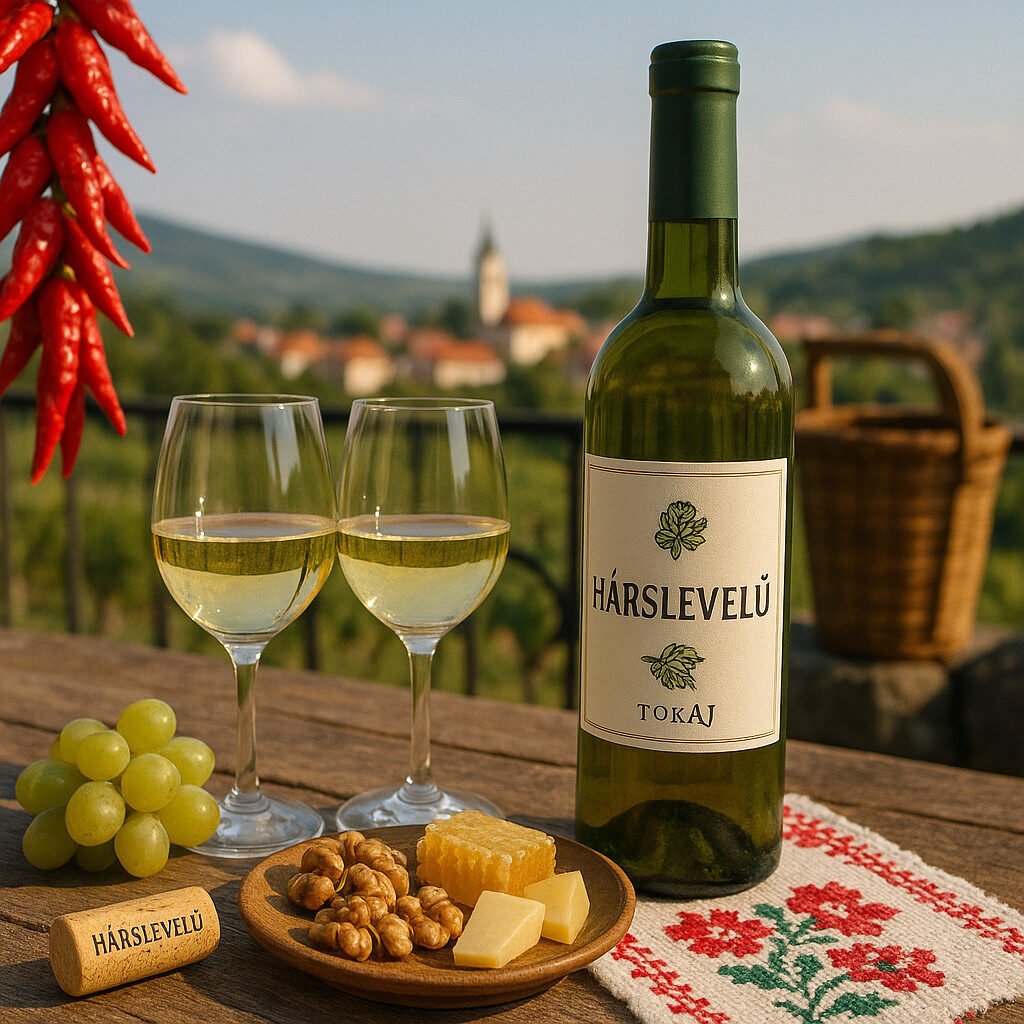
Hárslevelű is a native Hungarian white grape variety celebrated for its floral aroma and high acidity. It is primarily associated with the Tokaj wine region, where it contributes to world-famous sweet wines and increasingly popular dry styles.
- Colour: Pale yellow to golden, often with green hues.
- Wine style: Still, available in dry and sweet variations.
- Main grape varieties: Hárslevelű, often used as a monovarietal or in blends.
- Sweetness level: Ranges from dry (0-4 g/L residual sugar) to sweet (over 45 g/L in Tokaji Aszú).
- Acidity: High, providing freshness and balance.
- Tannin structure: Low, typical for white wines.
- Alcohol range: 11-14% ABV for dry versions, 9-12% ABV for sweet styles.
- Body: Medium to full-bodied, depending on ripeness and style.
- Typical serving temperature: 10-12°C for dry Hárslevelű, 8-10°C for sweet versions.
- Protected status: Tokaj region holds PDO (Protected Designation of Origin) under EU law.
Hárslevelű translates to “linden leaf” in Hungarian, reflecting its characteristic scent of lime blossoms and acacia flowers. The grape thrives in Hungary’s volcanic soils and continental climate, which enhance its mineral undertones and aromatic complexity. Beyond Tokaj, it is cultivated in regions like Eger and Somló, where it produces elegant, dry wines with good aging potential.
Where and How Hárslevelű from Hungary Is Made
Hárslevelű is predominantly grown in the Tokaj wine region, a UNESCO World Heritage site in northeastern Hungary. This area benefits from a continental climate with warm summers, humid autumns, and volcanic soils rich in clay and loess, ideal for developing noble rot (Botrytis cinerea) in sweet wines. Winemakers here often emphasize traditional methods that highlight terroir expression, while modern producers focus on precision and fruit purity in dry styles.
- Vineyard work: Pruning occurs in winter to control yields, and canopy management in spring ensures optimal sun exposure. Harvest timing is critical, with late picks for sweet wines to allow botrytis development.
- Grape selection: Hand-harvesting is common, especially for sweet wines where only botrytized aszú berries are selected. Dry versions may use machine harvesting for efficiency.
- Harvest: Typically from late September to October, with multiple passes for sweet wines to gather shriveled grapes.
- Destemming and crushing: Grapes are gently destemmed and crushed, followed by careful pressing to extract juice without excessive skin contact.
- Maceration: Minimal or no skin contact for white wines to avoid bitterness; some dry Hárslevelű may undergo short maceration for texture.
- Fermentation: Conducted in stainless steel tanks or oak barrels at 14-18°C for 2-4 weeks, using selected yeasts to enhance aromatics.
- Malolactic fermentation: Often prevented to retain high acidity, especially in sweet styles; it may occur in some dry versions for added complexity.
- Maturation: Aging in tanks, barrels, or bottles; sweet Tokaji Hárslevelű ages in small oak casks for several years, while dry versions may see brief oak or stainless steel aging.
- Clarification: Fining with agents like bentonite and filtration to stabilize the wine before bottling.
- Bottling: Done after maturation, with some wines benefiting from additional bottle aging to develop complexity.
Traditional Hárslevelű production in Tokaj focuses on sweet wines made from aszú berries, with extended oak aging that imparts honey and spice notes. Modern approaches for dry Hárslevelű use temperature-controlled fermentation to preserve freshness and emphasize varietal character. Artisanal producers often adopt organic practices, while mass-market versions may prioritize consistency through technological interventions.
Flavor Profile: What Makes Hárslevelű from Hungary Special?
Hárslevelű wines display a pale yellow color with green reflections and moderate viscosity, indicating good body and extract. The aroma is intensely floral, dominated by notes of lime blossom, acacia, and honeysuckle, complemented by citrus zest, peach, and apricot. In sweet versions, botrytis adds layers of honey, ginger, and saffron, creating a complex olfactory experience.
On the palate, Hárslevelű offers a balance of high acidity and residual sweetness in sweet styles, while dry versions showcase crisp, refreshing acidity. Flavors range from green apple and lemon in dry wines to rich peach, apricot, and marmalade in sweet ones, with a medium to full body and long, mineral-driven finish. Factors like grape ripeness, oak treatment, and aging influence this profile, with older sweet Hárslevelű developing nutty and caramel nuances.
Quality Labels and Certifications for Wine from Hungary
As far as current information suggests, Hungarian wines are regulated under EU quality schemes, with Protected Designation of Origin (PDO) labels ensuring geographical authenticity. The Tokaj region holds a PDO status for Hárslevelű wines, specifying strict production methods, permitted grape varieties, and aging requirements. Other relevant PDOs include Eger and Somló, though Tokaj remains the most prestigious for Hárslevelű production.
Additionally, as far as can be verified at present, organic and biodynamic certifications are gaining traction among Hungarian winemakers, involving sustainable vineyard practices and limited additives. These labels, such as the EU organic logo, enhance the credibility of Hárslevelű wines by promoting environmental stewardship and quality assurance.
Cheese Pairings
Hárslevelű pairs wonderfully with cheeses that balance its acidity and aromatic intensity. For dry Hárslevelű, semi-hard cheeses like Hungarian Trappista or Dutch Gouda work well, as the wine’s crispness cuts through the fat and enhances the creamy texture. Sweet Hárslevelű, such as Tokaji, complements bold blue cheeses like Roquefort or Stilton, where the sweetness contrasts the saltiness and mold-derived flavors.
In cooked dishes, Hárslevelű can be served with baked Brie or used in cheese sauces for pasta, where its floral notes elevate the dish. The wine’s high acidity helps cleanse the palate after rich, fatty cheeses, making it a versatile choice for cheese boards and gourmet recipes.
Suitable Fruit and Vegetables
Fresh fruits like peaches, apricots, and citrus segments highlight the stone fruit character of Hárslevelű in salads or desserts. Dried fruits such as figs or dates echo the honeyed notes in sweet Hárslevelű, creating a harmonious pairing. Vegetables with mild bitterness, like endive or radicchio, are balanced by the wine’s acidity when served raw in salads.
Cooked vegetables like roasted bell peppers or grilled asparagus pair well with dry Hárslevelű, as the wine’s minerality complements their earthy sweetness. In main dishes, fruits like apples or pears can be poached and served alongside, enhancing the wine’s aromatic profile without overpowering it.
Suitable Meat and Fish dishes
For cold servings, dry Hárslevelű pairs excellently with chicken or turkey charcuterie, as its acidity refreshes the palate. Sweet Hárslevelű complements foie gras or duck liver pâté, where the sweetness balances the richness. Fish dishes like salmon carpaccio or ceviche are enhanced by the wine’s citrus and floral notes.
Hot dishes such as roasted chicken, pork tenderloin, or grilled sea bass match dry Hárslevelű’s body and acidity. In stews or casseroles, the wine can be used in cooking or served alongside, with sweet versions pairing well with spicy Asian cuisines or game meats like venison.
Questions and Answers
How should I store Hárslevelű wine?
Store Hárslevelű in a cool, dark place at 10-15°C with stable humidity. Keep bottles horizontal if corked to maintain cork moisture. Hárslevelű can age for years, especially sweet versions from Tokaj.
What is the ideal serving temperature for Hárslevelű?
Serve dry Hárslevelű at 10-12°C and sweet Hárslevelű at 8-10°C. Chilling preserves its aromatic freshness and balance. Avoid over-chilling to not mute the complex flavors of Hárslevelű.
Does Hárslevelű need decanting?
Decanting Hárslevelű is optional but can benefit older sweet versions or complex dry styles. It helps aerate the wine and release subtle aromas. Young Hárslevelű may not require decanting.
How long does an opened bottle of Hárslevelű last?
An opened bottle of dry Hárslevelű lasts 3-5 days refrigerated, while sweet Hárslevelű can last up to a week. Use a wine preserver to extend the life of Hárslevelű after opening.
What foods pair best with Hárslevelű?
Hárslevelű pairs well with spicy dishes, poultry, and aromatic cheeses. Sweet Hárslevelű excels with desserts or strong blue cheeses. The versatility of Hárslevelű makes it suitable for diverse menus.
Where can I buy Hárslevelű wine?
Hárslevelű is available in specialty wine shops, online retailers, and some supermarkets in Europe. Look for reputable producers from Tokaj or other Hungarian regions when buying Hárslevelű.
What is the aging potential of Hárslevelű?
Dry Hárslevelű can age for 3-7 years, while sweet Tokaji Hárslevelű may improve for decades. Proper storage conditions are crucial for developing Hárslevelű’s complexity over time.
How do I handle leftovers of Hárslevelű?
For leftover Hárslevelű, recork tightly and refrigerate promptly. Use within a few days for optimal quality. Sweet Hárslevelű often retains its character longer due to higher sugar content.
Should Hárslevelű be chilled or tempered?
Hárslevelű should be served chilled according to its style. If too cold, allow it to warm slightly in the glass. Avoid sudden temperature changes to protect the integrity of Hárslevelű.
What makes Hárslevelű unique among white wines?
Hárslevelű is unique for its intense floral aroma and high acidity, even in sweet versions. Its adaptation to Hungarian terroir and role in Tokaji wines distinguish Hárslevelű from other varieties.
Similar Wines and Alternatives
Hárslevelű shares similarities with Furmint from Hungary, which also offers high acidity and floral notes but tends to be more citrus-focused and mineral-driven. Gewürztraminer from Alsace provides comparable lychee and rose aromas, though it typically has lower acidity and higher alcohol levels than Hárslevelű. For alternatives, consider Austrian Grüner Veltliner for its peppery notes and crispness, or Spanish Albariño for its peach and saline profile.
In terms of sweetness and body, dry Hárslevelű can be substituted with Italian Pinot Grigio, while sweet versions resemble French Sauternes but are often more affordable. Availability of Hárslevelű may be limited outside Europe, but online stores offer a range, with prices from mid-tier for dry styles to premium for aged Tokaji Hárslevelű.