
In this article
What Is White Blend from Haiti?
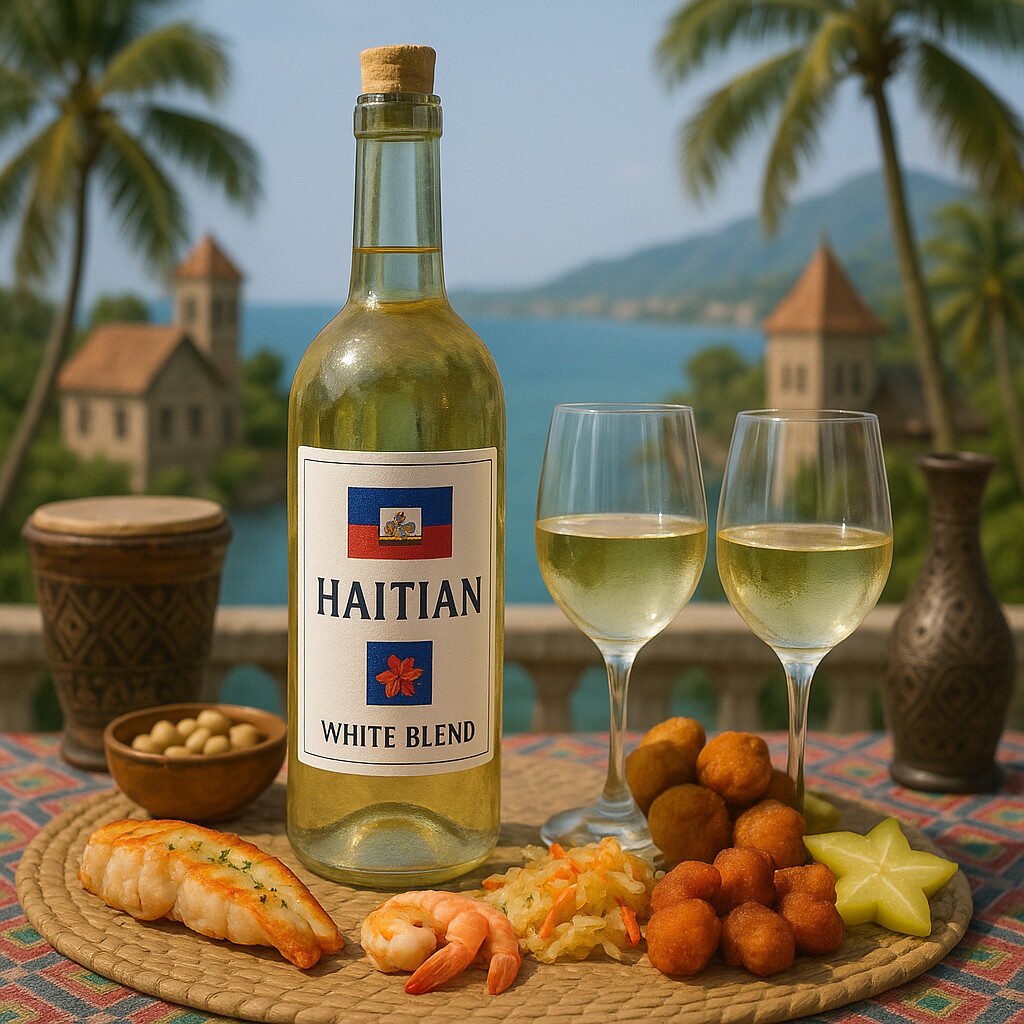
White Blend from Haiti is a still white wine crafted from multiple grape varieties grown in Haiti’s emerging vineyards. It offers a distinctive Caribbean profile that stands apart from European and American white blends.
- Colour: Pale straw to light gold with green reflections.
- Wine style: Still white wine.
- Main grape varieties: Muscat Blanc, Chenin Blanc, and local hybrids like Isabella.
- Sweetness level: Typically off-dry to medium-dry.
- Acidity: Medium to high acidity levels.
- Tannin structure: Very low tannins characteristic of white wines.
- Alcohol range: 12% to 13.5% ABV.
- Body: Light to medium body.
- Typical serving temperature: 8°C to 10°C.
- Protected status: No formal PDO or PGI certifications as far as current information suggests.
White Blend from Haiti typically undergoes minimal oak aging to preserve its primary fruit aromas. The blending process carefully balances aromatic intensity with structural acidity. Most producers bottle these wines young to maintain their fresh, vibrant character.
Where and How White Blend from Haiti Is Made
Haitian White Blend production centers primarily in the Central Plateau and coastal regions near Jacmel. These areas feature well-drained volcanic soils and a tropical climate with distinct wet and dry seasons. Vineyards benefit from cooling breezes from the Caribbean Sea that moderate temperatures and preserve acidity in the grapes.
Most vineyards practice sustainable agriculture with minimal chemical interventions due to Haiti’s developing wine industry. The terroir combines iron-rich clay soils with limestone substrates that impart mineral nuances to the wines. Producers focus on achieving optimal ripeness while maintaining balancing acidity through careful harvest timing.
- Vineyard work involves intensive canopy management to protect grapes from intense sun exposure throughout the growing season.
- Grape selection occurs through hand-harvesting during early morning hours to preserve freshness and avoid heat damage.
- Harvest typically happens between January and March during the drier months to prevent dilution from rainfall.
- Destemming and crushing uses gentle pneumatic presses to minimize skin contact and prevent bitterness.
- Maceration is brief or omitted entirely for most White Blend productions to maintain delicate aromas.
- Fermentation takes place in temperature-controlled stainless steel tanks between 16°C and 18°C for 10 to 14 days.
- Malolactic fermentation is usually prevented through temperature control and SO2 additions to preserve crisp acidity.
- Maturation occurs in neutral stainless steel tanks or concrete vats for 3 to 6 months before bottling.
- Clarification involves light fining with bentonite or casein followed by sterile filtration.
- Bottling happens relatively early, typically within 6 months of harvest, to capture youthful fruit expression.
Traditional Haitian White Blend production might involve natural fermentation in open concrete vats. Modern producers increasingly use temperature-controlled stainless steel to achieve cleaner, more consistent results. Artisanal versions sometimes incorporate brief skin contact for added texture, while commercial productions prioritize fruit purity and immediate drinkability.
Flavor Profile: What Makes White Blend from Haiti Special?
White Blend from Haiti presents a pale gold appearance with good viscosity that coats the glass. The aromatic profile bursts with tropical fruits like guava, passion fruit, and ripe pineapple, complemented by white floral notes of jasmine and orange blossom. These primary aromas derive from the Muscat component and Haiti’s warm growing conditions that promote intense fruit expression.
On the palate, White Blend from Haiti offers moderate alcohol weight balanced by vibrant acidity that cleanses the palate. Flavors range from citrus zest and green apple to more exotic notes of lychee and star fruit, with a subtle mineral undertone from volcanic soils. The finish is typically medium in length with a refreshing, slightly phenolic edge that adds complexity without bitterness.
Quality Labels and Certifications for Wine from Haiti
As far as current information suggests, Haiti does not maintain formal appellation systems comparable to European PDO or PGI designations. The country’s wine industry remains developing without established geographical indications for White Blend production. Some smaller producers may follow organic practices, though certification remains uncommon according to available reports.
International sustainability certifications have limited presence in Haitian viticulture as far as can be verified at present. The absence of regulated quality hierarchies means White Blend quality varies significantly between producers. Consumers should rely on importer information and producer reputation when selecting Haitian White Blend wines.
Cheese Pairings
White Blend from Haiti pairs beautifully with fresh, mild cheeses that complement its tropical fruit character. Young goat cheeses like chèvre provide a creamy texture that contrasts with the wine’s bright acidity. The salt content in feta or halloumi enhances the fruit sweetness in off-dry White Blend versions. Avoid strongly aged or blue cheeses that might overpower the wine’s delicate aromatics.
For cooked applications, White Blend from Haiti works well with cheese-based sauces in pasta dishes or gratins. The wine’s acidity cuts through the richness of melted Gruyère or Emmental in traditional Haitian recipes. International pairings include baked brie with fruit compotes, where the wine’s sweetness balances the cheese’s buttery notes. Always serve the wine well chilled to maintain its refreshing quality alongside cheese boards.
Suitable Fruit and Vegetables
Fresh tropical fruits naturally complement White Blend from Haiti’s flavor profile. Mango salads with lime dressing highlight the wine’s citrus notes while providing textural contrast. Grilled pineapple or papaya caramelizes to echo the wine’s inherent fruit sweetness. Avoid extremely bitter vegetables like radicchio that might clash with the wine’s delicate balance.
Vegetable dishes featuring asparagus or artichokes benefit from White Blend from Haiti’s crisp acidity. Roasted bell peppers and zucchini develop sweetness that mirrors the wine’s fruit character. In Haitian cuisine, pikliz (spicy pickled vegetables) creates an exciting contrast with the wine’s slight sweetness. The wine’s medium body stands up to vegetable stews while refreshing the palate between bites.
Suitable Meat and Fish dishes
White Blend from Haiti excels with simply prepared seafood dishes common in Caribbean cuisine. Grilled red snapper or mahi-mahi allows the wine’s mineral notes to shine through. Shrimp ceviche with citrus marinade accentuates the wine’s bright acidity and fruit flavors. Cold seafood platters with oysters or clams benefit from the wine’s cleansing finish and subtle salinity.
For meat pairings, White Blend from Haiti complements lighter poultry dishes like roast chicken with herbs. Haitian griot (fried pork) finds balance with the wine’s acidity cutting through the fat. Avoid heavy red meats or strongly spiced curries that would overwhelm the wine’s delicate structure. The wine’s versatility makes it suitable for mixed antipasto platters featuring prosciutto and mild sausages.
Questions and Answers
How should I store White Blend from Haiti?
Store White Blend from Haiti in a cool, dark place with consistent temperature around 12°C. Keep bottles horizontal if cork-sealed to maintain moisture. Avoid temperature fluctuations that can damage White Blend from Haiti’s delicate aromas.
What is the ideal serving temperature for White Blend from Haiti?
Serve White Blend from Haiti chilled between 8°C and 10°C. Over-chilling masks the aromatic complexity of White Blend from Haiti. Use an ice bucket for brief cooling if necessary before serving White Blend from Haiti.
Does White Blend from Haiti benefit from decanting?
Young White Blend from Haiti rarely requires decanting. Older vintages of White Blend from Haiti might benefit from 15 minutes of aeration. Decanting can help open up tightly wound examples of White Blend from Haiti.
How long can I keep an opened bottle of White Blend from Haiti?
Opened White Blend from Haiti maintains quality for 2-3 days when refrigerated and tightly sealed. Use a vacuum pump to preserve freshness in White Blend from Haiti. The wine’s high acidity helps White Blend from Haiti resist oxidation better than many whites.
What is the aging potential of White Blend from Haiti?
Most White Blend from Haiti is meant for consumption within 2-3 years of vintage. Premium examples of White Blend from Haiti might develop honeyed notes over 5 years. The vibrant fruit character in White Blend from Haiti diminishes with extended cellaring.
Where can I purchase White Blend from Haiti?
White Blend from Haiti is available through specialty wine importers and online retailers. Caribbean markets sometimes carry White Blend from Haiti. Direct purchases from Haitian producers offer the freshest examples of White Blend from Haiti.
What glassware works best for White Blend from Haiti?
Serve White Blend from Haiti in standard white wine glasses with medium bowls. These glasses concentrate the aromatic bouquet of White Blend from Haiti. Avoid overly large bowls that might dissipate the delicate scents of White Blend from Haiti.
Can I cook with White Blend from Haiti?
White Blend from Haiti works well in seafood sauces and deglazing pans. The wine’s acidity in White Blend from Haiti helps tenderize proteins. Avoid cooking with spoiled White Blend from Haiti as off-flavors will concentrate in reduced sauces.
How does White Blend from Haiti compare to other white blends?
White Blend from Haiti typically shows more tropical fruit than European blends. The acidity in White Blend from Haiti often exceeds that of California white blends. White Blend from Haiti offers unique terroir expression distinct from South African examples.
What food pairings should I avoid with White Blend from Haiti?
Avoid pairing White Blend from Haiti with intensely spicy dishes. Very bitter greens can clash with the fruit notes in White Blend from Haiti. Heavy cream sauces might overwhelm the delicate structure of White Blend from Haiti.
Similar Wines and Alternatives
For those enjoying White Blend from Haiti, South African Chenin Blanc-based blends offer similar tropical fruit intensity with bracing acidity. These alternatives typically show more citrus and apple notes compared to the exotic fruit profile of White Blend from Haiti. Portuguese Vinho Verde blends provide comparable refreshment but with lower alcohol and pronounced effervescence unlike the still character of White Blend from Haiti.
California white blends often feature similar grape varieties but tend toward richer, oak-influenced styles versus the stainless-steel purity of White Blend from Haiti. French Languedoc white blends deliver Mediterranean herb notes absent in the Caribbean expression of White Blend from Haiti. Price points for alternatives vary widely, with Haitian examples often occupying a niche position in specialty markets rather than mainstream distribution.