
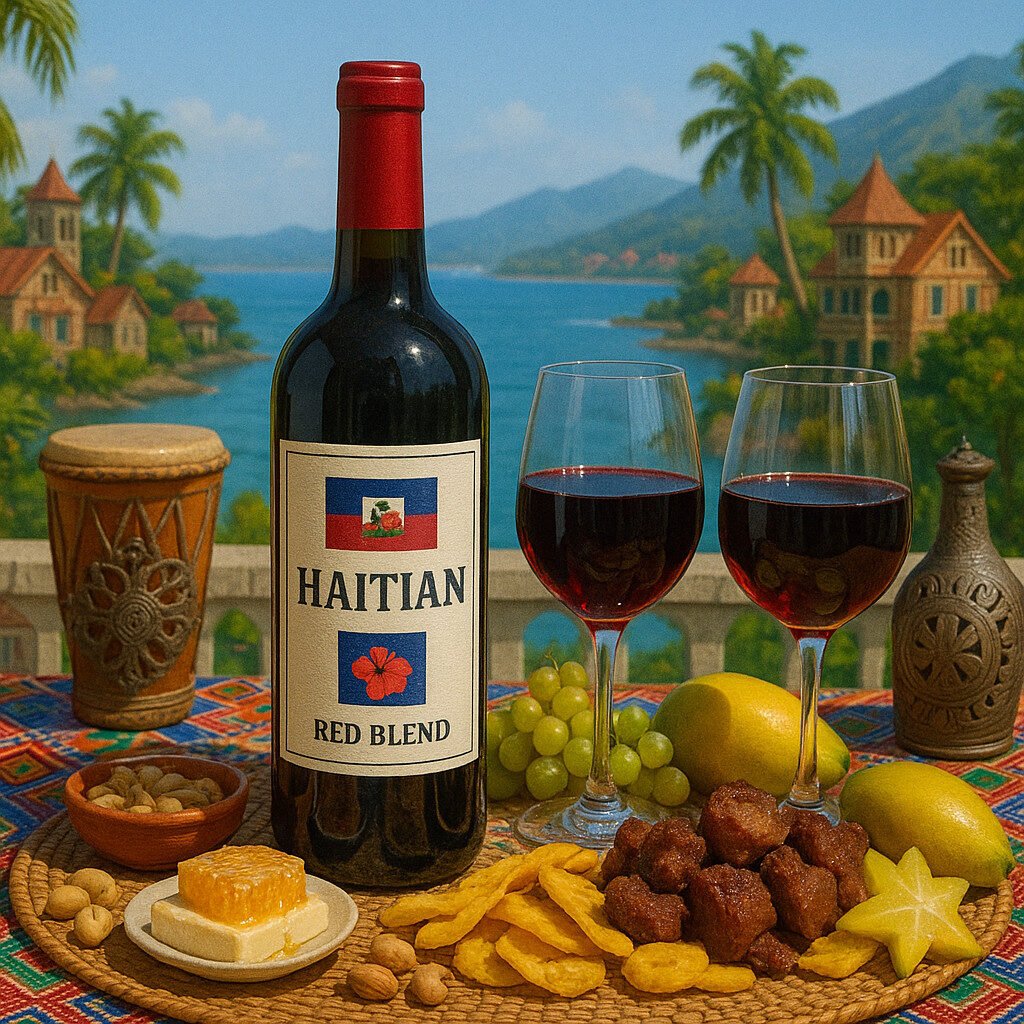
Red Blend from Haiti showcases the emerging potential of Caribbean viticulture. This wine blends international grape varieties with Haiti’s unique tropical terroir to produce a lively and food-friendly red.
In this article
What Is Red Blend from Haiti?
Red Blend from Haiti represents a modern approach to winemaking in a non-traditional region. It typically combines several red grape varieties to achieve balance and complexity.
- Colour: Deep ruby to garnet.
- Wine style: Still, dry red wine.
- Main grape varieties: Often includes Syrah, Cabernet Sauvignon, and Merlot.
- Sweetness level: Dry, with less than 4 grams per liter residual sugar.
- Acidity: Medium to high, around 5-6 grams per liter tartaric acid.
- Tannin structure: Medium, soft tannins.
- Alcohol range: 12.5% to 14% alcohol by volume.
- Body: Medium-bodied.
- Typical serving temperature: 16°C to 18°C.
- Protected status: No formal appellation as far as current information suggests.
Haitian Red Blend often features grapes grown in elevated vineyards to mitigate the tropical heat. Winemakers focus on achieving ripe fruit flavors while maintaining fresh acidity. This style appeals to both local consumers and international markets seeking something distinctive.
Where and How Red Blend from Haiti Is Made
Red Blend production in Haiti centers in regions like the Central Plateau and areas near Kenscoff, where altitudes exceed 1000 meters. These locations provide cooler nights and well-drained soils, often volcanic or limestone-based. The tropical climate demands careful canopy management to protect grapes from excessive sun and humidity.
Vineyards typically use drip irrigation to manage water stress during dry seasons. Most producers adopt sustainable practices, avoiding synthetic pesticides. The lack of formal appellations allows for experimental blending, though quality-focused wineries emphasize low yields and hand-harvesting.
- Vineyard work involves year-round pruning and canopy management to ensure air circulation. Growers often use vertical shoot positioning to optimize sun exposure and reduce disease pressure in the humid climate.
- Grape selection occurs in the vineyard and at the winery, with only the healthiest clusters chosen. Harvest typically happens in early morning hours to preserve acidity, from January to March depending on the variety.
- Destemming and crushing are done gently to avoid bitter tannin extraction. Many wineries use modern crusher-destemmers that minimize skin tearing.
- Maceration lasts 5 to 10 days at 20°C to 25°C to extract color and flavor. Some producers prefer cold soaking for 24-48 hours before fermentation to enhance fruit notes.
- Fermentation takes place in stainless steel tanks or concrete vats at 25°C to 28°C. Selected yeast strains are often used to ensure a clean ferment in the challenging tropical environment.
- Malolactic fermentation is commonly induced to soften acidity. This occurs in tank or barrel over 2 to 4 weeks, converting sharp malic acid to softer lactic acid.
- Maturation involves 6 to 12 months in neutral French oak barrels or stainless steel tanks. This step adds subtle complexity without overpowering the fruit.
- Clarification uses gentle fining with egg whites or bentonite, followed by light filtration. The goal is to stabilize the wine while preserving its vibrant character.
- Bottling happens with minimal sulfur dioxide additions, typically 30-40 mg per liter. Wines are often bottled early to retain freshness and consumed within 2-4 years of vintage.
Traditional methods in Haiti might involve longer maceration and use of local oak, but modern producers favor temperature-controlled fermentation for consistency. Artisanal wineries often handcraft small batches with native yeasts, while larger operations focus on efficiency and export-ready stability.
Flavor Profile: What Makes Red Blend from Haiti Special?
Red Blend from Haiti displays a bright ruby color with medium viscosity. Aromas burst with red fruits like cherry and raspberry, complemented by floral hints of violet and subtle earthy notes. The palate offers a crisp acidity that balances the ripe fruit, with soft tannins and a medium body that feels refreshing.
Oak aging, if used, introduces gentle spices like cinnamon and vanilla without dominating. The finish is clean and moderately long, emphasizing the wine’s vibrant fruit core. Factors like high-altitude vineyards contribute to the wine’s lifted acidity and intense aromatics, making it stand out among New World blends.
Quality Labels and Certifications for Wine from Haiti
As far as current information suggests, Haiti does not have a formal wine appellation system like European PDO or PGI. Some producers may adhere to general agricultural standards or organic practices, but certifications are not widespread. The focus remains on regional identity rather than regulated classifications.
Informal quality markers include estate bottling and sustainable farming initiatives. As far as can be verified at present, there are no national wine classification schemes. Winemakers often highlight terroir-driven characteristics to denote quality, such as specific vineyard sites in the Central Plateau.
Cheese Pairings
Red Blend from Haiti pairs excellently with semi-hard cheeses like aged Gouda or Mimolette. The wine’s acidity cuts through the fat content, while its soft tannins complement the salty notes. Local Haitian cheeses, such as fresh goat cheese, harmonize with the wine’s fruitiness and refresh the palate.
For international pairings, try with Pecorino or Manchego; their firm textures and nutty flavors align with the wine’s structure. In cooked dishes, incorporate the wine into sauces for baked Brie or raclette to enhance the creamy richness. Avoid overly pungent blue cheeses that might overwhelm the delicate fruit profile.
Suitable Fruit and Vegetables
Fresh fruits like strawberries and plums mirror the red berry notes in Red Blend from Haiti. Grilled vegetables such as bell peppers and eggplants work well, as their smoky sweetness complements the wine’s acidity. Incorporate dried figs or apricots into salads to add a touch of sweetness that balances the dry palate.
Roasted root vegetables like carrots and beets bring out earthy undertones in the wine. Avoid bitter greens like arugula unless dressed with a fruity vinaigrette. Tomatoes in sauces or salsas enhance the wine’s vibrant character, making it ideal for Mediterranean-inspired dishes.
Suitable Meat and Fish dishes
Red Blend from Haiti shines with grilled meats like lamb chops or beef skewers. The wine’s acidity and soft tannins cut through the richness, while its fruit notes accentuate caramelization from cooking. For cold servings, pair with charcuterie boards featuring prosciutto or salami, where the saltiness contrasts with the wine’s freshness.
Fish dishes such as grilled tuna or salmon stand up to the wine’s body, especially when seasoned with herbs like rosemary. Stews and casseroles with chicken or rabbit allow the wine’s complexity to develop alongside slow-cooked flavors. Avoid delicate white fish that may be overpowered by the wine’s structure.
Questions and Answers
How should I handle leftovers of Red Blend from Haiti?
Store leftover Red Blend from Haiti in a cool, dark place and consume within 2-3 days. Use a wine preserver or transfer to a smaller bottle to minimize oxidation. The wine may lose some freshness but remains enjoyable for short-term use.
What is the aging potential of Red Blend from Haiti?
Red Blend from Haiti is best consumed within 3-5 years of the vintage. It does not typically benefit from long aging due to its fresh, fruit-forward profile. Store bottles horizontally in a stable environment to maintain quality.
What is the shelf life of Red Blend from Haiti after opening?
Once opened, Red Blend from Haiti stays fresh for up to 3 days if recorked and refrigerated. Use a vacuum sealer to extend this to 5 days. The wine’s acidity helps preserve its character briefly after exposure to air.
Where can I buy Red Blend from Haiti?
Red Blend from Haiti is available in specialty wine shops in Haiti and through online importers focusing on Caribbean wines. Look for distributors that emphasize small producers. International availability may be limited, so check with retailers that stock unique regions.
How do I combine Red Blend from Haiti with food?
Pair Red Blend from Haiti with grilled meats, hearty vegetables, or semi-hard cheeses. The wine’s balance of acidity and fruit makes it versatile. Avoid overly spicy dishes that could clash with its subtle tannins.
How should I drink Red Blend from Haiti?
Serve Red Blend from Haiti in a standard Bordeaux glass to concentrate its aromas. Drink it slightly chilled at 16°C to 18°C to enhance freshness. Decanting for 30 minutes can open up its flavors if the wine is young.
Should I chill or temper Red Blend from Haiti?
Chill Red Blend from Haiti to 16°C to 18°C before serving. Do not over-chill, as temperatures below 14°C can mute its aromas. If too cold, let it warm in the glass for 10-15 minutes.
Do I need to decant Red Blend from Haiti?
Decanting Red Blend from Haiti for 20-30 minutes is recommended for younger bottles to aerate and soften tannins. Older vintages may not require decanting. Use a decanter to enhance the wine’s aromatic expression.
How should I serve Red Blend from Haiti?
Serve Red Blend from Haiti at 16°C to 18°C in a large-bowled glass. This temperature range highlights its fruit and acidity. Avoid serving too warm, which can emphasize alcohol.
How should I store Red Blend from Haiti?
Store Red Blend from Haiti in a cool, dark place with stable humidity, ideally at 12°C to 15°C. Keep bottles horizontal to keep corks moist. Avoid temperature fluctuations to preserve the wine’s integrity.
Similar Wines and Alternatives
If you enjoy Red Blend from Haiti, consider other Caribbean reds like those from the Dominican Republic, which share a similar tropical influence and medium body. Wines from Chile, such as Carmenère blends, offer comparable soft tannins and fruit-forward profiles but with more earthy notes. These alternatives are often more widely available in international markets.
For a European counterpart, try a Languedoc red blend from France, which has similar alcohol levels and food-friendly acidity. In terms of price, Haitian Red Blend may be moderately priced due to its niche production, whereas Chilean options can be more affordable. Always check labels for grape varieties and vintage to ensure a close match in style.