
In this article
What Is Guyana Sauvignon Blanc from Guyana?
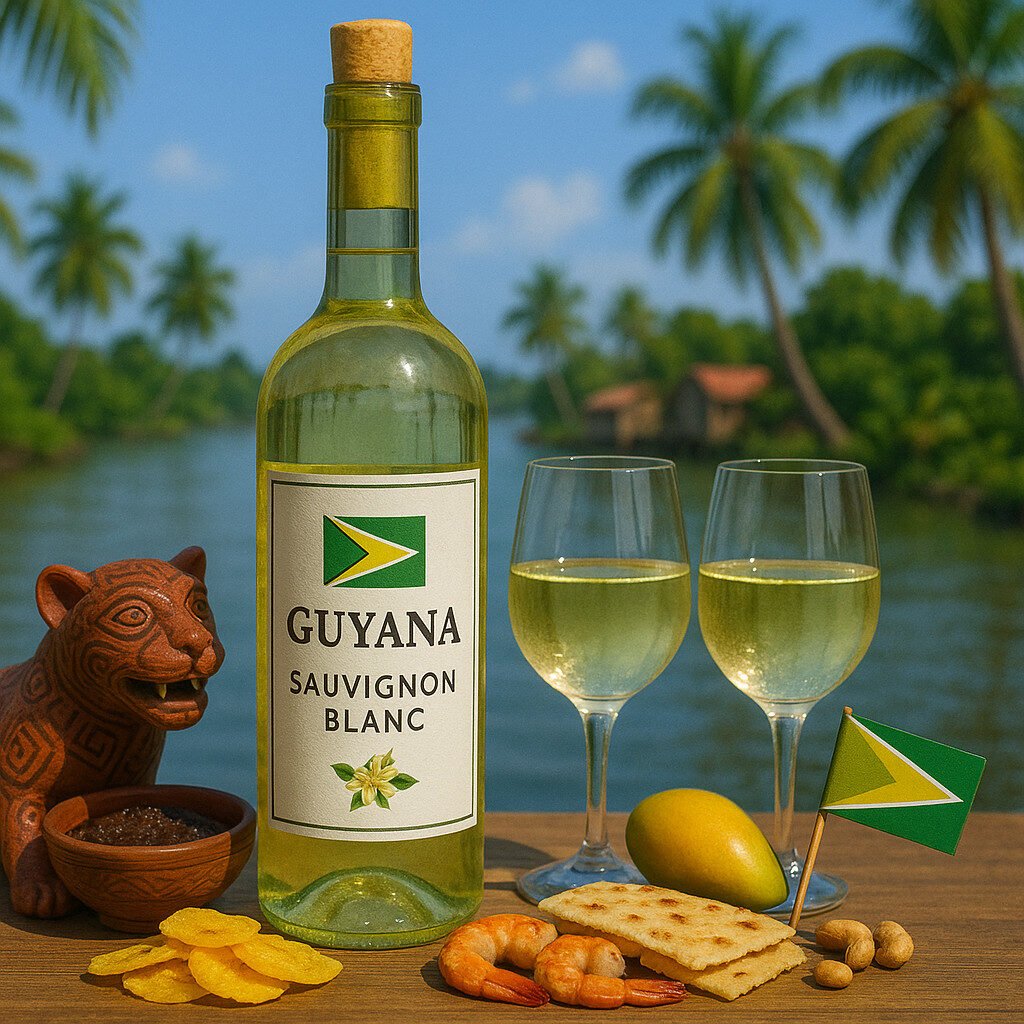
Guyana Sauvignon Blanc is a dry white wine crafted from the Sauvignon Blanc grape in Guyana’s coastal regions. It stands out for its zesty character and tropical fruit aromas derived from the country’s warm climate.
- Colour: Pale straw with green hints
- Wine style: Still white wine
- Main grape varieties: 100% Sauvignon Blanc
- Sweetness level: Dry
- Acidity: High
- Tannin structure: Very low
- Alcohol range: 12.5-13.5% vol
- Body: Light to medium
- Typical serving temperature: 8-10°C
- Protected status: No specific protected designation as far as current information suggests
The wine’s high acidity provides a refreshing palate cleanser, ideal for pairing with diverse cuisines. Guyana’s abundant sunshine ensures ripe fruit flavors while cool fermentation preserves delicate aromas. Many producers employ sustainable practices to maintain soil health and wine quality in this emerging region.
Where and How Guyana Sauvignon Blanc from Guyana Is Made
Guyana Sauvignon Blanc is primarily cultivated in the well-drained alluvial soils of the coastal plains, where the tropical climate features high humidity and distinct wet and dry seasons. Vineyards benefit from ocean breezes that moderate temperatures and reduce disease pressure, with viticulture focused on canopy management to optimize sun exposure.
Production emphasizes preserving the grape’s vibrant aromatics through controlled temperature fermentation. The philosophy centers on expressing the terroir’s unique fruit intensity while maintaining the wine’s crisp, food-friendly profile.
- Vineyard work involves pruning during the dry season from January to March, with careful trellising to improve air circulation and minimize fungal issues.
- Grape selection uses hand-harvesting in the early morning hours to ensure cool fruit temperatures and select only healthy, ripe bunches.
- Harvest occurs typically between July and August when sugar levels reach 20-22° Brix and acidity remains high for balance.
- Destemming and crushing are done gently to avoid extracting harsh phenolics from the skins, often using pneumatic presses.
- Maceration may include cold soaking for 4-6 hours at 8-10°C in stainless steel tanks to enhance aroma extraction without bitterness.
- Fermentation takes place in temperature-controlled stainless steel vessels at 12-15°C for 10-14 days, sometimes with selected yeast strains for consistency.
- Malolactic fermentation is usually prevented to retain the wine’s natural acidity and fresh character.
- Maturation involves aging on fine lees in stainless steel tanks for 2-3 months to add texture and complexity without oak influence.
- Clarification uses bentonite fining and sterile filtration to achieve brilliance and stability before bottling.
- Bottling is completed within 6 months of harvest to capture the wine’s primary fruit flavors and youthful vibrancy.
Traditional methods might involve spontaneous fermentation and longer skin contact, but modern practices favor temperature control and hygiene for consistency. Mass-market producers may use additives for stability, while artisanal winemakers focus on minimal intervention to highlight terroir expression.
Flavor Profile: What Makes Guyana Sauvignon Blanc from Guyana Special?
Guyana Sauvignon Blanc exhibits a pale straw color with green reflections and moderate viscosity. Its aroma bursts with tropical fruits like passion fruit and guava, complemented by citrus notes of grapefruit and lime. Herbaceous undertones of fresh-cut grass and bell pepper add complexity, derived from the grape’s pyrazine compounds.
On the palate, the wine is dry with pronounced acidity that energizes the mouthfeel. Flavors echo the nose, featuring ripe citrus zest and tropical fruit dominance, with a light body and minimal tannin structure. The finish is crisp and medium in length, often revealing a subtle mineral edge from Guyana’s alluvial soils, while the absence of oak aging ensures purity of fruit expression.
Quality Labels and Certifications for Wine from Guyana
As far as current information suggests, Guyana does not have a formal protected designation of origin system for wines like those in Europe. However, some local producers may adhere to informal quality standards or sustainable farming practices, though no widespread certifications are verified at present. The emerging wine industry in Guyana focuses on establishing identity through regional typicity rather than regulated labels.
Internationally, Guyana Sauvignon Blanc might not carry specific geographical indications, but it can be marketed based on producer reputation and tasting credentials. As far as can be verified, consumers should look for details on vineyard location and production methods when assessing quality, as the sector evolves potential for future certifications.
Cheese Pairings
Guyana Sauvignon Blanc pairs excellently with fresh, soft cheeses such as goat cheese or feta, where its high acidity cuts through the creaminess and enhances tangy flavors. The wine’s citrus and herbal notes complement the saltiness of these cheeses, making it ideal for cheese boards or salads. Avoid aged, pungent cheeses like blue varieties, as they can overwhelm the wine’s delicate aromatics.
For cooked dishes, incorporate mild cheeses like mozzarella or halloumi in pastas or grilled preparations, where the wine’s acidity balances the fat content. Classic local pairings might include fresh white cheeses from South America, while international options like ricotta or burrata work well in modern cuisine, highlighting the wine’s versatility.
Selecting Cheeses for Guyana Sauvignon Blanc
When choosing cheeses for Guyana Sauvignon Blanc, opt for varieties with high moisture and mild flavors, such as fresh chèvre or quark. These cheeses allow the wine’s vibrant fruit and herb notes to shine without competition. Their light texture refreshes the palate between sips, enhancing the overall tasting experience.
Avoid strongly flavored or rind-washed cheeses, as their intensity can clash with the wine’s herbaceous character. Instead, select semi-soft options like young gouda or fontina, which have a subtle creaminess that harmonizes with the acidity. Serving cheeses at room temperature maximizes aroma release and ensures optimal pairing balance.
Suitable Fruit and Vegetables
Guyana Sauvignon Blanc complements fresh fruits like citrus, green apples, and tropical varieties such as pineapple and mango, where its acidity mirrors the fruits’ brightness. Vegetable dishes featuring herbs like basil, mint, or cilantro enhance the wine’s herbal undertones, making it perfect for salads or salsas. Avoid bitter vegetables like radicchio, which can accentuate unwanted green notes in the wine.
For cooked preparations, roasted vegetables with olive oil and herbs, such as zucchini or asparagus, pair well by echoing the wine’s earthy elements. The wine’s crispness cleanses the palate from rich, oil-based dressings, while its fruit flavors balance sweeter vegetables like caramelized onions or bell peppers in diverse culinary applications.
Optimal Produce for Guyana Sauvignon Blanc
Guyana Sauvignon Blanc excels with produce that has high acidity or fresh textures, such as cucumber, avocado, and cherry tomatoes in salads. The wine’s zesty profile cuts through creamy elements like avocado, while its fruitiness enhances the sweetness of tomatoes. Incorporating fresh herbs like parsley or dill amplifies the pairing synergy.
Steamed or grilled artichokes and asparagus can be challenging but work with a butter-based sauce that the wine’s acidity balances. The mineral notes in Guyana Sauvignon Blanc complement earthy vegetables, and its lightness avoids overpowering delicate flavors. For fruit-based dishes, opt for uncooked or lightly dressed options to preserve the wine’s freshness.
Suitable Meat and Fish dishes
Guyana Sauvignon Blanc is ideal with light fish dishes such as grilled snapper or ceviche, where its acidity contrasts with the fish’s richness and citrus marinades. Shellfish like oysters and shrimp highlight the wine’s maritime nuances, making it a classic pairing for seafood platters. For meats, lean options like chicken or turkey breast seasoned with herbs and lemon allow the wine’s flavors to complement without dominance.
Avoid heavy, red meats or strongly spiced dishes, as they can overwhelm the wine’s delicate structure. Instead, focus on cold servings like seafood salads or hot preparations like baked white fish with fresh herbs. The wine’s crisp finish cleanses the palate from fatty or oily components, enhancing the dining experience.
Ideal Meat and Fish with Guyana Sauvignon Blanc
For cold meat and fish servings, Guyana Sauvignon Blanc pairs well with carpaccio or gravlax, where its acidity cuts through the richness and highlights delicate flavors. Charcuterie plates with mild cured meats like prosciutto allow the wine’s fruit and herbal notes to shine. The wine’s lightness ensures it doesn’t overpower these subtle dishes.
Hot dishes such as herb-crusted pork loin or grilled sea bass benefit from the wine’s acidity, which balances the protein’s fat and enhances herb seasonings. Pasta with seafood or light cream sauces works beautifully, as the wine refreshes the palate between bites. Always avoid overly smoky or spicy elements to maintain harmony with Guyana Sauvignon Blanc’s profile.
Questions and Answers
How should I store Guyana Sauvignon Blanc?
Store Guyana Sauvignon Blanc in a cool, dark place at 10-15°C, away from direct light and vibrations. Keep the bottle upright to minimize cork contact and preserve freshness. Proper storage ensures the wine maintains its vibrant aromas and flavors for up to 2 years.
What is the best way to serve Guyana Sauvignon Blanc?
Serve Guyana Sauvignon Blanc chilled between 8-10°C to enhance its crisp acidity and aromatic intensity. Use a standard white wine glass to concentrate the fruity and herbal notes. Avoid over-chilling, as it can mute the wine’s delicate characteristics.
Does Guyana Sauvignon Blanc need decanting?
Guyana Sauvignon Blanc typically does not require decanting, as it is best enjoyed young and fresh to preserve its primary fruit flavors. Decanting may overly expose it to oxygen, reducing its vibrancy. Serve it directly from the bottle for optimal experience.
How long should I chill Guyana Sauvignon Blanc before serving?
Chill Guyana Sauvignon Blanc for about 2 hours in the refrigerator at 4-7°C before serving to reach the ideal temperature. If short on time, place it in an ice bucket for 20-30 minutes. Serving it too cold can diminish its aromatic expression.
When is the best time to drink Guyana Sauvignon Blanc?
Drink Guyana Sauvignon Blanc within 1-2 years of the vintage date to enjoy its youthful fruitiness and acidity. It is not suited for long-term aging and is meant for immediate consumption. The wine’s freshness peaks within the first year after bottling.
What foods pair best with Guyana Sauvignon Blanc?
Guyana Sauvignon Blanc pairs well with seafood, salads, goat cheese, and light poultry dishes due to its high acidity and herbal notes. Avoid heavy or spicy foods that can clash with its delicate profile. The wine’s versatility makes it suitable for various cuisines.
Where can I buy Guyana Sauvignon Blanc?
Guyana Sauvignon Blanc may be available in specialty wine shops, online retailers, or importers focusing on South American wines. Check with local distributors or winery websites for availability. Its distribution might be limited outside Guyana, so online sources are often reliable.
What is the shelf life of Guyana Sauvignon Blanc after opening?
After opening, Guyana Sauvignon Blanc can be stored in the refrigerator for up to 3 days if recorked tightly. Use a wine preserver to minimize oxidation and maintain freshness. Consume it quickly to enjoy its optimal flavor and acidity.
Does Guyana Sauvignon Blanc have aging potential?
Guyana Sauvignon Blanc has minimal aging potential and is best consumed young to appreciate its fresh, fruity character. Aging can lead to loss of acidity and aromatic intensity. Focus on recent vintages for the best tasting experience.
How should I handle leftovers of Guyana Sauvignon Blanc?
For leftovers of Guyana Sauvignon Blanc, recork the bottle and store it in the refrigerator at 4-7°C. Use within 2-3 days to prevent flavor degradation. Consider using leftover wine in cooking, such as in sauces or marinades, to avoid waste.
Similar Wines and Alternatives
Guyana Sauvignon Blanc shares similarities with other New World Sauvignon Blancs, such as those from New Zealand’s Marlborough region, which also feature high acidity and tropical fruit notes. However, Guyana’s version often has a distinct herbal intensity due to its warmer climate, whereas New Zealand examples tend toward more pronounced grapefruit and grassiness. Chilean Sauvignon Blanc from Casablanca Valley offers a comparable crispness but may display more mineral and citrus flavors, making it a accessible alternative.
For Old World alternatives, Sancerre from France’s Loire Valley provides a similar dry, high-acid profile but with flinty minerality and less overt fruitiness. South African Sauvignon Blanc can be grassier and more pungent, while Pinot Grigio from Italy serves as a lighter-bodied substitute with neutral fruit notes. In terms of price and availability, Guyana Sauvignon Blanc is generally affordable but may be harder to find internationally compared to established regions, so explore online or specialty stores for sourcing.