
In this article
What Is Guyana Rosé from Guyana?
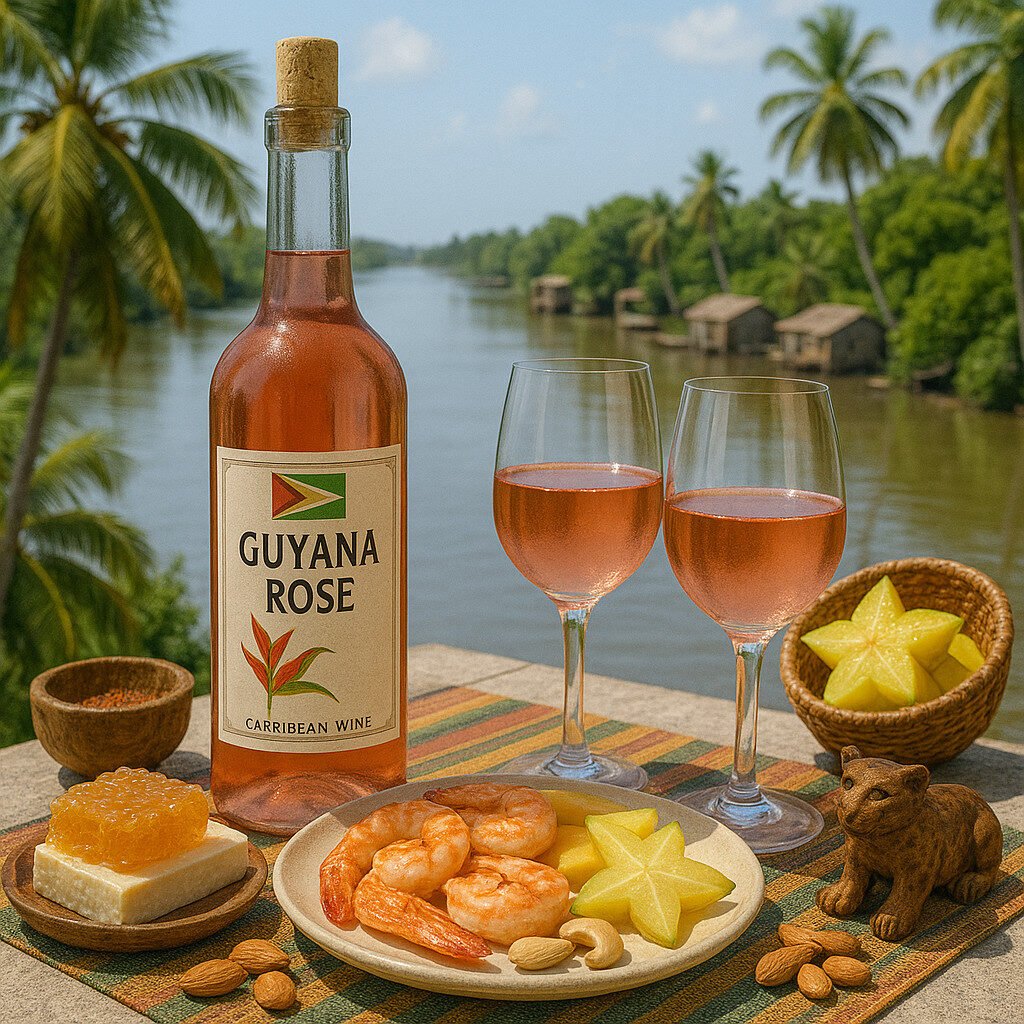
Guyana Rosé is a still pink wine produced in the coastal regions of Guyana. It represents a niche but growing category in the country’s beverage industry.
- Color: Pale to medium pink with salmon hues.
- Wine style: Still.
- Main grape varieties: Isabella, Black Spanish, and hybrid vines.
- Sweetness level: Dry to off-dry.
- Acidity: Medium to high.
- Tannin structure: Low.
- Alcohol range: 11.5-13% volume.
- Body: Light-bodied.
- Typical serving temperature: 9-11°C.
- Protected status: No formal appellations; some use geographic indications.
Guyana Rosé is crafted from hybrid grape varieties that thrive in humid, tropical conditions. The winemaking involves brief skin contact to achieve its characteristic color. This results in a wine best consumed young to preserve its fresh, fruity character.
Where and How Guyana Rosé from Guyana Is Made
Guyana Rosé is primarily produced in coastal areas like Demerara-Mahaica, where alluvial soils provide good drainage. The tropical climate features high humidity and temperatures averaging 25-30°C year-round. Vineyards are often situated on raised beds to mitigate flooding risks.
Winemakers emphasize early harvesting to maintain acidity in the grapes. They employ modern techniques such as temperature-controlled fermentation. The production philosophy focuses on creating a crisp, approachable wine that reflects its environment.
- Vineyard work: Pruning occurs during the dry season from January to March. Canopy management is essential to reduce fungal disease pressure. Drip irrigation supplements rainfall in drier periods.
- Grape selection: Hand harvesting is preferred for quality control. Grapes are picked in the early morning to retain coolness. Only healthy, ripe clusters are chosen for rosé production.
- Harvest: Timing is critical, typically between June and August. Brix levels are monitored to ensure a balance of sugar and acid. Harvest avoids peak heat to preserve freshness.
- Destemming and crushing: Grapes are destemmed but gently pressed to minimize bitterness. Skin contact lasts 2-4 hours for color extraction. This step is done at cool temperatures around 10-15°C.
- Maceration: Limited to 6-12 hours to achieve the desired pink hue. Temperature control at 10-15°C preserves delicate aromas. This process defines the wine’s color and structure.
- Fermentation: Conducted in stainless steel tanks at 16-18°C for 10-14 days. Selected yeast strains enhance fruity esters. Fermentation may be halted early for off-dry styles.
- Malolactic fermentation: Typically prevented to maintain crisp acidity. This is standard in rosé production for freshness. It ensures the wine remains vibrant and zesty.
- Maturation: Aged in stainless steel tanks for 3-6 months. No oak aging is used to highlight fruit flavors. Some artisanal versions may see neutral barrels briefly.
- Clarification: Fining with bentonite or similar agents removes impurities. Cold stabilization may be applied for tartrate stability. Filtration ensures clarity before bottling.
- Bottling: Done under inert gas to prevent oxidation. Screw caps or corks are used based on market preferences. The wine is released soon after bottling for immediate enjoyment.
Traditional methods for Guyana Rosé involve longer maceration and spontaneous fermentation. Modern practices use precise temperature control and cultured yeasts for consistency. Artisanal producers focus on hand-harvesting and minimal intervention, while commercial operations prioritize efficiency and shelf stability.
Flavor Profile: What Makes Guyana Rosé from Guyana Special?
Guyana Rosé exhibits a pale pink color with subtle orange reflections, hinting at its tropical origin. The aroma profile bursts with red fruits like strawberry and raspberry, complemented by citrus and tropical notes such as guava and passion fruit. On the palate, it delivers bright acidity that balances the fruit sweetness, leading to a clean, refreshing finish with minimal tannin presence.
Flavor intensity is moderate, dominated by primary fruit characters from hybrid grapes. Oak treatment is absent, allowing the wine to remain fruit-forward and unoaked. Factors like early harvest and cool fermentation enhance the crispness and aromatic purity, making Guyana Rosé a vibrant and easy-drinking choice.
Quality Labels and Certifications for Wine from Guyana
As far as current information suggests, Guyana does not have a formal wine appellation system. The beverage industry operates under general food safety regulations without specific geographical indications for wine. Some producers may voluntarily label origin details, but there are no protected designations of origin for Guyana Rosé.
Organic certifications are possible through international bodies, though adoption is limited among Guyana Rosé makers. Sustainability initiatives focus on water conservation and reduced chemical use in vineyards. However, as far as can be verified at present, most Guyana Rosé lacks official quality labels, relying on producer reputation for assurance.
Potential Future Certifications for Guyana Rosé
Discussions about establishing geographic indications for Guyana Rosé are ongoing among industry stakeholders. Such certifications could define production zones and methods specific to the wine. This would help protect its unique characteristics and boost market credibility.
If implemented, these labels might include criteria for grape varieties and alcohol levels. They could also incorporate sustainability standards to appeal to eco-conscious consumers. This evolution would enhance the global recognition of Guyana Rosé as a distinct wine category.
Cheese Pairings
Guyana Rosé pairs excellently with fresh, soft cheeses like goat cheese or feta. The wine’s bright acidity cuts through the fat and saltiness, creating a harmonious balance. Local Guyanese cheeses, often made from cow’s milk, complement the tropical fruit notes with their mild creaminess.
For international pairings, semi-hard cheeses such as Gouda or Edam work well. Their subtle sweetness and smooth texture contrast with the rosé’s crispness. Avoid strongly flavored or blue cheeses, as they can overwhelm the delicate profile of Guyana Rosé.
Ideal Cheese Boards for Guyana Rosé
A cheese board featuring Guyana Rosé should include a mix of textures and intensities. Start with fresh options like mozzarella or ricotta for lightness. Add aged cheddar in small portions to provide depth without dominating the wine.
Incorporate accompaniments such as cassava crackers or mango chutney to echo the wine’s fruitiness. The key is to balance the cheese’s fat content with the wine’s acidity and light body. This approach ensures each element enhances the other in every bite.
Suitable Fruit and Vegetables
Fresh fruits like mango, pineapple, and watermelon are ideal matches for Guyana Rosé. Their natural sweetness and high acidity mirror the wine’s profile, creating a refreshing combination. In salads, add citrus segments or berries to brighten the dish and complement the rosé’s vibrancy.
Vegetables such as bell peppers, cucumbers, and avocados work well in cold preparations. Grilled vegetables like zucchini or eggplant can be served with the wine for a smoky contrast. The wine’s crispness cleanses the palate between bites of richer, cooked vegetable dishes.
Fruit Salads with Guyana Rosé
Fruit salads featuring tropical ingredients pair beautifully with Guyana Rosé. The wine’s acidity balances the sweetness of fruits like papaya and passion fruit. Adding a squeeze of lime juice to the salad enhances the citrus notes in the wine.
For added texture, include crunchy vegetables like jicama or radish in the mix. The contrast makes the pairing more dynamic and engaging. Always serve the salad chilled to align with the wine’s recommended serving temperature.
Suitable Meat and Fish dishes
For cold servings, Guyana Rosé excels with ceviche or shrimp cocktail. The wine’s acidity accentuates the seafood’s freshness and briny qualities. Charcuterie plates with mild sausages or prosciutto also pair well, as the wine cuts through the fat and salt.
Hot dishes like grilled chicken, pork chops, or fish stews are excellent companions. The wine’s light body and fruity notes balance savory and spicy flavors. In Guyanese cuisine, milder versions of pepperpot or curry allow the rosé to shine without being overpowered.
Questions and Answers
What is the best way to store Guyana Rosé?
Store Guyana Rosé in a cool, dark place at 10-15°C. Keep bottles horizontal if corked to maintain cork moisture. Consume within 1-2 years for optimal freshness and fruit expression.
How should I serve Guyana Rosé?
Serve Guyana Rosé chilled between 9-11°C for best results. Use a standard wine glass to appreciate its aromatic complexity. Decanting is not necessary due to its young and vibrant nature.
Does Guyana Rosé need decanting?
Guyana Rosé does not typically require decanting. It is designed to be enjoyed immediately after opening. If sediment is present, decant gently to avoid disturbing the delicate flavors.
Can I age Guyana Rosé?
Guyana Rosé is not suitable for long-term aging. Drink it within one to two years of the vintage date. Aging may lead to loss of acidity and fruitiness, diminishing its appeal.
What foods pair best with Guyana Rosé?
Guyana Rosé pairs well with light appetizers, seafood, and salads. Its acidity complements spicy dishes and creamy cheeses. Avoid heavy, tannic red meat dishes to prevent flavor clash.
Where can I buy Guyana Rosé?
Guyana Rosé is available in specialty wine shops in Guyana and through online retailers. International availability may be limited, so check with importers in major cities. Look for producers from coastal regions for authenticity.
How long does opened Guyana Rosé last?
Opened Guyana Rosé should be consumed within 2-3 days. Recork and refrigerate it promptly to preserve its freshness. Using a vacuum sealer can extend its drinkability slightly.
What is the alcohol content of Guyana Rosé?
Guyana Rosé typically has an alcohol content of 11.5-13% by volume. This range provides a balanced structure without excessive warmth. Always check the label for specific producer details.
Can Guyana Rosé be used in cooking?
Yes, Guyana Rosé can be used in cooking for deglazing pans or in sauces. Its acidity and fruitiness enhance dishes like seafood risotto or chicken piccata. Avoid boiling it to retain its delicate aromas.
What are similar wines to Guyana Rosé?
Similar wines include Provençal rosés or Spanish Rosado, which share light body and dry style. Guyana Rosé has unique tropical influences from its hybrid grapes. Alternatives may differ in acidity and fruit intensity based on origin.
Similar Wines and Alternatives
Guyana Rosé can be compared to other light-bodied rosés from warm climates, such as those from the Languedoc in France. These wines share a crisp, fruit-forward profile with moderate alcohol levels. However, Guyana Rosé often exhibits more pronounced tropical fruit notes due to its hybrid grape varieties and tropical terroir.
Alternatives include New World rosés from California or Australia, which may have riper fruit flavors and slightly higher alcohol. In terms of price and availability, Guyana Rosé is generally affordable and accessible in local markets, while imported options might be costlier. For a close substitute, consider a dry Provençal rosé or a Spanish Rosado, though they lack the distinct Guyanese character and may vary in acidity and body.