
In this article
What Is Guyana Cabernet Sauvignon from Guyana?
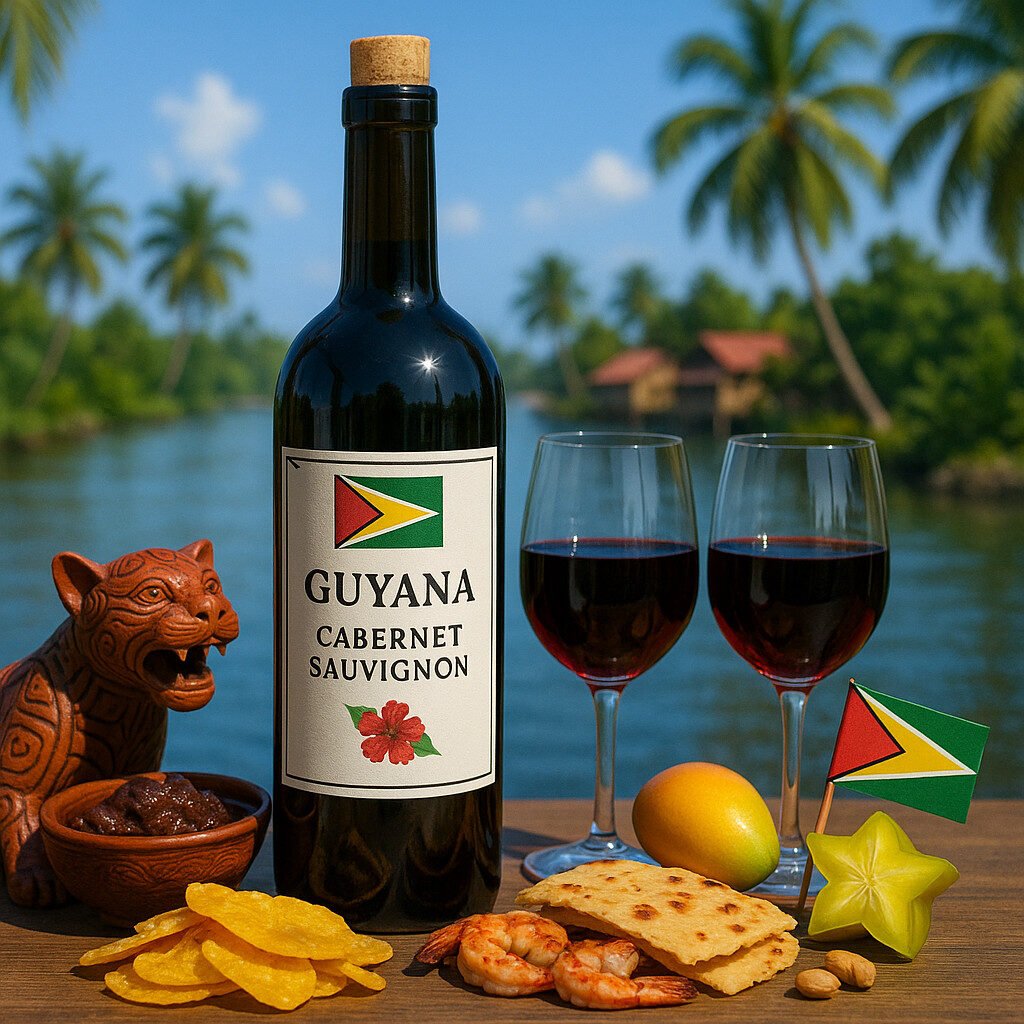
Guyana Cabernet Sauvignon is a full-bodied red wine that highlights the unique adaptation of Cabernet Sauvignon vines to Guyana’s tropical climate. It stands out for its intense flavor profile and firm tannic structure.
- Colour: Deep ruby red with purple reflections.
- Wine style: Still red wine.
- Main grape varieties: Predominantly Cabernet Sauvignon, occasionally blended with Merlot or Cabernet Franc.
- Sweetness level: Dry, with minimal residual sugar.
- Acidity: Medium to high, providing balance and freshness.
- Tannin structure: Firm and grippy in youth, softening with bottle aging.
- Alcohol range: 13.5% to 14.5% by volume.
- Body: Full-bodied, with a rich mouthfeel.
- Typical serving temperature: 16 to 18 degrees Celsius.
- Protected status: As far as current information suggests, no specific protected designation of origin applies, but it may align with general South American wine standards.
This wine often exhibits a bold character due to Guyana’s warm growing conditions, which accelerate ripening. Vineyards typically employ careful canopy management to protect grapes from excessive sun exposure. The resulting wine combines New World fruit intensity with Old World structure, appealing to a wide range of palates.
Where and How Guyana Cabernet Sauvignon from Guyana Is Made
Guyana Cabernet Sauvignon originates primarily from the Rupununi Savannah and coastal vineyard areas, where well-drained sandy loam soils prevail. The tropical climate features high humidity and distinct wet and dry seasons, influencing vine growth cycles. Producers focus on sustainable practices, often using irrigation to manage water stress during dry periods.
Key appellations include the Essequibo and Demerara regions, though formal designations are limited. The basic production philosophy emphasizes handcrafted techniques to preserve fruit purity and terroir expression. Vineyards are often situated on slopes to enhance drainage and air circulation, reducing disease pressure.
- Vineyard work involves meticulous pruning and trellising from June to August, ensuring optimal sun exposure and air flow. Canopy management is critical to prevent fungal diseases in the humid climate.
- Grape selection occurs through hand-harvesting in January or February, targeting berries with balanced sugar and acidity. Workers discard damaged or unripe clusters to maintain quality.
- Harvest timing is based on brix levels reaching 23 to 25 degrees, with picking done early in the morning to preserve freshness.
- Destemming and crushing use gentle equipment to avoid harsh tannin extraction, often leaving some whole berries for complexity.
- Maceration lasts 7 to 14 days in temperature-controlled vats at 25 to 28 degrees Celsius, extracting color and flavor compounds.
- Fermentation takes place in stainless steel tanks with selected yeast strains, maintained at 28 to 30 degrees Celsius for about 10 days.
- Malolactic fermentation is commonly induced to soften acidity, occurring in barrels or tanks over several weeks.
- Maturation involves 6 to 12 months in French or American oak barrels, adding vanilla and spice notes. Some batches age in neutral oak for a fruit-forward style.
- Clarification uses light fining with egg whites or bentonite, followed by filtration to achieve brilliance without stripping character.
- Bottling includes a period of bottle aging before release, typically 3 to 6 months, to allow integration.
Traditional methods emphasize extended maceration and oak aging for greater complexity, while modern approaches may use shorter maceration and stainless steel to highlight primary fruit. Artisanal producers often hand-harvest and use native yeasts, whereas mass-market versions might employ mechanical harvesting and commercial yeasts for consistency. These differences yield a spectrum of styles from robust and oaky to fresh and vibrant.
Flavor Profile: What Makes Guyana Cabernet Sauvignon from Guyana Special?
Guyana Cabernet Sauvignon displays a deep ruby color with notable viscosity, indicating its full body and alcohol content. Aromas burst with blackcurrant, plum, and dark cherry, complemented by secondary notes of tobacco, cedar, and subtle earthiness. The palate reveals firm tannins and bright acidity, balancing the rich fruit core and leading to a long, spicy finish.
Oak treatment introduces vanilla, toast, and clove nuances, especially in barrel-aged versions, while the warm climate amplifies ripe fruit characteristics. Factors like harvest timing influence sweetness perception, with later picks yielding jammier flavors. Overall, the wine’s intensity and structure make it age-worthy, developing leather and mushroom notes over 5 to 10 years.
Quality Labels and Certifications for Wine from Guyana
Guyana Cabernet Sauvignon Quality Standards
As far as can be verified at present, Guyana lacks a formal appellation system for wines like Guyana Cabernet Sauvignon. However, some producers may adhere to general South American quality benchmarks or seek organic certifications. These efforts focus on sustainable farming and minimal intervention in the winery to ensure authenticity.
International standards, such as ISO certifications, might apply to export-oriented bottles, though specific geographical indications are rare. As far as current information suggests, consumers can look for producer seals or regional endorsements that highlight artisanal methods. This evolving landscape encourages transparency and quality improvement in Guyana’s wine industry.
Cheese Pairings
Pairing Guyana Cabernet Sauvignon with Cheese
Guyana Cabernet Sauvignon pairs excellently with aged, hard cheeses like Dutch Gouda or English Cheddar, where the wine’s tannins cut through the fat and salt. The bold fruit flavors complement the nutty and caramel notes in these cheeses, creating a harmonious balance. For local pairings, consider firm Caribbean cheeses with a slightly salty profile to enhance the wine’s structure.
Softer, blue-veined cheeses such as Stilton or Roquefort also work well, as their pungency contrasts with the wine’s acidity and spice. In cooked dishes, incorporate melted Gruyère or Manchego into gratins or pastas to mirror the wine’s richness. The key is matching intensity, ensuring the cheese does not overwhelm the wine’s complex character.
Suitable Fruit and Vegetables
Fruit and Vegetable Matches for Guyana Cabernet Sauvignon
Fresh or grilled vegetables like bell peppers, eggplants, and mushrooms align perfectly with Guyana Cabernet Sauvignon’s earthy and herbal notes. Their slight bitterness and umami depth enhance the wine’s complexity without clashing. Roasted root vegetables, such as carrots or beets, add sweetness that resonates with the wine’s ripe fruit profile.
Fruits like dried figs, plums, or blackberries in chutneys or salads amplify the wine’s dark fruit flavors and provide a textural contrast. Avoid highly acidic fruits like citrus, which can exaggerate the wine’s tannins. Instead, focus on cooked or dried options that soften acidity and complement the full body of Guyana Cabernet Sauvignon.
Suitable Meat and Fish dishes
Meat and Fish Dishes with Guyana Cabernet Sauvignon
For cold servings, Guyana Cabernet Sauvignon excels with charcuterie plates featuring salami, prosciutto, or smoked meats, where its tannins cleanse the palate of fats. Grilled or roasted red meats, such as beef tenderloin or lamb chops, are classic pairings, as the wine’s structure stands up to rich proteins. The wine’s spice notes also harmonize with herb-crusted dishes or pâtés.
In hot dishes, hearty stews, braised short ribs, or venison casseroles allow the wine to shine, with its acidity cutting through the richness. For fish, opt for oily varieties like grilled tuna or salmon, especially when prepared with robust sauces or spices. Avoid delicate white fish, which may be overpowered by the wine’s bold character.
Questions and Answers
How should I store Guyana Cabernet Sauvignon?
Store Guyana Cabernet Sauvignon in a cool, dark place at 12 to 15 degrees Celsius with consistent humidity. Keep bottles horizontal to keep corks moist and prevent oxidation. Proper storage preserves the wine’s flavor and aging potential.
What is the ideal serving temperature for Guyana Cabernet Sauvignon?
Serve Guyana Cabernet Sauvignon at 16 to 18 degrees Celsius to enhance its aromas and balance. Chilling it slightly below room temperature highlights its fruit notes. Avoid serving too warm, which can exaggerate alcohol and tannins.
Should I decant Guyana Cabernet Sauvignon?
Decant Guyana Cabernet Sauvignon for 30 to 60 minutes before serving to soften tannins and release complex aromas. Young bottles benefit greatly from aeration. Decanting improves the overall drinking experience of Guyana Cabernet Sauvignon.
How long can I age Guyana Cabernet Sauvignon?
Guyana Cabernet Sauvignon can age for 5 to 10 years in proper conditions, developing tertiary notes like leather and tobacco. Its firm structure allows for gradual evolution. Monitor storage to ensure optimal aging for Guyana Cabernet Sauvignon.
What foods pair best with Guyana Cabernet Sauvignon?
Guyana Cabernet Sauvignon pairs well with grilled meats, aged cheeses, and hearty stews. Its acidity and tannins complement rich, savory dishes. Experiment with local Caribbean cuisines for unique matches with Guyana Cabernet Sauvignon.
Where can I buy Guyana Cabernet Sauvignon?
Buy Guyana Cabernet Sauvignon from specialty wine shops, online retailers, or directly from Guyanese producers. Availability may vary by region, so check importers. Seek out reputable sources for authentic Guyana Cabernet Sauvignon.
How long does Guyana Cabernet Sauvignon last after opening?
Guyana Cabernet Sauvignon remains drinkable for 3 to 5 days after opening if recorked and refrigerated. Use a wine preserver to extend freshness. Consume promptly to enjoy the full character of Guyana Cabernet Sauvignon.
What is the alcohol content of Guyana Cabernet Sauvignon?
Guyana Cabernet Sauvignon typically has an alcohol content of 13.5% to 14.5% by volume. This range contributes to its full body and warmth. Check the label for specific details on Guyana Cabernet Sauvignon.
Can Guyana Cabernet Sauvignon be chilled?
Chill Guyana Cabernet Sauvignon slightly for 10-15 minutes in the refrigerator if serving in warm conditions. Avoid over-chilling, which can mute flavors. A light chill can refresh Guyana Cabernet Sauvignon on hot days.
What are the main grape varieties in Guyana Cabernet Sauvignon?
Guyana Cabernet Sauvignon is primarily made from Cabernet Sauvignon grapes, sometimes blended with Merlot or Cabernet Franc. These varieties contribute to its depth and structure. The blend varies by producer for Guyana Cabernet Sauvignon.
Similar Wines and Alternatives
Alternatives to Guyana Cabernet Sauvignon
Chilean Cabernet Sauvignon offers a similar full-bodied profile with black fruit and herbal notes, often at a lower price point and wider availability. It shares the firm tannins and medium-high acidity of Guyana Cabernet Sauvignon, but may exhibit more mint or eucalyptus nuances due to cooler growing regions. Argentine Malbec provides a fruit-forward alternative with softer tannins and comparable alcohol levels, appealing to those who prefer a juicier style.
French Bordeaux blends, particularly from the Left Bank, deliver structured complexity with cassis and tobacco flavors, though they often command higher prices. Unlike Guyana Cabernet Sauvignon, Bordeaux typically has more pronounced earthiness and longer aging potential. For everyday substitutes, South African Cabernet Sauvignon mirrors the boldness and spice, making it an accessible option in many markets.