
In this article
What Is Tempranillo from Guatemala?
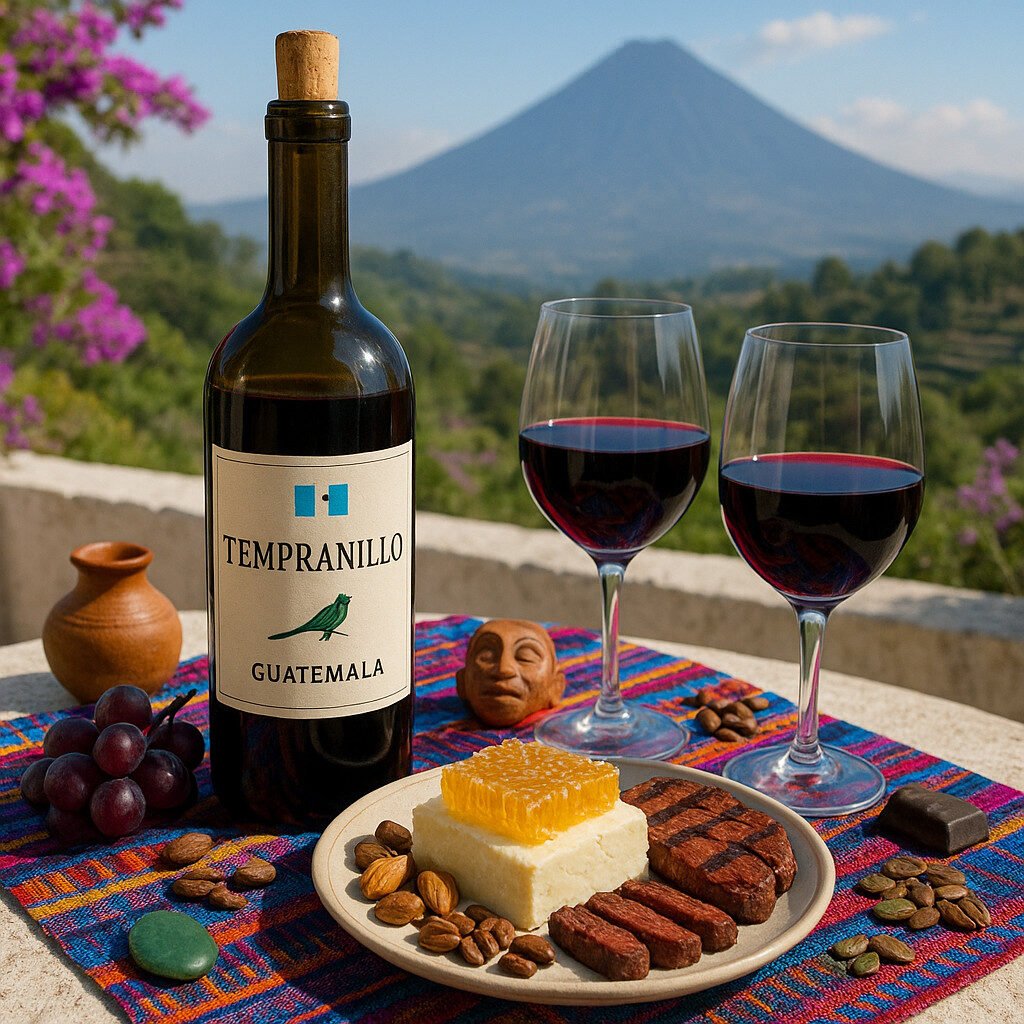
Tempranillo from Guatemala is a red wine produced from the Tempranillo grape variety. It showcases the unique adaptation of this vine to Central American highland conditions.
- Colour: Deep ruby red with violet reflections.
- Wine style: Still red wine.
- Main grape varieties: Tempranillo, typically as a single varietal.
- Sweetness level: Dry, with residual sugar usually below 4 grams per liter.
- Acidity: Medium to high, around 5-7 grams per liter tartaric acid.
- Tannin structure: Medium to firm, well-integrated from skin contact.
- Alcohol range: 12.5% to 14.5% by volume.
- Body: Medium to full-bodied.
- Typical serving temperature: 16-18°C.
- Protected status: As far as current information suggests, no specific protected designation of origin exists for Guatemalan wine.
The Tempranillo grape thrives in Guatemala’s elevated vineyards above 1500 meters. Cool nighttime temperatures preserve natural acidity and slow ripening. Winemakers often employ careful canopy management to optimize sun exposure and prevent disease in the humid climate.
Where and How Tempranillo from Guatemala Is Made
Tempranillo from Guatemala is primarily cultivated in the central highlands, including areas near Antigua and Lake Atitlán. These regions feature volcanic soils rich in minerals and a temperate climate with distinct wet and dry seasons. The high altitude ensures significant diurnal temperature shifts that enhance grape complexity.
Production philosophy often blends sustainable viticulture with modern winemaking techniques. Many vineyards practice organic methods to protect the local ecosystem. This approach results in wines that express both varietal character and terroir uniqueness.
- Vineyard work: Pruning occurs during the dry season from November to February. Canopy management controls sunlight and airflow to reduce fungal pressure. Irrigation is carefully managed to stress vines mildly for concentration.
- Grape selection: Hand-harvesting typically happens between February and April. Workers select only fully ripe, healthy clusters in the vineyard. This ensures optimal sugar levels and phenolic maturity.
- Destemming and crushing: Grapes are destemmed to avoid harsh tannins from stems. Light crushing follows to release juice without extracting bitter compounds. Some producers may include whole berries for carbonic maceration effects.
- Maceration: Skin contact lasts 5 to 10 days at temperatures of 25-28°C. This process extracts color, tannins, and flavor compounds. Pump-overs or punch-downs occur daily to enhance extraction.
- Fermentation: Alcoholic fermentation takes place in stainless steel tanks at 28-30°C for 7-10 days. Selected yeast strains ensure consistency and control. Cap management techniques optimize color and tannin integration.
- Malolactic fermentation: This secondary fermentation is standard practice. It softens acidity by converting malic to lactic acid over 2-4 weeks. It often occurs in barrels or tanks with temperature control.
- Maturation: Aging spans 6 to 18 months in French or American oak barrels. Some wines see a mix of new and used oak for complexity. Alternative vessels like concrete eggs may be used for minimal intervention styles.
- Clarification: Fining with agents like egg whites or bentonite removes harsh tannins. Light filtration ensures stability without stripping flavor. This step prepares the wine for bottling.
- Bottling: Wines are bottled under inert gas to prevent oxidation. They may undergo bottle aging for 3-6 months before release. Cork or screw cap closures preserve quality depending on producer preference.
Traditional methods involve longer maceration and aging in large, neutral oak for earthy notes. Modern producers use temperature-controlled fermentation and new oak for fruit intensity. Artisanal wineries focus on small batches with handcrafted attention, while commercial operations prioritize efficiency and broad appeal.
Flavor Profile: What Makes Tempranillo from Guatemala Special?
Tempranillo from Guatemala presents a deep ruby color with moderate viscosity. Aromas burst with red cherries, raspberries, and subtle floral hints of violet. Earthy notes of tobacco and leather emerge from the volcanic soil influence, adding depth to the bouquet.
The palate is dry with bright acidity that refreshes the mouthfeel. Medium tannins provide structure without aggression, supporting flavors of plum and blackberry. Oak aging introduces spices like vanilla and cinnamon, while the finish remains clean and moderately long due to the high-altitude growing conditions.
Quality Labels and Certifications for Wine from Guatemala
As far as can be verified at present, Guatemalan wine lacks a formal appellation system like European PDO or PGI. Some producers pursue organic certifications such as USDA Organic or equivalent local standards. These labels promote sustainable farming and minimal chemical use in the vineyard.
Regional indications may appear on labels to highlight origin, but no protected geographical indications exist currently. Winemakers often adopt self-imposed quality controls to ensure authenticity. As far as current information suggests, efforts toward formal certifications are evolving within the industry.
Cheese Pairings
Tempranillo from Guatemala pairs beautifully with semi-hard cheeses like Manchego or local Queso de Bola. The wine’s acidity cuts through the cheese’s fat content, while its tannins bind with proteins for a smooth texture. Classic Guatemalan pairings include mild fresh cheeses that let the wine’s fruit notes shine without overpowering.
International options like aged Gouda or Comté work well due to their nutty flavors and crystalline textures. In cooked dishes, melted cheese on enchiladas or gratin enhances the wine’s earthy and spicy elements. The saltiness of blue cheeses can contrast nicely with the wine’s vibrant acidity, creating a balanced experience.
Suitable Fruit and Vegetables
Fresh tomatoes and roasted bell peppers complement Tempranillo from Guatemala with their sweet acidity. Grilled eggplant and zucchini absorb the wine’s flavors, adding smoky depth to pairings. Dried fruits like apricots or raisins highlight the wine’s subtle spice notes in composed dishes.
Bitter greens such as arugula or radicchio in salads provide a counterpoint to the wine’s fruitiness. Root vegetables like carrots or beets, when roasted, develop caramelized sugars that mirror the wine’s ripe berry character. Incorporating mushrooms or onions into recipes amplifies the earthy undertones of Tempranillo from Guatemala.
Suitable Meat and Fish dishes
Tempranillo from Guatemala excels with grilled beef or lamb, where its tannins soften the meat’s fibers. Charcuterie plates featuring chorizo or salami match the wine’s spicy and earthy profile. For hot dishes, slow-cooked stews with rich sauces embrace the wine’s body and complexity, creating a harmonious blend.
Fish options like grilled tuna or salmon stand up to the wine’s structure when seasoned with herbs. The acidity in Tempranillo from Guatemala balances the oiliness of the fish, enhancing the overall dish. Pasta with meat-based ragù or seafood in tomato sauce also pairs effectively, depending on the seasoning and preparation style.
Questions and Answers
How should I store Tempranillo from Guatemala? Store Tempranillo from Guatemala in a cool, dark place at 12-14°C with consistent humidity. Keep bottles horizontal to maintain cork integrity and prevent premature aging. Avoid temperature fluctuations to preserve the wine’s quality over time.
What is the ideal serving temperature for Tempranillo from Guatemala? Serve Tempranillo from Guatemala at 16-18°C to highlight its fruit and structure. Chilling it slightly below room temperature can enhance freshness. Use a wine thermometer for accuracy to ensure optimal enjoyment.
Should I decant Tempranillo from Guatemala? Decanting Tempranillo from Guatemala for 30-60 minutes before serving can soften tannins and release aromas. Younger bottles benefit more from aeration to open up flavors. Older vintages may require careful decanting to separate sediment.
How long can I age Tempranillo from Guatemala? Tempranillo from Guatemala can age for 3-7 years in proper storage conditions. High-quality examples may develop greater complexity over time. Monitor the wine periodically to enjoy it at its peak.
What foods pair best with Tempranillo from Guatemala? Tempranillo from Guatemala pairs well with grilled meats, hard cheeses, and tomato-based dishes. Its acidity and tannins complement rich, savory flavors. Experiment with local Guatemalan cuisine for authentic matches.
Can I chill Tempranillo from Guatemala? Light chilling of Tempranillo from Guatemala to 14-16°C can refresh its profile in warm weather. Avoid over-chilling to prevent muting its aromas and flavors. This technique works well for casual drinking occasions.
How do I handle leftover Tempranillo from Guatemala? Recork leftover Tempranillo from Guatemala tightly and refrigerate it for up to 3 days. Use a vacuum pump to remove air and slow oxidation. Consider using leftovers in cooking to enhance sauces or marinades.
Where can I buy Tempranillo from Guatemala? Purchase Tempranillo from Guatemala from specialty wine shops or online retailers focusing on Central American wines. Check importers who source directly from Guatemalan producers. Availability may vary by region, so inquire with local distributors.
What is the shelf life after opening Tempranillo from Guatemala? Opened Tempranillo from Guatemala remains drinkable for 2-4 days if stored properly. Its vibrant acidity helps preserve freshness longer than some reds. Reseal and refrigerate to extend usability.
How does Tempranillo from Guatemala compare to other red wines? Tempranillo from Guatemala offers brighter acidity and lighter body compared to Spanish Tempranillo. It shares fruitiness with Garnacha but has more structure. Its unique terroir sets it apart from similar varieties in other regions.
Similar Wines and Alternatives
Tempranillo from Guatemala resembles Spanish Tempranillo from regions like Ribera del Duero but with higher acidity and lighter body due to cooler climates. Argentine Malbec serves as a robust alternative with similar dark fruit notes and approachable tannins. Chilean Carménère offers comparable spice and earthiness, often at competitive price points in international markets.
For those exploring within Central America, Honduran or Costa Rican red blends might provide similar profiles with local twists. These wines typically feature good value and accessibility. Differences include varying alcohol levels and oak influence, so taste comparisons can guide preferences based on desired intensity and complexity.