
In this article
What Is Grenadian Syrah from Grenada?
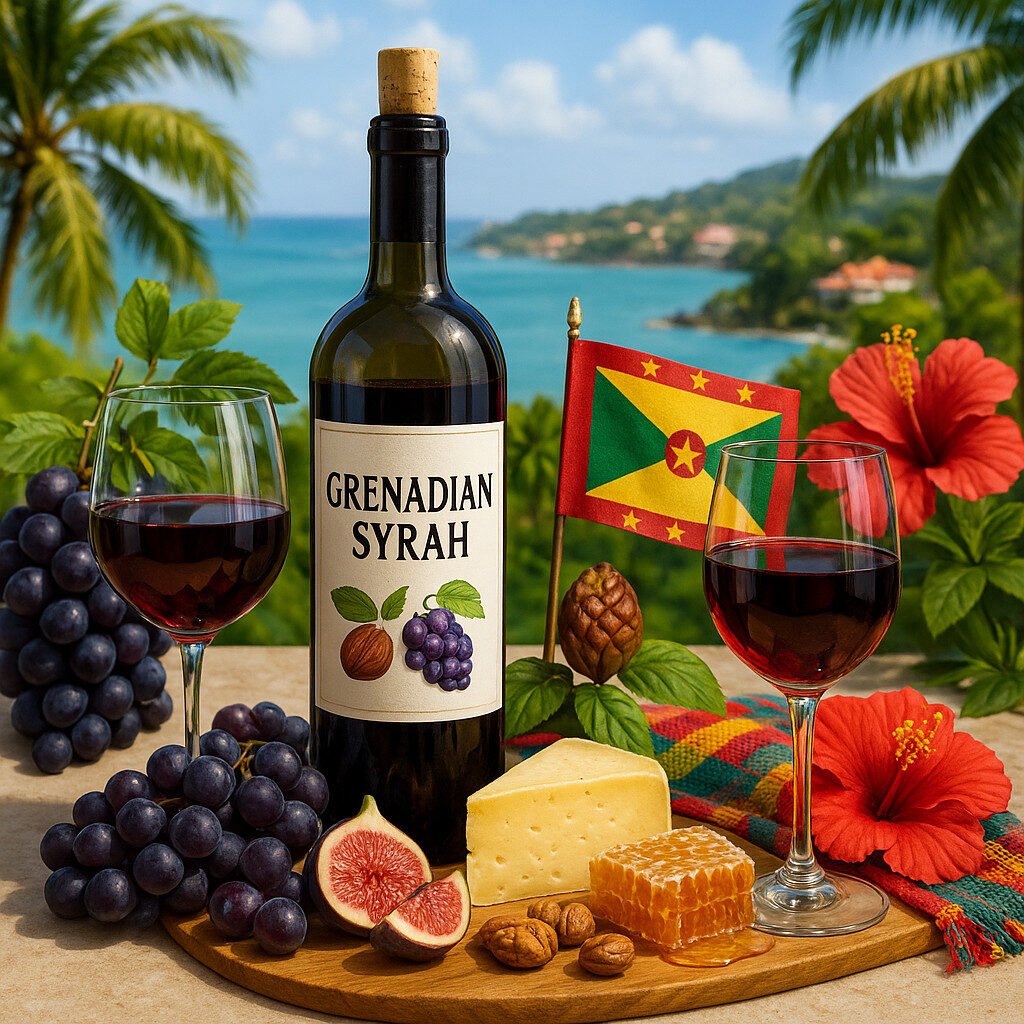
Grenadian Syrah is a distinguished red wine produced exclusively on the island of Grenada. It reflects the island’s volcanic soils and warm climate through its powerful structure and aromatic complexity.
- Colour: Deep ruby red with purple hues.
- Wine style: Still red wine.
- Main grape varieties: Syrah.
- Sweetness level: Dry.
- Acidity: Medium to high.
- Tannin structure: Firm and grippy.
- Alcohol range: 13-14% vol.
- Body: Full-bodied.
- Typical serving temperature: 16-18°C.
- Protected status: No specific protected designation as far as current information suggests.
Grenadian Syrah often exhibits a riper fruit profile compared to cooler climate Syrahs due to Grenada’s consistent warmth. The wine’s tannins are well-integrated, providing a smooth mouthfeel despite their intensity. Volcanic minerality contributes to a distinct earthy undertone that enhances its regional character.
Where and How Grenadian Syrah from Grenada Is Made
Grenadian Syrah originates from small vineyards across Grenada’s hilly parishes, such as St. George and St. David. The tropical climate features high humidity and annual rainfall, which viticulturists manage through careful canopy practices. Volcanic and clay-rich soils impart mineral notes and support vine roots in well-drained conditions.
Producers emphasize sustainable farming to preserve the island’s ecosystem. Vineyards are typically situated on slopes to maximize sun exposure and air circulation. This approach minimizes disease pressure and promotes even grape ripening throughout the growing season.
- Vineyard work involves pruning during the dry season from January to March and canopy management for optimal sunlight penetration.
- Grape selection occurs through hand-harvesting, ensuring only fully ripe, healthy Syrah clusters are picked.
- Harvest takes place between late January and early March, timed to avoid excessive rainfall.
- Destemming and crushing are done gently to preserve fruit integrity and avoid harsh tannins.
- Maceration lasts 7-10 days at 25-30°C, extracting color and flavor compounds from the skins.
- Fermentation proceeds in stainless steel tanks at 28-30°C for 10-14 days with selected yeast strains.
- Malolactic fermentation is commonly induced to soften acidity and add buttery nuances.
- Maturation occurs in French oak barrels for 6-12 months, enhancing complexity and structure.
- Clarification uses light fining with egg whites or bentonite to stabilize the wine.
- Bottling is performed with minimal filtration to retain the wine’s full flavor profile.
Artisanal producers often use wild ferments and extended maceration for greater depth, while larger wineries may opt for temperature control and faster processes. Traditional methods emphasize handcrafting and smaller yields, resulting in more concentrated Grenadian Syrah. Modern techniques focus on consistency and accessibility, appealing to broader markets.
Flavor Profile: What Makes Grenadian Syrah from Grenada Special?
Grenadian Syrah presents a deep, opaque ruby color with notable viscosity that coats the glass. Its aroma bursts with blackberry, plum, and ripe cherry, complemented by black pepper, violets, and a hint of smoked meat. Volcanic soil influences add a graphite-like minerality, while oak aging introduces vanilla and toast notes.
On the palate, Grenadian Syrah offers bold flavors of dark fruits, licorice, and baking spices, with high alcohol contributing to a warm finish. Acidity is vibrant, balancing the wine’s richness and extending its length. Firm tannins provide structure, making it suitable for aging, though it is approachable in its youth.
Quality Labels and Certifications for Wine from Grenada
As far as can be verified at present, Grenada does not have established protected designations of origin for wine like European PDO or PGI systems. Wines such as Grenadian Syrah may adhere to general Caribbean agricultural standards, which focus on food safety and labeling accuracy. Some producers pursue organic practices, though formal certification is not widespread.
Local initiatives promote quality through vineyard audits and winemaking guidelines, but these are voluntary. International importers often require basic quality assurances, ensuring Grenadian Syrah meets global market expectations. Sustainability efforts are growing, with some wineries implementing eco-friendly packaging and water conservation.
Cheese Pairings
Pairing Grenadian Syrah with Cheese
Grenadian Syrah pairs excellently with aged, firm cheeses like English cheddar or Spanish Manchego, which match its full body and tannic structure. The wine’s acidity cuts through the fat in these cheeses, cleansing the palate and highlighting savory notes. Salty, blue-veined cheeses such as Roquefort or Gorgonzola contrast beautifully with the wine’s fruit sweetness and spice.
Local Caribbean cheeses, like firm goat cheese or spiced varieties, offer a regional pairing that complements Grenadian Syrah’s tropical influences. In cooked dishes, melted Gruyère or Comté in gratins harmonize with the wine’s oak-derived flavors. Avoid fresh, mild cheeses as they can be overwhelmed by the wine’s intensity.
Suitable Fruit and Vegetables
Fruit and Vegetable Companions for Grenadian Syrah
Grilled or roasted vegetables like eggplant, bell peppers, and mushrooms enhance Grenadian Syrah’s earthy and smoky aspects. Their caramelized sugars and umami depth align with the wine’s ripe fruit profile. Dishes featuring sun-dried tomatoes or olive tapenade provide a salty counterpoint that elevates the wine’s complexity.
Fruits such as figs, plums, and blackberries in chutneys or salads mirror the wine’s dark fruit character. Dried fruits like dates or prunes add sweetness that balances Grenadian Syrah’s acidity. Avoid overly acidic or bitter greens, which can clash with the wine’s tannins and alcohol.
Suitable Meat and Fish dishes
Meat and Fish Dishes Enhanced by Grenadian Syrah
Grenadian Syrah excels with robust meat dishes like grilled lamb chops, beef stew, or venison, where its tannins bind with proteins. The wine’s peppery notes complement spices in jerk-seasoned meats, a local specialty. Charcuterie plates with salami or prosciutto allow the wine’s fruitiness to shine against salty, cured flavors.
For fish, oily varieties such as grilled tuna or swordfish stand up to Grenadian Syrah’s body, especially when prepared with hearty sauces. Avoid delicate white fish, which may be overpowered. In pasta dishes, meat-based ragù or mushroom risotto pairs well, emphasizing the wine’s structure and depth.
Questions and Answers About Grenadian Syrah
How should I store Grenadian Syrah?
Store Grenadian Syrah in a cool, dark place at 12-14°C with consistent humidity. Keep bottles horizontal to keep the cork moist. Avoid temperature fluctuations to preserve Grenadian Syrah’s quality.
What is the ideal serving temperature for Grenadian Syrah?
Serve Grenadian Syrah at 16-18°C to highlight its aromas and balance. Chilling it slightly can soften tannins if the wine is young. Always decant Grenadian Syrah before serving to aerate it.
Does Grenadian Syrah need decanting?
Yes, decant Grenadian Syrah for 30-60 minutes before drinking to open up its flavors. This process helps integrate tannins and release aromatic compounds. Older vintages of Grenadian Syrah may require less decanting time.
How long can I age Grenadian Syrah?
Grenadian Syrah can age for 5-10 years in proper cellaring conditions. Its structure and acidity allow it to develop complex secondary notes. Younger Grenadian Syrah is more fruit-forward, while aged versions show leather and tobacco.
What foods pair best with Grenadian Syrah?
Grenadian Syrah pairs well with grilled meats, aged cheeses, and spicy dishes. Its bold profile complements rich, savory flavors. Avoid pairing Grenadian Syrah with delicate or sweet foods that may clash.
Where can I buy Grenadian Syrah?
Grenadian Syrah is available at specialty wine shops in Grenada and through online retailers. International distributors may carry limited quantities. Check with Caribbean wine importers for availability of Grenadian Syrah.
How long does Grenadian Syrah last after opening?
Grenadian Syrah remains drinkable for 3-5 days if recorked and refrigerated. Use a wine preserver to extend its life. The wine’s flavors may evolve, but Grenadian Syrah retains its character.
Should Grenadian Syrah be chilled or served at room temperature?
Serve Grenadian Syrah at a cool room temperature of 16-18°C. Slight chilling can enhance drinkability in warm climates. Never serve Grenadian Syrah too cold, as it mutes the aromas.
What is the alcohol content of Grenadian Syrah?
Grenadian Syrah typically has an alcohol content of 13-14% by volume. This range contributes to its full body and warming finish. Always check the label for specific details on Grenadian Syrah.
Are there any alternatives to Grenadian Syrah?
Similar wines include Australian Shiraz or French Rhône Syrah, which share bold fruit and spice. Grenadian Syrah offers a unique tropical twist. For a lighter option, try a Grenache blend as an alternative to Grenadian Syrah.
Similar Wines and Alternatives
How Grenadian Syrah Compares to Other Syrahs
Grenadian Syrah shares similarities with Australian Shiraz, both being full-bodied with dark fruit and pepper notes, but Grenadian versions often have higher acidity due to the tropical climate. French Syrah from the Northern Rhône, such as Hermitage, offers more earthy and floral tones, whereas Grenadian Syrah tends to be fruitier and less tannic. In terms of price, Grenadian Syrah may be more niche and slightly higher in cost due to limited production.
For alternatives, consider Syrah from California or Chile, which provide comparable body and alcohol levels but with different terroir expressions. Grenache blends from Spain or Southern Rhône can serve as substitutes with similar spice and red fruit profiles. Grenadian Syrah remains distinct for its volcanic minerality and Caribbean origin, making it a unique choice for enthusiasts.