
In this article
What Is Spätburgunder from Germany?
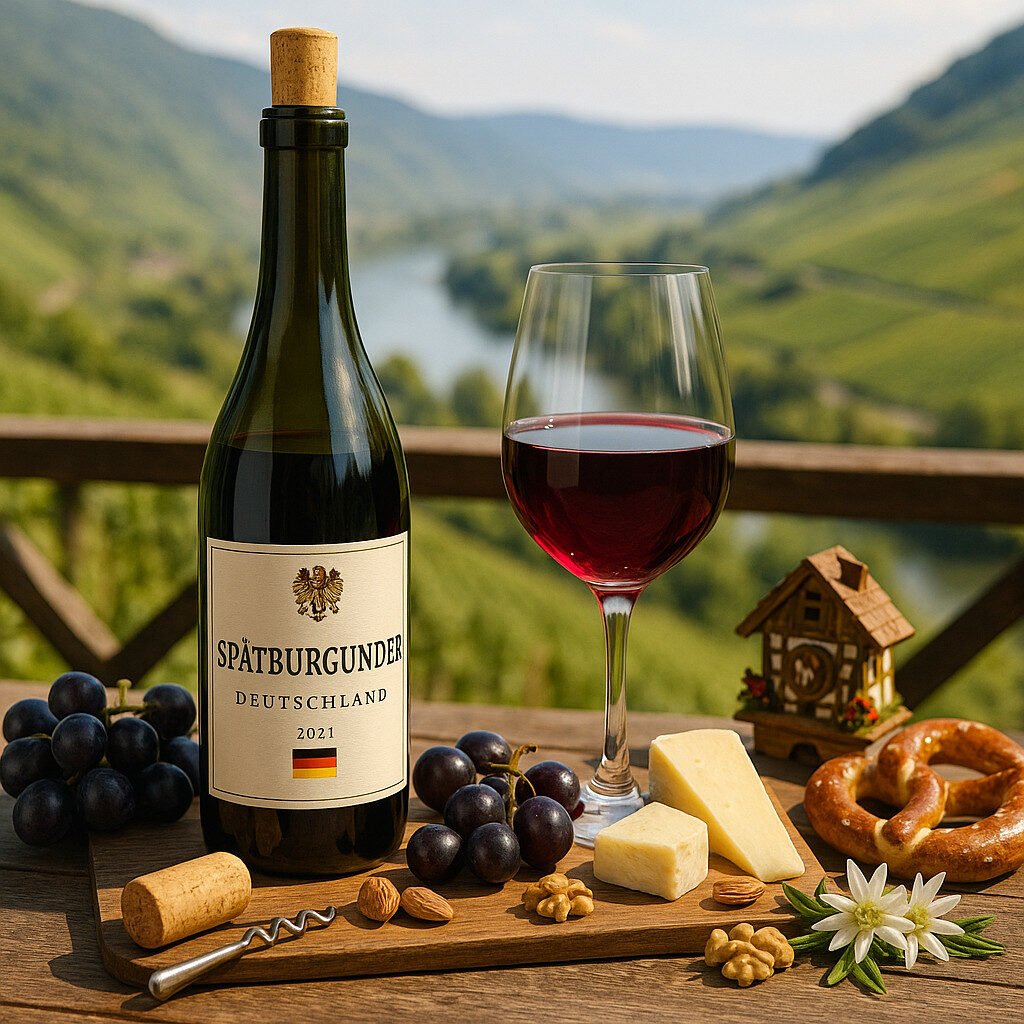
Spätburgunder is the German name for the Pinot Noir grape, crafting elegant red wines that rank among the country’s finest. It excels particularly in Germany’s cooler regions, where it develops a unique character marked by finesse and structure.
- Colour: Light to medium ruby red, often with garnet hues as it ages.
- Wine style: Still, predominantly dry, though some off-dry styles exist.
- Main grape varieties: Pinot Noir (Spätburgunder) is the sole or primary variety.
- Sweetness level: Typically dry, with residual sugar usually below 9 grams per liter.
- Acidity: High, providing freshness and longevity.
- Tannin structure: Low to medium, soft and well-integrated.
- Alcohol range: 11.5% to 13.5% by volume, depending on ripeness.
- Body: Light to medium-bodied, with a silky texture.
- Typical serving temperature: 14°C to 16°C for optimal expression.
- Protected status: Often falls under PDO designations like Qualitätswein or Prädikatswein within specific Anbaugebiete.
Spätburgunder’s profile is shaped by meticulous viticulture in sites with excellent sun exposure and well-drained soils. Winemakers often employ gentle extraction techniques to preserve the grape’s delicate aromas and avoid harsh tannins. The best examples can age gracefully for five to fifteen years, developing tertiary notes of forest floor and spice.
Where and How Spätburgunder from Germany Is Made
Spätburgunder cultivation centers on Germany’s sunniest wine regions, including Baden, Pfalz, and Ahr, where slopes and river valleys provide ideal microclimates. Soils range from limestone and loess to volcanic basalt, each imparting distinct mineral nuances to the wine. The production philosophy emphasizes site expression and sustainable practices, with many growers adhering to organic or biodynamic methods.
Vineyards are often planted on south-facing slopes to maximize sunlight absorption in the cool climate. Key appellations like the Kaiserstuhl in Baden or the Mittelhaardt in Pfalz are renowned for their Spätburgunder, benefiting from warm days and cool nights. This diurnal temperature variation helps retain acidity while promoting flavor concentration in the grapes.
- Vineyard work involves careful canopy management and green harvesting to ensure even ripening and reduce yields, typically from spring to summer.
- Grape selection occurs through hand-harvesting in September or October, prioritizing healthy bunches for quality.
- Harvest timing is critical, often determined by sugar levels and physiological maturity, to achieve optimal balance.
- Destemming and crushing are done gently, sometimes with whole clusters included for structure, using modern presses.
- Maceration lasts 5 to 14 days at temperatures between 18°C and 25°C to extract color and flavor without bitterness.
- Fermentation takes place in stainless steel tanks or oak vats, with temperatures controlled at 18°C to 28°C, using native or cultured yeasts.
- Malolactic fermentation is commonly induced in barrel or tank to soften acidity and enhance texture.
- Maturation occurs over 6 to 18 months in French or German oak barrels, with varying toast levels influencing spice notes.
- Clarification involves light fining with egg whites or bentonite, or minimal filtering to preserve purity.
- Bottling follows aging, with many wines resting briefly in bottle before release to integrate flavors.
Traditional Spätburgunder production often involves longer maceration and older, larger barrels for subtle oak influence. In contrast, modern approaches may use shorter maceration, new barriques, and temperature control for fruit-forward styles. Artisanal producers focus on low-intervention winemaking, while mass-market versions might prioritize consistency through technological aids.
Flavor Profile: What Makes Spätburgunder from Germany Special?
Spätburgunder displays a pale to medium ruby color with moderate viscosity, hinting at its elegance. Aromas burst with red fruits like cherry, raspberry, and strawberry, complemented by floral notes of violet and rose. Earthy undertones of mushroom, forest floor, and subtle spice from oak aging add complexity, while the palate shows bright acidity and soft tannins.
Flavor intensity ranges from delicate to concentrated, with dryness accentuated by the high acidity that defines German styles. The body remains light to medium, leading to a lingering finish that often reveals hints of vanilla or tobacco. Factors like grape ripeness, with cooler vintages emphasizing red fruit and herbs, and oak treatment, where barriques contribute toast and smoke, deeply shape this profile.
Quality Labels and Certifications for Wine from Germany
Spätburgunder in German Quality Systems
As far as current information suggests, Spätburgunder often falls under Germany’s Qualitätswein bestimmter Anbaugebiete (QbA) or higher Prädikatswein categories, which denote origin and quality levels. The VDP (Verband deutscher Prädikatsweingüter) classification further distinguishes top sites with designations like Grosse Lage for grand cru equivalents. These systems ensure that Spätburgunder from designated regions meets strict standards for grape maturity and winemaking practices.
Protected designations of origin, such as those for regions like Baden or Pfalz, guarantee that the wine originates from specific terroirs with traditional methods. Sustainability certifications, like ECOVIN for organic viticulture, are increasingly common, reflecting a commitment to environmental stewardship. As far as can be verified at present, these labels help consumers identify Spätburgunder with assured quality and authenticity.
Cheese Pairings
Spätburgunder Pairings with Local Cheeses
Spätburgunder pairs excellently with German cheeses like Limburger or Weinkase, where the wine’s acidity cuts through the fat and enhances creamy textures. The subtle earthiness of the cheese complements the wine’s mushroom and forest notes, creating a harmonious balance. For international options, semi-soft cheeses such as Brie or Camembert work well, as their mild pungency aligns with Spätburgunder’s fruit and spice.
Aged cheeses like Gouda or Comté bring out the wine’s tertiary flavors, while the saltiness contrasts with its bright acidity. In cooked dishes, incorporating Spätburgunter into sauces for cheese fondues or gratins allows the wine’s body to meld with the richness. The key is to match intensity, avoiding overly sharp cheeses that could overwhelm the wine’s delicate structure.
Suitable Fruit and Vegetables
Fruit Combinations for Spätburgunder
Fresh fruits like cherries, strawberries, and raspberries mirror Spätburgunder’s red fruit profile, making them ideal in salads or compotes. Their natural acidity resonates with the wine’s vibrant character, while slight sweetness balances any tannic edge. Roasted vegetables such as beetroot or mushrooms deepen the earthy connection, with their umami qualities enhancing the wine’s complexity.
Dried fruits like figs or apricots can be used in stuffings or sides, adding a touch of sweetness that contrasts with Spätburgunder’s dryness. Bitter greens like radicchio in salads provide a counterpoint to the wine’s fruitiness, and the texture of grilled eggplant or zucchini complements its medium body. Overall, the goal is to highlight the wine’s acidity and fruit without masking its subtlety.
Suitable Meat and Fish dishes
Meat Dishes Enhanced by Spätburgunder
Spätburgunder shines with poultry and game birds like duck or pheasant, where its acidity cuts through the richness and highlights herbal notes. In cold servings, charcuterie plates with prosciutto or salami allow the wine’s red fruit to contrast with salty, fatty meats. For hot dishes, roasted pork with herbs or venison stews embrace the wine’s earthy undertones and soft tannins.
Fish dishes such as grilled salmon or trout pair well, as the wine’s brightness complements the oiliness without overpowering it. Pasta with mushroom-based sauces or coq au vin made with Spätburgunder itself creates a synergistic effect. The key is to avoid heavily spiced or smoked meats that could dominate the wine’s delicate profile.
Questions and Answers
How should I store Spätburgunder?
Store Spätburgunder in a cool, dark place at 10°C to 15°C with stable humidity. Keep bottles horizontally to keep corks moist and prevent oxidation. Spätburgunder benefits from consistent conditions to maintain its delicate aromas and structure.
What is the ideal serving temperature for Spätburgunder?
Serve Spätburgunder between 14°C and 16°C to enhance its aromatic complexity and balance. Chilling it slightly below room temperature highlights the acidity and fruit flavors. Avoid serving Spätburgunder too warm, as it can emphasize alcohol and mask subtleties.
Should I decant Spätburgunder before drinking?
Decant younger Spätburgunder for 30 minutes to open up its aromas and soften tannins. Older vintages may benefit from careful decanting to separate sediment. Spätburgunder generally does not require prolonged aeration like heavier reds.
How long can I keep an opened bottle of Spätburgunder?
An opened bottle of Spätburgunder lasts 2 to 4 days if recorked and refrigerated. Use a vacuum pump to remove air and preserve freshness. Spätburgunder’s high acidity helps it retain character longer than many red wines.
What foods pair best with Spätburgunder?
Spätburgunder pairs well with roasted meats, poultry, and mushroom-based dishes. Its acidity complements fatty foods like duck or creamy cheeses. Avoid overly spicy or sweet dishes that could clash with Spätburgunder’s profile.
Where is the best place to buy Spätburgunder?
Buy Spätburgunder from specialized wine shops, online retailers, or directly from German wineries. Look for reputable producers in regions like Baden or Pfalz for quality assurance. Spätburgunder is widely available in markets with a focus on European wines.
What is the aging potential of Spätburgunder?
High-quality Spätburgunder can age for 5 to 15 years, developing tertiary notes of earth and spice. Lighter styles are best consumed within 3 to 5 years for fruit freshness. Spätburgunder from top vintages and sites often improves with cellaring.
How does Spätburgunder compare to other Pinot Noirs?
Spätburgunder typically has higher acidity and lighter body than Pinot Noir from warmer regions like Burgundy. It often shows more red fruit and floral notes, with less oak influence. Spätburgunder offers a unique expression due to Germany’s cool climate.
Can Spätburgunder be used in cooking?
Yes, Spätburgunder works well in sauces, stews, and reductions for meat dishes. Its acidity and fruitiness enhance flavors without overpowering ingredients. Use Spätburgunder in recipes like coq au vin for an authentic touch.
What should I do with leftover Spätburgunder?
Use leftover Spätburgunder in cooking, such as deglazing pans or making wine-based marinades. Alternatively, freeze it in ice cube trays for future use in sauces. Spätburgunder can also be enjoyed chilled the next day if stored properly.
Similar Wines and Alternatives
If you enjoy Spätburgunder, consider Pinot Noir from Burgundy, France, which shares similar red fruit and earth profiles but often has more structure and higher tannins. German alternatives like Trollinger or Schwarzriesling offer lighter bodies and brighter acidity, though they lack Spätburgunder’s complexity. From the New World, Oregon Pinot Noir provides a fruit-forward style with comparable acidity, but at a generally higher price point.
Wines like Austrian Blauburgunder or Italian Pinot Nero mirror Spätburgunder’s elegance but may show riper fruit due to warmer climates. For value seekers, Spätburgunder from lesser-known German regions like Württemberg can be more accessible without sacrificing quality. Differences include body weight, with Spätburgunder typically lighter than many alternatives, and alcohol levels that remain moderate, making it versatile for various occasions.