
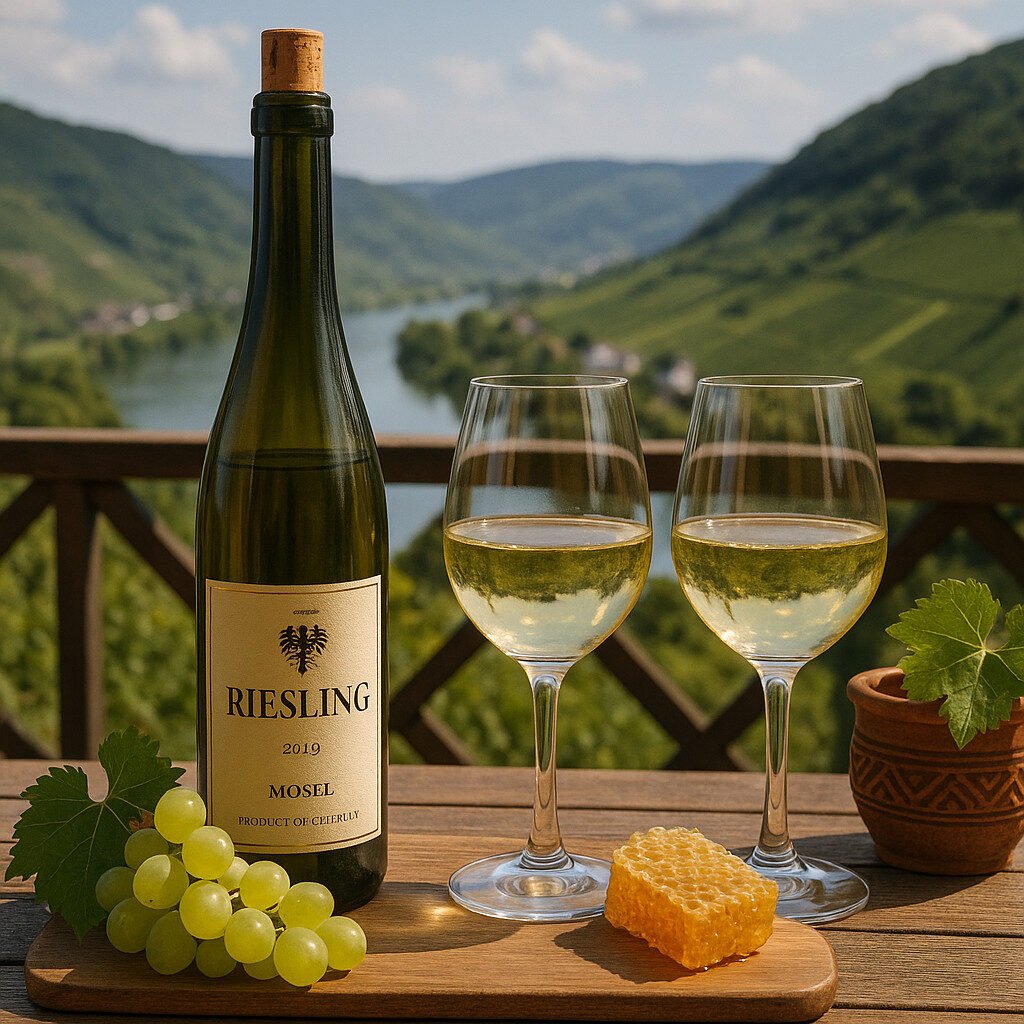
German Riesling exemplifies the height of aromatic white wine craftsmanship, offering a dynamic range from bone-dry to intensely sweet profiles. Its vibrant acidity and mineral depth make it a favorite among sommeliers and chefs for food pairing versatility.
In this article
What Is Riesling from Germany?
German Riesling is a white wine produced exclusively from the Riesling grape, known for its pronounced acidity and aromatic intensity. It reflects the cool climate and diverse soils of Germany’s wine regions, yielding styles that span dry to sweet.
- Colour: Pale straw to golden yellow, deepening with age and sweetness level.
- Wine style: Still white wine, with occasional light effervescence in some interpretations.
- Main grape varieties: 100% Riesling.
- Sweetness level: Ranges from dry (Trocken) to off-dry (Halbtrocken) and sweet (Kabinett, Spätlese, Auslese, Beerenauslese, Trockenbeerenauslese).
- Acidity: High, providing structure and freshness.
- Tannin structure: Minimal, as typical for white wines.
- Alcohol range: 8% to 12.5% ABV, varying with ripeness and style.
- Body: Light to medium-bodied.
- Typical serving temperature: 8-10°C for dry styles, 6-8°C for sweeter versions.
- Protected status: Protected Designation of Origin (PDO) under EU law, with German Qualitätswein and Prädikatswein classifications.
German Riesling often displays flavors of green apple, lime, and peach, supported by a slate-driven minerality. The Prädikatswein system categorizes wines by must weight, influencing sweetness and body. Aging potential is significant, with top examples developing honey and petrol notes over decades.
Where and How Riesling from Germany Is Made
German Riesling thrives in key regions like Mosel, Rheingau, Pfalz, and Nahe, where steep slopes and river valleys optimize sun exposure. Soils vary from slate in Mosel to limestone in Franken, imparting distinct mineral characters to the wine. The cool continental climate ensures slow ripening, preserving acidity and aromatic compounds.
Vineyard practices emphasize sustainable viticulture, with many estates practicing hand-harvesting for selective picking. Traditional winemaking focuses on expressing terroir, while modern techniques may include temperature-controlled fermentation for purity.
- Vineyard work: Canopy management and green harvesting occur in spring and summer to control yields and enhance ripeness. Soil maintenance includes organic composting to support vine health.
- Grape selection: Hand-harvesting typically happens from September to November, with multiple passes for different sweetness levels. Berries are sorted to remove botrytis-affected or underripe fruit.
- Harvest: Grapes are picked at optimal ripeness, often measured in Oechsle degrees, ranging from 70°Oe for Kabinett to over 150°Oe for Trockenbeerenauslese.
- Destemming and crushing: Most producers destem gently to avoid bitter tannins, then crush to release juice. Some estates use whole-cluster pressing for finer textures.
- Maceration: Skin contact is minimal, usually less than 12 hours, to extract aromas without harsh phenolics. Temperature is kept below 15°C to preserve freshness.
- Fermentation: Occurs in stainless steel tanks or traditional oak casks (Fuder) at 14-18°C for 2-4 weeks. Natural yeasts are sometimes used for complexity.
- Malolactic fermentation: Generally avoided to maintain acidity, though some dry styles may undergo partial conversion for softer texture.
- Maturation: Ages on fine lees for 3-12 months in tank or large oak, enhancing body and complexity. Sweet wines may mature longer, up to several years.
- Clarification: Light fining with bentonite or filtration ensures stability without stripping flavors. Many quality wines are bottled unfiltered for authenticity.
- Bottling: Done carefully to avoid oxidation, with cork or screw cap closures based on style and market.
Traditional methods often involve spontaneous fermentation and extended lees aging, yielding wines with greater complexity. Modern approaches favor temperature control and earlier bottling for fruit-forward styles. Artisanal producers focus on single-vineyard expressions, while larger operations may blend for consistency.
Key German Riesling Regions
The Mosel region is famous for its steep slate vineyards, which impart racy acidity and floral notes to Riesling. Rheingau produces fuller-bodied examples with stone fruit flavors, thanks to its south-facing slopes along the Rhine River. Pfalz offers richer, drier styles due to its warmer climate and diverse soils.
Nahe Rieslings balance fruit and minerality, often from volcanic and sandstone soils. Franken bottles in distinctive Bocksbeutels yield earthy, dry wines suited to local cuisine. Baden, Germany’s warmest region, creates powerful Rieslings with higher alcohol and tropical fruit hints.
Flavor Profile: What Makes Riesling from Germany Special?
German Riesling presents a pale straw to gold hue with noticeable viscosity in sweeter versions. Aromas burst with citrus like lemon and lime, floral notes of honeysuckle, and stone fruits such as peach and apricot. Herbal undertones of mint or thyme and mineral impressions of wet slate add complexity, while oak influence is rare, preserving fruit purity.
On the palate, it offers high acidity that balances sweetness, creating a refreshing yet layered experience. Flavors intensify from green apple in drier styles to honeyed peach in Auslese, with a light to medium body and crisp finish. Aging potential allows development of petrol, beeswax, and marmalade notes, enhanced by factors like grape ripeness and cool fermentation.
Quality Labels and Certifications for Wine from Germany
As far as current information suggests, German Riesling falls under the EU Protected Designation of Origin (PDO) system, with Qualitätswein bestimmter Anbaugebiete (QbA) ensuring regional origin and minimum quality standards. Prädikatswein represents the highest level, categorized by must weight into Kabinett, Spätlese, Auslese, Beerenauslese, Eiswein, and Trockenbeerenauslese, each denoting specific ripeness and style.
Additional certifications include VDP classifications for elite estates, emphasizing terroir-driven wines from designated Erste Lage and Grosse Lage vineyards. Organic and sustainable labels, such as Ecovin or Demeter, are increasingly common, promoting environmentally friendly practices in Riesling production.
Cheese Pairings
German Riesling pairs excellently with fresh, acidic cheeses like goat cheese or feta, where its high acidity cuts through the creaminess. The wine’s sweetness in off-dry styles balances salty, aged cheeses such as Gouda or Comté, enhancing nutty flavors. Local German pairings include Handkäse with music, a sour milk cheese that contrasts with Riesling’s fruitiness.
For international options, try blue cheeses like Roquefort, where Riesling’s sweetness counteracts the pungency. In cooked dishes, incorporate Riesling with cheese in fondues or gratins, as its acidity prevents richness from overwhelming the palate. The wine’s low tannin and vibrant character make it versatile across cheese intensities and textures.
Suitable Fruit and Vegetables
Fresh fruits like apples, pears, and citrus complement German Riesling’s acidity and fruit notes, ideal in salads or salsas. Cooked vegetables such as asparagus or fennel highlight the wine’s herbal undertones, especially in creamy sauces. Dried apricots or figs in dishes mirror the sweetness of Spätlese Rieslings, creating harmonious flavor bridges.
Bitterness in vegetables like radicchio or endive is softened by Riesling’s residual sugar in off-dry styles. Roasted root vegetables with honey glazes enhance the wine’s mineral depth, while pickled vegetables provide a tangy contrast. Colorful bell peppers and zucchini in stir-fries allow Riesling’s brightness to shine without overpowering subtle flavors.
Suitable Meat and Fish Dishes
For cold servings, German Riesling excels with smoked salmon or trout, where its acidity cleanses the palate. Charcuterie plates featuring prosciutto or salami benefit from the wine’s sweetness balancing salt and fat. In traditional German cuisine, it accompanies Weißwurst or Leberkäse, highlighting the regional affinity.
Hot dishes like roasted chicken or pork loin pair well with drier Rieslings, as the wine’s acidity cuts through richness. Grilled fish such as sea bass or pike-perch enhance the mineral notes, while stews with root vegetables allow for broader flavor integration. Spicy Asian dishes, like Thai curry, are tempered by off-dry Rieslings, making it a global pairing champion.
Questions and Answers about German Riesling
How should I store German Riesling?
Store German Riesling in a cool, dark place at 10-15°C with consistent humidity. Lay bottles horizontally if cork-sealed to keep the cork moist. German Riesling can age for years in proper conditions.
What is the best way to serve German Riesling?
Serve German Riesling chilled at 8-10°C for dry styles and 6-8°C for sweeter ones. Use a tulip-shaped glass to concentrate aromas. German Riesling benefits from slight aeration before drinking.
Should I decant German Riesling?
Decant younger German Riesling for 30 minutes to open up aromas, especially for rich styles like Spätlese. Older German Riesling may not need decanting to avoid overwhelming delicate notes.
How do I chill or temper German Riesling?
Chill German Riesling in the refrigerator for 2-3 hours before serving. If too cold, let it warm slightly at room temperature for 10-15 minutes. German Riesling should never be frozen or overheated.
When is the best time to drink German Riesling?
Drink German Riesling young for vibrant fruit or aged for complex notes like petrol. Most German Riesling is ready upon release but can improve for decades. Enjoy German Riesling with meals or solo.
How do I combine German Riesling with food?
Combine German Riesling with spicy, salty, or fatty dishes to balance its acidity and sweetness. German Riesling pairs well with Asian cuisine, seafood, and pork. Avoid overly bitter foods with German Riesling.
Where can I buy German Riesling?
Buy German Riesling from specialty wine shops, online retailers, or directly from German estates. Look for importers with a focus on quality German wines. German Riesling is widely available in many markets.
What is the shelf life of German Riesling after opening?
German Riesling lasts 3-5 days in the refrigerator after opening, with a stopper to minimize oxidation. Sweeter German Riesling may hold up slightly longer due to higher sugar and acidity.
What is the aging potential of German Riesling?
German Riesling has excellent aging potential, with top Prädikatswein lasting 20+ years. Acidity and sugar preserve German Riesling, allowing flavors to evolve into honey and petrol nuances.
How should I handle leftovers of German Riesling?
Handle leftovers of German Riesling by recorking and refrigerating promptly. Use leftover German Riesling in cooking, such as deglazing pans or making sauces, to avoid waste.
Similar Wines and Alternatives
Alsace Riesling from France offers a fuller body and drier profile compared to German Riesling, with higher alcohol and pronounced minerality. Austrian Riesling shares high acidity but tends to be drier and more peppery, often from terraced vineyards. For a New World alternative, Australian Riesling from Clare Valley is bone-dry with lime zest notes and less residual sugar.
Within Germany, Silvaner provides a lighter, earthier option with lower acidity, while Grauburgunder (Pinot Gris) offers richer texture and stone fruit flavors. Price-wise, German Riesling ranges from affordable QbA to premium Prädikatswein, similar to Alsace Grand Cru but often more accessible than aged Austrian Smaragd. Availability varies, with German Riesling widely stocked in international markets due to its reputation.