
In this article
What Is Dornfelder from Germany?
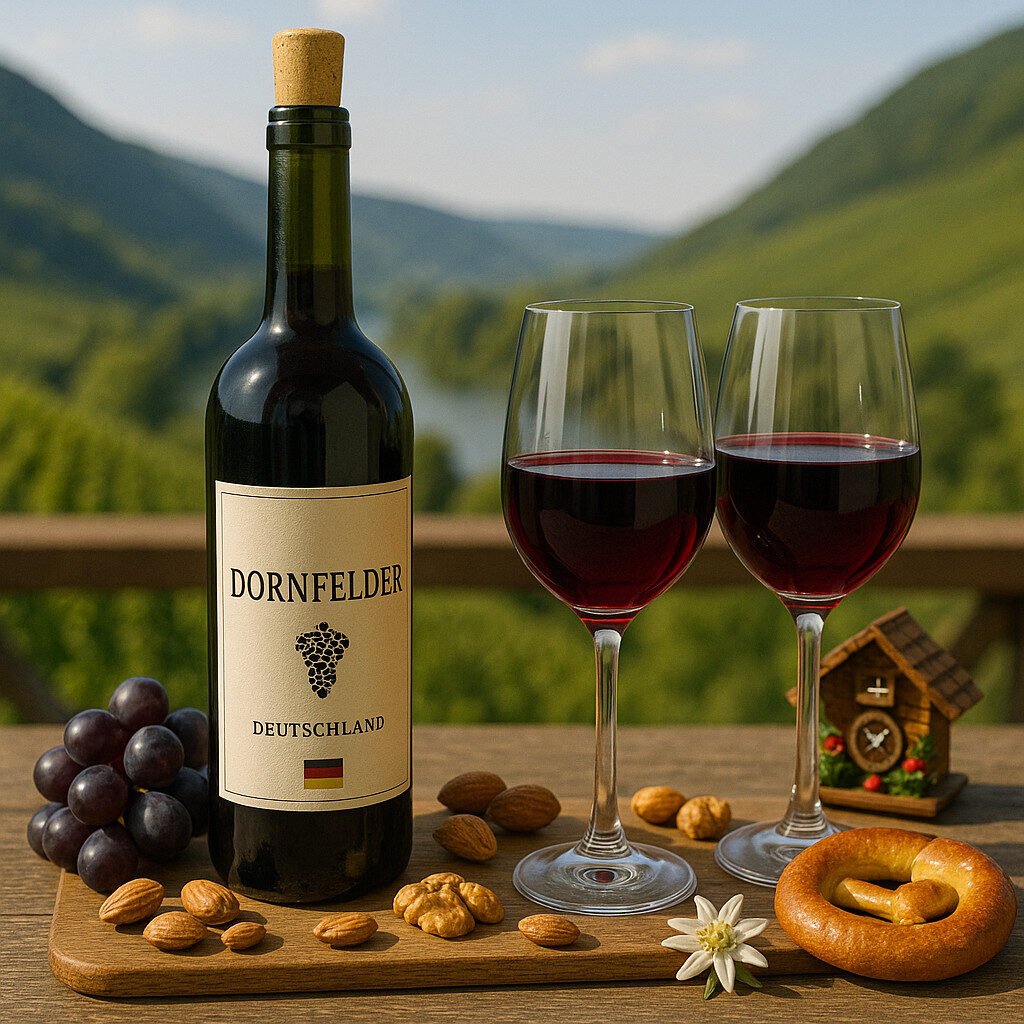
Dornfelder is a red wine grape variety developed in Germany specifically for its colour intensity and disease resistance. It has become one of Germany’s most planted red grapes, offering a full-bodied alternative to lighter German reds.
- Colour: Deep ruby to inky purple.
- Wine style: Still red wine.
- Main grape varieties: Dornfelder, typically as a single varietal.
- Sweetness level: Usually dry (trocken), but can be halbtrocken or lieblich.
- Acidity: Medium to high acidity.
- Tannin structure: Medium, soft and well-integrated tannins.
- Alcohol range: 12 to 13.5 percent by volume.
- Body: Medium to full body.
- Typical serving temperature: 16 to 18 degrees Celsius.
- Protected status: Often holds Qualitätswein (QbA) or Prädikatswein status under German wine law.
August Herold bred Dornfelder in 1955 at the Weinsberg research institute in Württemberg. This crossing of Helfensteiner and Heroldrebe grapes yields wines with notable extract and colour stability. Many German winemakers value Dornfelder for its reliability in the vineyard and consistent quality in the bottle.
Where and How Dornfelder from Germany Is Made
Dornfelder thrives primarily in Germany’s warmer wine regions such as Rheinhessen, Pfalz, and Württemberg. These areas benefit from a temperate continental climate with sufficient sunshine hours for full ripening. Soils vary from limestone and loess to clay and sandstone, which contribute to the wine’s structure.
Vineyards are often situated on south-facing slopes to maximize sun exposure. German vintners typically employ sustainable viticulture practices to maintain soil health. The production philosophy generally emphasizes fruit purity and tannin management.
- Vineyard work includes careful canopy management and green harvesting in July to reduce yields and concentrate flavours. This step ensures optimal air circulation and sunlight penetration.
- Grape selection occurs manually or mechanically before harvest, usually in late September to October. Only healthy, fully ripe clusters are chosen to avoid dilution.
- Harvest is timed based on sugar levels (Oechsle) and phenolic ripeness, often reaching 85 to 95 Oechsle. Night harvesting is common to preserve acidity.
- Destemming and crushing follow immediately after harvest to prevent oxidation. Modern presses gently extract juice without bitter compounds from skins.
- Maceration lasts five to ten days at 18 to 25 degrees Celsius to extract colour and tannins. Pump-overs or punch-downs are used daily.
- Fermentation takes place in stainless steel tanks or oak barrels at controlled temperatures of 20 to 28 degrees Celsius. Selected yeast strains may be used for consistency.
- Malolactic fermentation is often induced to soften acidity and enhance texture. This occurs in tank or barrel over several weeks.
- Maturation lasts six to eighteen months in stainless steel, large oak casks, or barriques. Oak aging imparts vanilla and spice notes if used.
- Clarification involves fining with egg whites or bentonite, followed by filtration. This stabilizes the wine without stripping flavour.
- Bottling occurs after stability tests, with some wines receiving additional bottle aging before release.
Traditional Dornfelder production often uses large old oak casks for maturation, resulting in softer, more oxidative styles. Modern approaches favour stainless steel tanks to highlight primary fruit flavours, while artisanal producers might use spontaneous fermentation. Mass-market versions may see shorter maceration and earlier bottling for immediate drinkability.
Flavor Profile: What Makes Dornfelder from Germany Special?
Dornfelder displays a dense, opaque ruby colour with violet hues and good viscosity. Its aroma profile bursts with dark berry notes like blackberry, blueberry, and Morello cherry. Floral hints of violet and subtle herbal undertones such as mint or thyme add complexity.
On the palate, Dornfelder offers intense fruit flavours complemented by soft, ripe tannins and vibrant acidity. Oak aging introduces nuances of vanilla, chocolate, or sweet spice, while the body remains medium to full. The finish is typically dry and lingering, with the wine’s natural acidity providing freshness and balance.
Quality Labels and Certifications for Wine from Germany
As far as current information suggests, Dornfelder often falls under Germany’s Qualitätswein (QbA) category, which requires grapes from one of 13 designated wine regions. Prädikatswein levels like Spätlese or Auslese may apply if residual sugar criteria are met. Many producers also adhere to regional specificities such as the VDP classification for top sites.
Protected designations of origin, as far as can be verified at present, include appellations like Rheinhessen or Pfalz under EU law. Organic certifications like Ecovin or Demeter are increasingly common, emphasizing sustainable practices. These labels assure consumers of rigorous production standards and geographical authenticity.
Cheese Pairings
Dornfelder pairs excellently with semi-hard German cheeses like Allgäuer Bergkäse or Limburger. The wine’s acidity cuts through the fat content, while its tannins bind with proteins for a smooth finish. Salty, aged cheeses highlight Dornfelder’s dark fruit notes without overpowering its structure.
Internationally, try Dornfelder with Gouda, Cheddar, or blue cheeses like Roquefort. The wine’s body stands up to bold flavours, and its sweetness balance complements salty or pungent profiles. In cooked dishes, incorporate Dornfelder into cheese sauces for pasta or gratins to enhance richness.
Suitable Fruit and Vegetables
Fresh fruits like blackberries, plums, and figs harmonize with Dornfelder’s berry-driven profile. Roasted vegetables such as bell peppers, eggplants, or mushrooms absorb the wine’s earthy tones. Dishes with fruit-based sauces, like cherry compote, elevate the pairing by mirroring the wine’s acidity.
Dried fruits including dates or prunes add a sweet contrast that softens Dornfelder’s tannins. Bitter greens like radicchio or kale in salads benefit from the wine’s fruitiness. Grilled or caramelized vegetables develop Maillard reactions that complement Dornfelder’s structure.
Suitable Meat and Fish dishes
Cold meat pairings for Dornfelder include German charcuterie like Schwarzwälder Schinken or liver pâté. The wine’s acidity cleanses the palate between bites of rich, fatty meats. For hot dishes, roasted pork, duck confit, or beef stews match Dornfelder’s body and spice notes.
Grilled salmon or tuna steaks work well due to Dornfelder’s moderate tannins and fruit intensity. Pasta with wild boar ragù or lamb casseroles highlight the wine’s rustic character. Avoid delicate white fish, as Dornfelder’s robustness may overwhelm lighter flavours.
Questions and Answers
How should I store Dornfelder?
Store Dornfelder in a cool, dark place at 12 to 14 degrees Celsius with consistent humidity. Keep Dornfelder bottles horizontal to keep the cork moist. Avoid vibrations and strong odors to preserve Dornfelder’s quality.
What is the ideal serving temperature for Dornfelder?
Serve Dornfelder at 16 to 18 degrees Celsius to enhance its aromas and structure. Chilling Dornfelder slightly below room temperature highlights its fruitiness. Never overchill Dornfelder, as it masks its complexity.
Should I decant Dornfelder before drinking?
Decant young Dornfelder for 30 minutes to open up its flavours and soften tannins. Older vintages of Dornfelder may benefit from careful decanting to separate sediment. Decanting Dornfelder aerates it and improves the drinking experience.
How do I chill or temper Dornfelder?
To chill Dornfelder, place it in a refrigerator for 20 to 30 minutes before serving. If Dornfelder is too cold, let it warm up gradually at room temperature. Always monitor Dornfelder’s temperature to avoid serving it too cold or too warm.
What is the best way to drink Dornfelder?
Drink Dornfelder from a large Bordeaux-style glass to concentrate its aromas. Sip Dornfelder slowly to appreciate its evolving flavours. Pair Dornfelder with food to balance its acidity and tannins.
How can I combine Dornfelder with food?
Combine Dornfelder with hearty dishes like roasted meats or aged cheeses. The acidity in Dornfelder cuts through rich foods, while its tannins complement proteins. Experiment with Dornfelder in sauces or marinades for deeper integration.
Where can I buy Dornfelder?
Buy Dornfelder from specialized wine shops, online retailers, or directly from German wineries. Look for Dornfelder in regions like Rheinhessen or Pfalz for authentic examples. Importers often stock Dornfelder in markets with strong German wine presence.
What is the shelf life of Dornfelder after opening?
Dornfelder lasts three to five days after opening if recorked and refrigerated. Use a vacuum pump to extend Dornfelder’s freshness by removing oxygen. Consume Dornfelder within a week for optimal flavour.
Does Dornfelder have aging potential?
Dornfelder can age for three to eight years, depending on the vintage and winemaking. High-quality Dornfelder with oak aging develops tertiary notes over time. Monitor Dornfelder’s evolution by tasting it annually.
How should I handle leftovers of Dornfelder?
Store leftover Dornfelder in a small, airtight container to minimize oxidation. Use leftover Dornfelder in cooking, such as deglazing pans or making reductions. Freezing Dornfelder is not recommended, as it alters the texture and flavour.
Similar Wines and Alternatives
If you enjoy Dornfelder, consider German Spätburgunder (Pinot Noir), which offers lighter body but similar acidity and red fruit notes. Portuguese Touriga Nacional provides comparable depth and dark fruit intensity, though with higher tannins. Both alternatives share Dornfelder’s food-friendly nature but may differ in price and availability.
International options like Merlot from France or California mimic Dornfelder’s soft tannins and plum flavours. Blaufränkisch from Austria presents a spicier profile with analogous acidity. These wines often cost more than Dornfelder but offer broader distribution in global markets.