
In this article
What Is Demerara Dry White from Guyana?
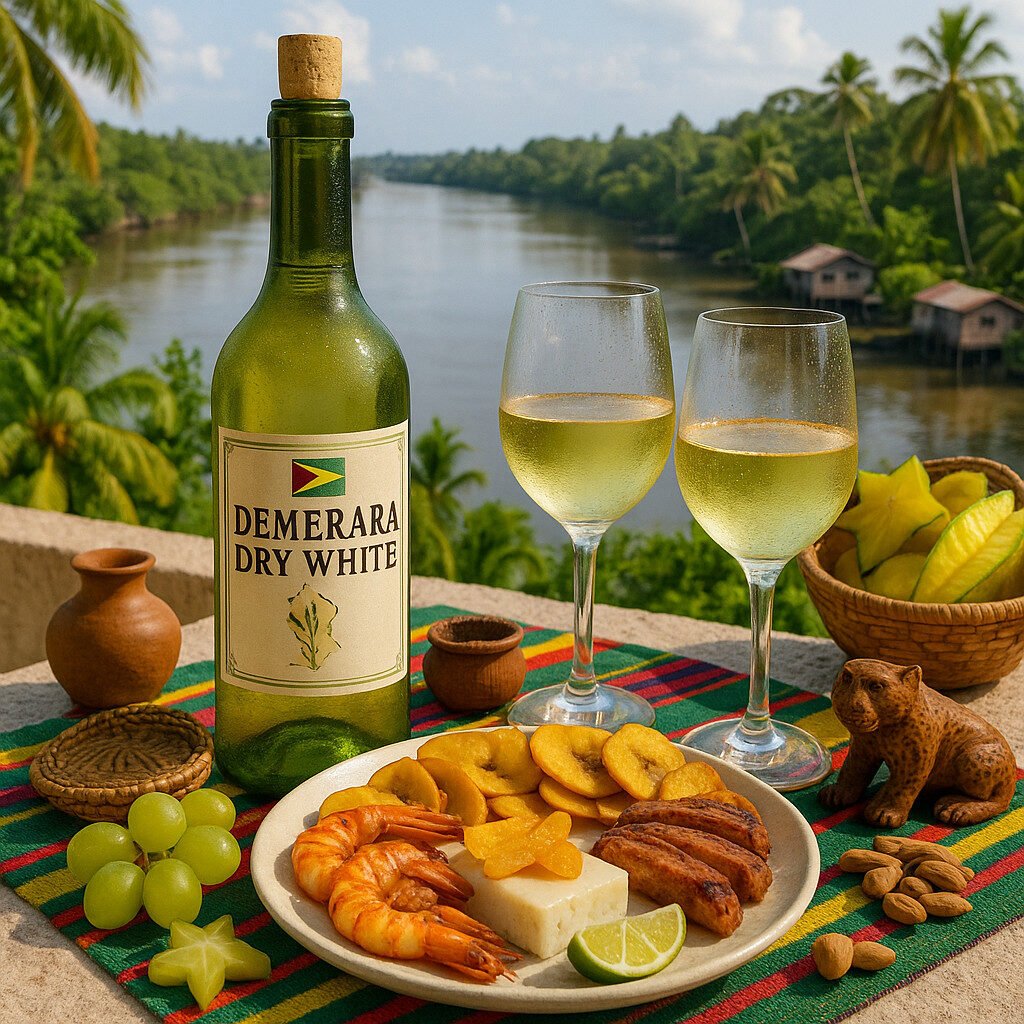
Demerara Dry White is a still white wine produced in Guyana’s coastal regions. It reflects the unique terroir of the Demerara area with its tropical climate influences.
- Colour: Pale straw yellow with green hints
- Wine style: Still, dry white wine
- Main grape varieties: Chenin Blanc, Sauvignon Blanc
- Sweetness level: Dry, with less than 4 g/L residual sugar
- Acidity: Medium to high
- Tannin structure: Low
- Alcohol range: 11.5% to 13.5% ABV
- Body: Light to medium
- Typical serving temperature: 8-10°C
- Protected status: No specific appellation; may follow general Guyanese agricultural standards
The wine’s production often involves early harvesting to preserve natural acidity in Guyana’s warm climate. Winemakers select grapes from well-drained vineyards to avoid excessive humidity. This approach results in a wine that is both zesty and approachable for various occasions.
Where and How Demerara Dry White from Guyana Is Made
Demerara Dry White originates primarily from the Demerara-Mahaica region along Guyana’s coast. This area features alluvial soils rich in minerals from the Demerara River basin. The tropical climate with high rainfall and temperatures around 25-30°C year-round poses challenges for viticulture.
Vineyards are strategically planted on elevated plots to improve drainage and air circulation. Producers emphasize sustainable practices to manage pests and diseases common in humid conditions. The philosophy centers on crafting fresh, fruit-forward wines that express local character.
- Vineyard work includes pruning during the dry season from January to March. Canopy management reduces fungal pressure, and irrigation is used sparingly to control vigor.
- Grape selection involves hand-harvesting in the early morning hours. Workers choose only fully ripe, healthy clusters to ensure quality and flavor concentration.
- Harvest typically occurs between June and August, depending on grape variety and sugar levels. Timing is critical to balance acidity and alcohol potential.
- Destemming and crushing use gentle equipment to minimize skin contact. This step helps preserve delicate aromas and prevents bitterness.
- Maceration lasts for 2-4 hours at temperatures of 10-12°C. Short skin contact enhances aromatic extraction without extracting harsh tannins.
- Fermentation takes place in stainless steel tanks at 14-16°C for 10-14 days. Selected yeast strains promote clean, consistent fermentation with ester formation.
- Malolactic fermentation is usually inhibited to maintain crisp acidity. This decision preserves the wine’s vibrant and refreshing character.
- Maturation involves aging on fine lees for 2-3 months in temperature-controlled tanks. Lees stirring adds texture and complexity without oak influence.
- Clarification includes cold stabilization at 0°C for one week. Light filtration ensures brilliance while retaining flavor compounds.
- Bottling is done under inert gas to prevent oxidation. Wines are sealed with screw caps or synthetic corks for consistency.
Traditional methods might include longer maceration times and natural fermentation. Modern producers often use temperature control and selected yeasts for predictability. Artisanal versions may showcase more terroir expression, while mass-market ones focus on clean, accessible profiles.
Flavor Profile: What Makes Demerara Dry White from Guyana Special?
Demerara Dry White presents a pale gold color with slight viscosity on the glass. Its aroma profile features intense citrus notes like lime and grapefruit, layered with tropical fruits such as pineapple and guava. Floral hints of jasmine and subtle herbal undertones add depth to the bouquet.
On the palate, the wine offers bright acidity that balances its dry sweetness level. Flavors of green apple and passion fruit dominate, with a light body and crisp finish. The absence of oak allows pure fruit expression, while careful viticulture ensures no bitterness from unripe grapes.
Quality Labels and Certifications for Wine from Guyana
Understanding Demerara Dry White’s Quality Standards
As far as current information suggests, Guyana lacks a dedicated wine appellation system. Some producers of Demerara Dry White may follow general food safety guidelines from the Guyana National Bureau of Standards. Organic certifications are rare but possible for vineyards avoiding synthetic pesticides.
International sustainability labels could apply if wineries adopt eco-friendly practices. As far as can be verified at present, most quality assurance relies on producer integrity rather than formal classifications. This situation may evolve as Guyana’s wine industry develops further.
Cheese Pairings
Best Cheese Matches for Demerara Dry White
Demerara Dry White pairs beautifully with fresh, soft cheeses like goat cheese or burrata. The wine’s acidity cuts through the creamy fat, while its citrus notes enhance the cheese’s tanginess. For a local twist, try it with Guyanese-style fresh cheese, which has a mild saltiness that complements the wine’s fruitiness.
Aged cheeses such as Gouda or mild Cheddar also work well if they are not overly sharp. The wine’s crisp body cleanses the palate between rich bites, making it ideal for cheese boards. In cooked dishes, incorporate Demerara Dry White into sauces for baked camembert or ricotta-filled pastas to balance flavors.
Suitable Fruit and Vegetables
Fruit and Vegetable Pairings with Demerara Dry White
Fresh fruits like mango, papaya, and citrus segments highlight the tropical notes in Demerara Dry White. In salads, add apples or pears for a crisp texture that contrasts with the wine’s acidity. Avoid overly sweet fruits to maintain balance, and instead focus on those with a hint of tartness.
Cooked vegetables such as grilled zucchini, asparagus, or bell peppers pair excellently. The wine’s lightness complements without overpowering, and its acidity cuts through oily dressings. For side dishes, consider steamed green beans or roasted squash, which echo the wine’s herbal undertones and fresh finish.
Suitable Meat and Fish dishes
Meat and Fish Dishes for Demerara Dry White
Demerara Dry White is ideal with light fish dishes like grilled snapper or shrimp ceviche. Its bright acidity enhances the freshness of seafood, while the fruit flavors complement mild spices. Cold servings such as smoked salmon or tuna tartare allow the wine’s crispness to shine without competition.
For meat, opt for delicate options like chicken salad, turkey breast, or pork tenderloin. Avoid heavy, spicy preparations; instead, use herbs like thyme or basil to mirror the wine’s aromatic profile. The wine’s medium body supports these dishes without dominating, making it versatile for both casual and formal meals.
Questions and Answers
How should I store Demerara Dry White? Store Demerara Dry White in a cool, dark place at 12-14°C. Keep bottles upright if using screw caps, and avoid direct sunlight to preserve freshness. Consume within 1-2 years of purchase for optimal taste.
What is the ideal serving temperature for Demerara Dry White? Serve Demerara Dry White chilled between 8-10°C. This temperature highlights its crisp acidity and fruit flavors. Use an ice bucket for short-term cooling if needed.
Should I decant Demerara Dry White? Decanting is generally not necessary for Demerara Dry White. A quick swirl in the glass releases its aromas effectively. For older bottles, decant briefly to separate any sediment.
How long can I keep an opened bottle of Demerara Dry White? An opened bottle of Demerara Dry White lasts 3-5 days in the refrigerator. Recork it tightly and store upright to minimize oxidation. Use a vacuum sealer for extended freshness.
What food pairs best with Demerara Dry White? Demerara Dry White pairs well with seafood, salads, and light cheeses. Its acidity complements acidic dishes, while its fruitiness balances mild spices. Avoid very sweet or heavily smoked foods.
Where can I buy Demerara Dry White? Demerara Dry White is available in specialty wine shops in Guyana and through online retailers. Check for imports in Caribbean markets or direct from producers. Availability may vary seasonally.
What is the aging potential of Demerara Dry White? Demerara Dry White is best consumed young, within 2-3 years of vintage. It does not benefit from long aging, as its fresh fruit character may fade. Enjoy it promptly for vibrant flavors.
Can I cook with Demerara Dry White? Yes, use Demerara Dry White in sauces, marinades, or deglazing for fish and poultry. Its acidity adds brightness without overpowering other ingredients. Avoid boiling to preserve delicate aromas.
How does Demerara Dry White compare to other dry whites? Demerara Dry White offers unique tropical fruit notes due to Guyana’s climate. It has similar acidity to Sauvignon Blanc but with less herbaceousness. Its body is lighter than many Chardonnays.
What should I do with leftover Demerara Dry White? Use leftover Demerara Dry White in cooking or make wine-based cocktails. Alternatively, freeze it in ice cube trays for later use in sauces. Do not reuse for drinking if oxidized.
Similar Wines and Alternatives
If you enjoy Demerara Dry White, consider South African Chenin Blanc for its comparable acidity and tropical fruit profile. New Zealand Sauvignon Blanc offers more pronounced herbaceous notes but shares a crisp, dry style. Both alternatives are widely available and often priced similarly to mid-range Demerara Dry White.
For a different origin, Portuguese Vinho Verde provides a light-bodied, high-acidity alternative with slight effervescence. Italian Pinot Grigio is another option, though it tends to be less aromatic. Demerara Dry White stands out for its unique Guyanese terroir, which may make it harder to find but worth seeking for enthusiasts.