
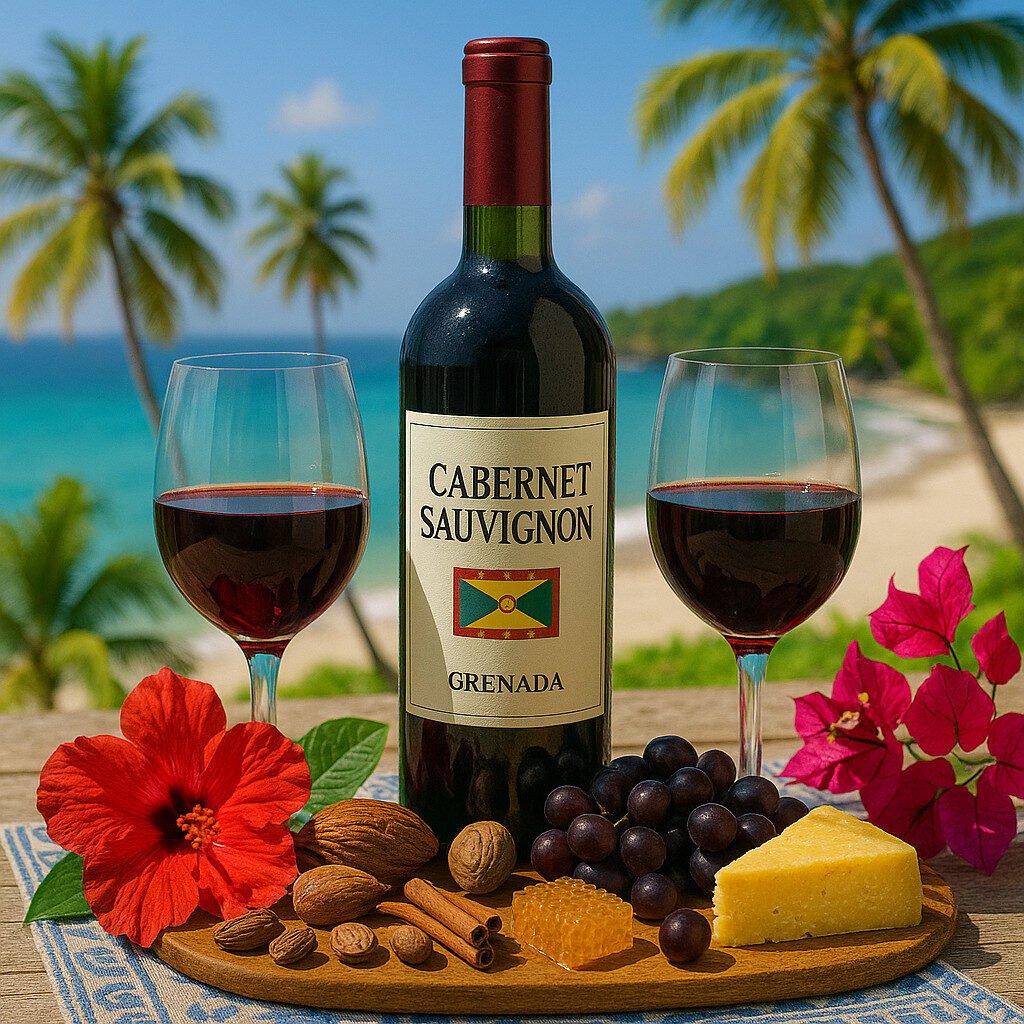
Cabernet Sauvignon from Grenada delivers a powerful and sun-kissed expression of this global variety, shaped by the island’s volcanic terrain and tropical conditions. This full-bodied red wine boasts rich fruit notes and a firm structure, making it an intriguing choice for adventurous wine lovers and professionals.
In this article
Cabernet Sauvignon of Grenada
Grenada’s wine culture is a nascent but dynamic scene, focusing on adapting international grapes to its unique Caribbean environment. Cabernet Sauvignon holds significance as a flagship red that showcases the island’s potential for producing robust and flavorful wines.
- Colour: Deep ruby red with purple tints.
- Wine style: Still red wine.
- Main grape varieties: Predominantly Cabernet Sauvignon, occasionally with small additions of Syrah or local hybrids.
- Sweetness level: Dry, with less than 4 grams per liter residual sugar.
- Acidity: Medium to high, preserved by careful harvest timing.
- Tannin structure: Firm and grippy, providing good aging potential.
- Alcohol range: 13.5% to 14.5% volume.
- Body: Full-bodied and rich on the palate.
- Typical serving temperature: 16 to 18 degrees Celsius.
- Protected status: No formal PDO or PGI; wines are typically labeled as regional table wines.
Grenadian Cabernet Sauvignon thrives on well-drained slopes in areas like the Grand Etang region, where elevations moderate the heat. Winemakers employ sustainable practices to manage the vigorous growth and achieve optimal ripeness without losing acidity. The resulting wines often display a distinctive intensity, with ripe black fruit characters and a spicy undertone that sets them apart from Old World examples.
Test Your Knowledge:
Where and How Cabernet Sauvignon Is Made in Grenada
Cabernet Sauvignon in Grenada is primarily cultivated in the central highlands and foothills, such as those around Mount St. Catherine. The tropical climate features high humidity and rainfall, but vineyards benefit from altitude-induced cooler temperatures and volcanic soils rich in minerals like basalt and clay. Producers emphasize organic and low-intervention methods to work with the challenging environment, aiming for wines that express terroir while maintaining balance.
Vineyards are often terraced to prevent erosion and maximize sun exposure on the steep slopes. The basic philosophy centers on achieving full phenolic ripeness through careful canopy management and selective harvesting. This approach ensures that the grapes develop complex flavors while retaining necessary acidity for structure.
- Vineyard work includes pruning during the dry season from January to March and diligent canopy management to control sun scorch and disease pressure in the humid conditions.
- Grape selection involves hand-harvesting in the early morning hours to keep berries cool and preserve freshness, typically targeting Brix levels of 23 to 25.
- Harvest occurs from late February to April, timed after the main rainy season to avoid dilution and maximize sugar accumulation.
- Destemming and crushing are done gently, often with partial whole-berry retention to enhance fruitiness and reduce harsh tannin extraction.
- Maceration lasts 7 to 10 days at temperatures of 25 to 28 degrees Celsius, allowing for good color and tannin extraction from the thick skins.
- Fermentation takes place in stainless steel tanks or open-top fermenters for 10 to 14 days, with pump-overs or punch-downs done twice daily to manage cap formation.
- Malolactic fermentation is commonly induced in barrel or tank to soften the naturally high acidity and add buttery nuances, completing over 4 to 6 weeks.
- Maturation involves 6 to 12 months in French or American oak barrels, with a mix of new and used wood to integrate vanilla and spice notes without overpowering the fruit.
- Clarification is achieved through light fining with egg whites or bentonite, followed by minimal filtration to preserve texture and flavor intensity.
- Bottling is carried out on-site, often with sulfur dioxide levels kept below 100 mg per liter to ensure stability while highlighting the wine’s vibrant character.
Traditional methods in Grenada might favor longer maceration and extended oak aging to build structure, whereas modern approaches focus on earlier drinking styles with fresher fruit expression. Artisanal producers often use native yeasts and avoid additives, contrasting with mass-market versions that may rely on cultured yeasts and quicker turnaround times. This divergence highlights a growing interest in terroir-driven Cabernet Sauvignon that reflects the island’s unique conditions.
Flavor Profile: What Makes Cabernet Sauvignon from Grenada Special?
The appearance of Cabernet Sauvignon from Grenada is a deep, opaque ruby red with noticeable viscosity that coats the glass. Aromas are intensely fruity, dominated by ripe blackcurrant, black cherry, and plum, complemented by secondary notes of tobacco, dark chocolate, and a hint of vanilla from oak aging. This wine exhibits high flavor intensity on the palate, with a dry taste profile, vibrant acidity, and firm, grainy tannins that provide structure and length.
Factors like the warm tropical climate ensure full ripeness, yielding higher alcohol and lush fruit characters, while careful oak treatment adds layers of spice and toast without masking the core flavors. The body is full and rounded, leading to a persistent finish that evolves with air, revealing earthy and herbal undertones. This combination of ripe fruit, balanced acidity, and robust tannins makes Grenadian Cabernet Sauvignon distinct from cooler climate versions, offering a sun-drenched yet structured experience.
Quality Labels and Certifications of Cabernet Sauvignon from Grenada
As far as current information suggests, Cabernet Sauvignon from Grenada does not fall under any formal protected designations of origin or geographical indications. The wine is typically classified as a regional table wine, with no established PDO, PGI, or similar certification systems in place for Grenadian viticulture. This lack of official labels means that quality assurance relies largely on producer integrity and local market standards.
Some winemakers may adopt organic or sustainable practices, though widespread certification is not verified at present. As far as can be determined, efforts are more focused on artisanal production methods rather than adhering to international eco-labels. This informal approach allows for flexibility but emphasizes the importance of trusting reputable producers for consistent quality in Grenadian Cabernet Sauvignon.
Cheese Pairings
Cabernet Sauvignon from Grenada pairs excellently with aged, hard cheeses like extra-sharp cheddar or Manchego, which match its full body and tannic structure. The high fat content in these cheeses coats the palate, softening the wine’s firm tannins and allowing the fruit flavors to shine through. Salty elements in the cheese enhance the wine’s perceived sweetness and complexity, creating a harmonious balance on the cheese board.
For modern international pairings, try blue cheeses such as Roquefort or Gorgonzola, where the pungent notes contrast with the wine’s dark fruit and spice. In cooked dishes, incorporate Cabernet Sauvignon into recipes with melted cheese, like a beef and cheese gratin, where the wine’s acidity cuts through the richness. Local Caribbean cheeses, often fresh and mild, can be served with fruit compotes to bridge the wine’s intensity, offering a refreshing contrast.
Suitable Regional Fruit and Vegetables
Fresh tropical fruits like mango, pineapple, and papaya work well with Cabernet Sauvignon from Grenada, especially in salads or salsas, where their sweetness balances the wine’s tannins and acidity. The juicy texture and bright flavors of these fruits highlight the wine’s ripe berry notes, while their natural acidity refreshes the palate. Grilled or roasted vegetables such as bell peppers, eggplants, and onions also complement the wine, as their caramelized sweetness and smoky undertones echo the oak influences.
Dried fruits like figs or dates can be served alongside the wine or used in stuffings, adding a concentrated sweetness that contrasts with its dry profile. In main dishes, incorporate vegetables like spinach or kale sautéed with garlic, where the bitterness provides a counterpoint to the wine’s fruitiness. The vibrant colors and textures of these pairings enhance the overall dining experience, making Cabernet Sauvignon from Grenada a versatile companion for vegetable-centric meals.
Suitable Meat and Fish dishes
Cabernet Sauvignon from Grenada is ideal with robust meat dishes such as grilled steak, lamb chops, or slow-cooked beef stews, where the protein’s richness matches the wine’s full body and tannins. The charred notes from grilling amplify the wine’s spicy and oaky characteristics, while the fat in the meat helps to soften its firm structure. For cold servings, pair it with charcuterie plates featuring salami or prosciutto, as the saltiness and umami flavors enhance the wine’s fruit intensity.
Fish dishes like grilled tuna or salmon can also pair successfully if prepared with bold sauces, such as a red wine reduction or herb crust, that stand up to the wine’s power. The oiliness of these fish varieties complements the wine’s acidity, preventing any metallic notes. In pasta or casseroles, incorporate Cabernet Sauvignon into recipes with duck confit or mushroom ragù, where the earthy elements harmonize with the wine’s complexity, offering a satisfying combination.
Cabernet Sauvignon from Grenada: Questions and Answers
How should I store Cabernet Sauvignon from Grenada?
Store Cabernet Sauvignon from Grenada in a cool, dark place with a consistent temperature of 12 to 14 degrees Celsius and humidity around 70% to preserve its quality.
What is the ideal serving temperature for Cabernet Sauvignon from Grenada?
Serve Cabernet Sauvignon from Grenada at 16 to 18 degrees Celsius to allow its aromas and flavors to open up without being too warm.
Should I decant Cabernet Sauvignon from Grenada?
Decant Cabernet Sauvignon from Grenada for 30 to 60 minutes before serving to soften tannins and enhance its aromatic complexity.
How do I chill or temper Cabernet Sauvignon from Grenada?
Chill Cabernet Sauvignon from Grenada briefly in the refrigerator for about 15 minutes if it is too warm, but avoid over-chilling to maintain its character.
What is the best way to drink Cabernet Sauvignon from Grenada?
Drink Cabernet Sauvignon from Grenada in a large Bordeaux-style glass to aerate the wine and fully appreciate its bouquet and structure.
How does Cabernet Sauvignon from Grenada combine with food?
Cabernet Sauvignon from Grenada pairs well with hearty dishes like grilled meats and aged cheeses, as its tannins and acidity balance rich flavors.
Where can I buy Cabernet Sauvignon from Grenada?
Buy Cabernet Sauvignon from Grenada from specialty wine shops, online retailers, or directly from Grenadian producers, though availability may be limited outside the Caribbean.
What is the shelf life after opening Cabernet Sauvignon from Grenada?
After opening, Cabernet Sauvignon from Grenada can last 3 to 5 days if recorked and stored in a cool place, but it is best consumed within 2 days for optimal freshness.
What is the aging potential of Cabernet Sauvignon from Grenada?
Cabernet Sauvignon from Grenada has good aging potential of 5 to 8 years, developing more tertiary notes like leather and earth over time.
How should I handle leftovers of Cabernet Sauvignon from Grenada?
Handle leftovers of Cabernet Sauvignon from Grenada by using a vacuum sealer or transferring to a smaller bottle to minimize oxygen exposure and extend usability.
Similar Wines and Alternatives
If you enjoy Cabernet Sauvignon from Grenada, consider trying Merlot from nearby Caribbean islands like Barbados, which offers a similar full body and ripe fruit profile but with softer tannins and a more approachable style. Syrah from Grenada or other tropical regions can also serve as an alternative, sharing the boldness and spicy notes but often with a peppery twist that differentiates it. These wines provide comparable intensity and food pairing versatility, making them suitable substitutes for those exploring New World reds.
From other countries, Cabernet Sauvignon from Chile or Australia shares the sun-drenched character and robust structure, though they may have more pronounced eucalyptus or mint notes due to cooler microclimates. In terms of price and availability, Grenadian versions might be rarer and slightly higher in cost due to small production scales, whereas alternatives from major regions are often more accessible in international markets. The key differences lie in acidity and tannin integration, with Grenadian examples typically showing brighter acidity from the tropical conditions, offering a unique take on this classic variety.