
In this article
What Is Vidiano from Greece?
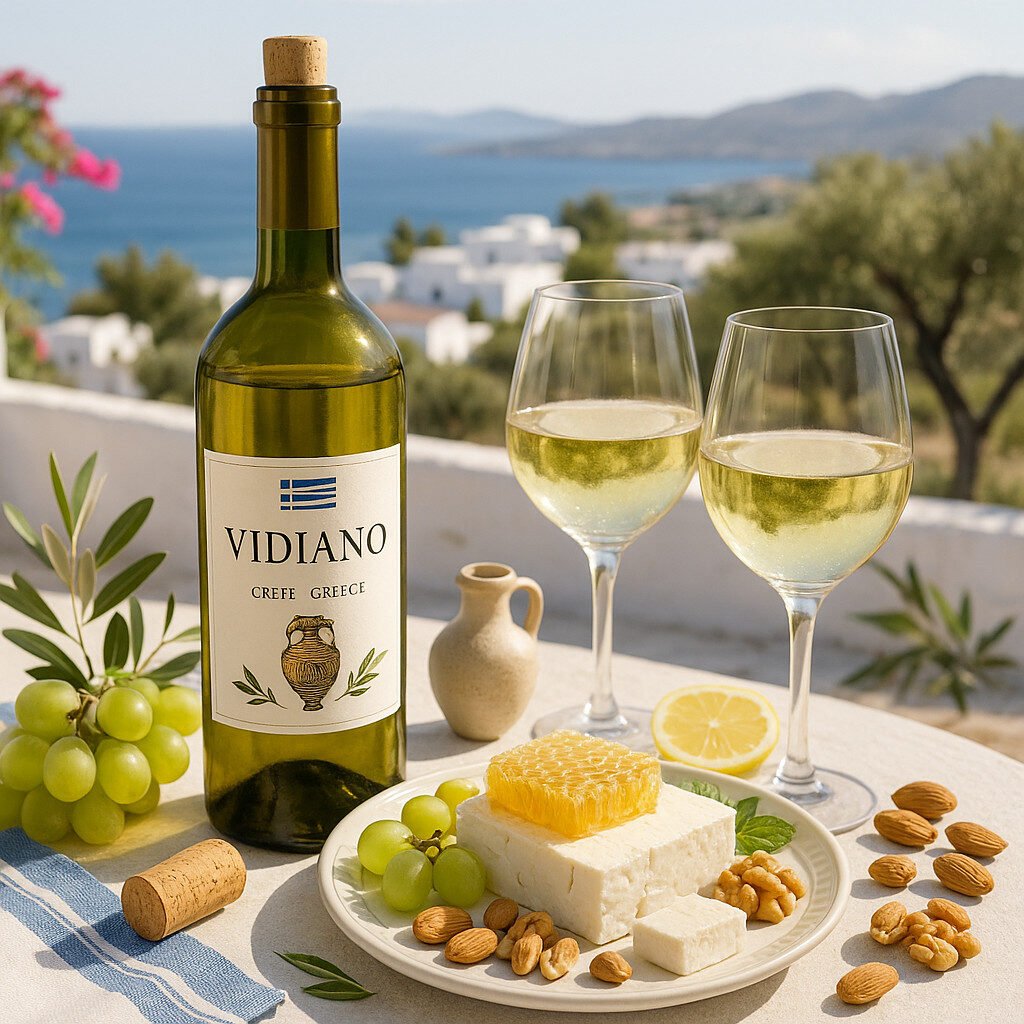
Vidiano is a white grape native to the island of Crete, known for crafting expressive and age-worthy wines. It represents a revival of Greek viticulture with its ability to reflect terroir distinctly.
- Colour: Pale yellow to golden hues.
- Wine style: Still white wine.
- Main grape varieties: 100% Vidiano.
- Sweetness level: Dry.
- Acidity: Medium to high.
- Tannin structure: Low.
- Alcohol range: 12.5% to 14% ABV.
- Body: Medium to full.
- Typical serving temperature: 10°C to 12°C.
- Protected status: Often under PDO appellations like Peza or Archanes in Crete.
Vidiano wines typically exhibit a pronounced aromatic intensity with stone fruit and floral notes. They gain complexity through careful vineyard management and controlled fermentation processes. The grape’s thick skins contribute to a robust structure and potential for oak aging.
Where and How Vidiano from Greece Is Made
Vidiano thrives primarily in Crete’s central and eastern regions, including the PDO zones of Peza and Archanes. The Mediterranean climate offers warm, sunny days and cool nights, which preserve acidity in the grapes. Soils range from limestone to clay-loam, imparting minerality and depth to the wines.
Producers focus on sustainable viticulture, often using organic practices to enhance grape quality. Elevations up to 500 meters above sea level help maintain freshness and aromatic precision. The production philosophy balances traditional methods with modern technology to highlight Vidiano’s purity.
- Vineyard work involves spur pruning and canopy management from January to March to control yields and sun exposure.
- Grape selection occurs through hand-harvesting in early September to ensure optimal ripeness and health.
- Harvest takes place in the cool morning hours to retain acidity and prevent oxidation.
- Destemming and crushing use gentle pneumatic presses to avoid bitter tannin extraction.
- Maceration involves cold soaking at 8°C to 10°C for 4 to 6 hours to enhance aromatic compounds.
- Fermentation occurs in stainless steel tanks at 16°C to 18°C for 10 to 14 days with selected yeasts.
- Malolactic fermentation is usually prevented to maintain crisp acidity and freshness.
- Maturation happens in stainless steel tanks or neutral oak barrels for 3 to 6 months.
- Clarification uses light fining with bentonite or gravity settling before filtration.
- Bottling follows early to preserve primary fruit characters, typically within 6 months of harvest.
Traditional producers may use extended lees contact and oak aging for richer styles. Modern approaches emphasize stainless steel fermentation to highlight vibrant fruit and minerality. Artisanal wineries often hand-harvest and use wild ferments, while larger operations focus on consistency and drinkability.
Flavor Profile: What Makes Vidiano from Greece Special?
Vidiano displays a pale gold colour with medium viscosity and slow-forming legs. Its aroma profile bursts with ripe peach, apricot, and lemon zest, complemented by floral hints of jasmine and orange blossom. Subtle herbal notes like thyme and mint add complexity, while minimal oak influence allows fruit purity to shine.
On the palate, Vidiano offers a dry taste with high acidity that balances its medium to full body. Flavors of nectarine, pear, and a touch of almond unfold, supported by a crisp, lingering finish. Grape ripeness and cool fermentation enhance fruit intensity, while careful oak treatment, if used, adds texture without overpowering the wine’s innate vibrancy.
The Unique Aromas of Vidiano
Vidiano’s aromatic spectrum is dominated by stone fruits like peach and apricot, with citrus undertones of grapefruit and lime. Floral elements such as honeysuckle and acacia provide an elegant lift, while occasional mineral notes reflect Crete’s limestone soils. The wine’s intensity makes it highly expressive even at a young age.
These aromas result from the grape’s high concentration of terpenes and thiols, amplified by cool climate growing conditions. Winemaking techniques like cold maceration help extract and preserve these volatile compounds. The absence of heavy oak allows the primary fruit and floral characters to remain front and center.
Quality Labels and Certifications for Wine from Greece
As far as current information suggests, Vidiano often falls under Protected Designation of Origin (PDO) labels in Crete, such as PDO Peza and PDO Archanes. These appellations mandate specific grape varieties, yields, and production methods to ensure quality and typicity. Greek wine law also includes Protected Geographical Indication (PGI) zones for broader regional wines.
Organic certifications are increasingly common, with many producers adhering to EU organic standards that prohibit synthetic pesticides. Sustainability initiatives, as far as can be verified at present, include programs like “Wines of Crete” that promote environmentally friendly practices. These labels help consumers identify wines made with strict quality and origin controls.
Cheese Pairings
Vidiano and Cheese Harmony
Vidiano pairs excellently with Greek cheeses like Graviera and Feta due to its bright acidity cutting through their saltiness and fat. The wine’s citrus notes complement the tangy profile of aged goat cheeses, while its medium body stands up to semi-hard textures. For international options, try Brie or Camembert, where Vidiano’s acidity balances the creamy richness and enhances the buttery flavors.
In cooked dishes, Vidiano works well with saganaki or cheese-based pasta sauces, as its acidity cleanses the palate. The wine’s subtle herbal notes harmonize with herb-crusted cheeses, and its lack of aggressive tannins prevents clashes. Avoid overly pungent blues, which can overwhelm Vidiano’s delicate fruit character.
Suitable Fruit and Vegetables
Fruit Pairings for Vidiano
Fresh fruits like peaches, apricots, and citrus segments highlight Vidiano’s stone fruit and zesty notes in salads. Grilled vegetables such as zucchini, eggplant, and bell peppers benefit from the wine’s acidity, which cuts through their smoky sweetness. Dried figs or dates can echo Vidiano’s subtle honeyed tones without clashing with its dryness.
In vegetable-based dishes, Vidiano complements artichokes and asparagus, often challenging pairings, due to its crisp finish. Roasted root vegetables with herbs like rosemary align with the wine’s herbal undertones. The wine’s medium body and acidity make it versatile with both raw and cooked produce, enhancing freshness and depth.
Suitable Meat and Fish dishes
Meat and Fish with Vidiano
For cold servings, Vidiano matches well with seafood carpaccio or Greek meze like octopus salad, where its acidity brightens the delicate flavors. Charcuterie plates with mild salami or prosciutto allow the wine’s fruitiness to shine without tannin interference. Grilled fish such as sea bass or dorada pairs seamlessly, as Vidiano’s body complements the firm texture.
Hot dishes like roasted chicken, lamb kebabs, or pork tenderloin benefit from Vidiano’s acidity cutting through the richness. Pasta with white clam sauce or shrimp scampi highlights the wine’s citrus and herbal notes. Avoid heavily spiced or smoked meats, which can dominate Vidiano’s elegant profile.
Questions and Answers About Vidiano
How should I store Vidiano?
Store Vidiano in a cool, dark place at 12°C to 14°C with consistent humidity. Keep bottles horizontal if cork-sealed to prevent drying. Avoid temperature fluctuations to preserve Vidiano’s freshness and aromas.
What is the ideal serving temperature for Vidiano?
Serve Vidiano chilled between 10°C and 12°C to enhance its acidity and fruit expression. Over-chilling can mute Vidiano’s aromatic complexity, so allow it to warm slightly in the glass.
Does Vidiano need decanting?
Decanting Vidiano for 15 to 30 minutes can open up its aromas, especially for younger bottles. Older Vidiano may benefit from a gentle decant to separate any sediment. This process helps Vidiano reveal its full aromatic potential.
How do I chill Vidiano properly?
Chill Vidiano in a refrigerator for two hours or an ice bucket for 20 minutes. Avoid freezing, as it can damage Vidiano’s delicate structure. Serve immediately after reaching the optimal temperature.
When is the best time to drink Vidiano?
Drink Vidiano within 3 to 5 years of vintage for primary fruit character. Aged Vidiano can develop honey and nutty notes over 5 to 8 years. Enjoy Vidiano young for vibrancy or aged for complexity.
What foods pair best with Vidiano?
Pair Vidiano with grilled seafood, creamy cheeses, and herb-roasted vegetables. Its acidity complements rich dishes like chicken with lemon sauce. Avoid overly spicy foods to maintain Vidiano’s balance.
Where can I buy Vidiano?
Buy Vidiano from specialty wine shops, online retailers, or importers focusing on Greek wines. Look for producers from Crete’s PDO regions for authenticity. Vidiano is increasingly available in international markets due to its growing reputation.
What is the shelf life of opened Vidiano?
Opened Vidiano lasts 3 to 5 days in the refrigerator with a stopper. Use vacuum sealers to extend freshness slightly. Consume Vidiano quickly to enjoy its aromatic intensity.
What is the aging potential of Vidiano?
Vidiano can age gracefully for 5 to 10 years in good vintages. High-acidity examples develop tertiary notes like honey and toast. Store Vidiano properly to maximize its aging potential.
How should I handle leftover Vidiano?
Pour leftover Vidiano into a smaller bottle to reduce oxygen exposure. Refrigerate immediately and use within days for cooking or drinking. Leftover Vidiano works well in sauces or marinades.
Similar Wines and Alternatives
Comparing Vidiano to Other Wines
Vidiano shares similarities with Assyrtiko from Santorini, but Assyrtiko offers higher acidity and more pronounced mineral notes. Both are dry Greek whites, yet Vidiano tends toward a fuller body and riper stone fruit flavors. For international alternatives, consider Viognier from France, which has comparable aromatic intensity and body, though Viognier often shows more floral and peach notes with lower acidity.
Chardonnay from Burgundy or California can mirror Vidiano’s texture, especially unoaked styles, but Chardonnay typically has more apple and butter characteristics. In terms of price, Vidiano is often moderately priced and accessible, while premium Assyrtiko or Viognier may cost more. These alternatives provide similar weight and food pairing versatility, making them good substitutes if Vidiano is unavailable.