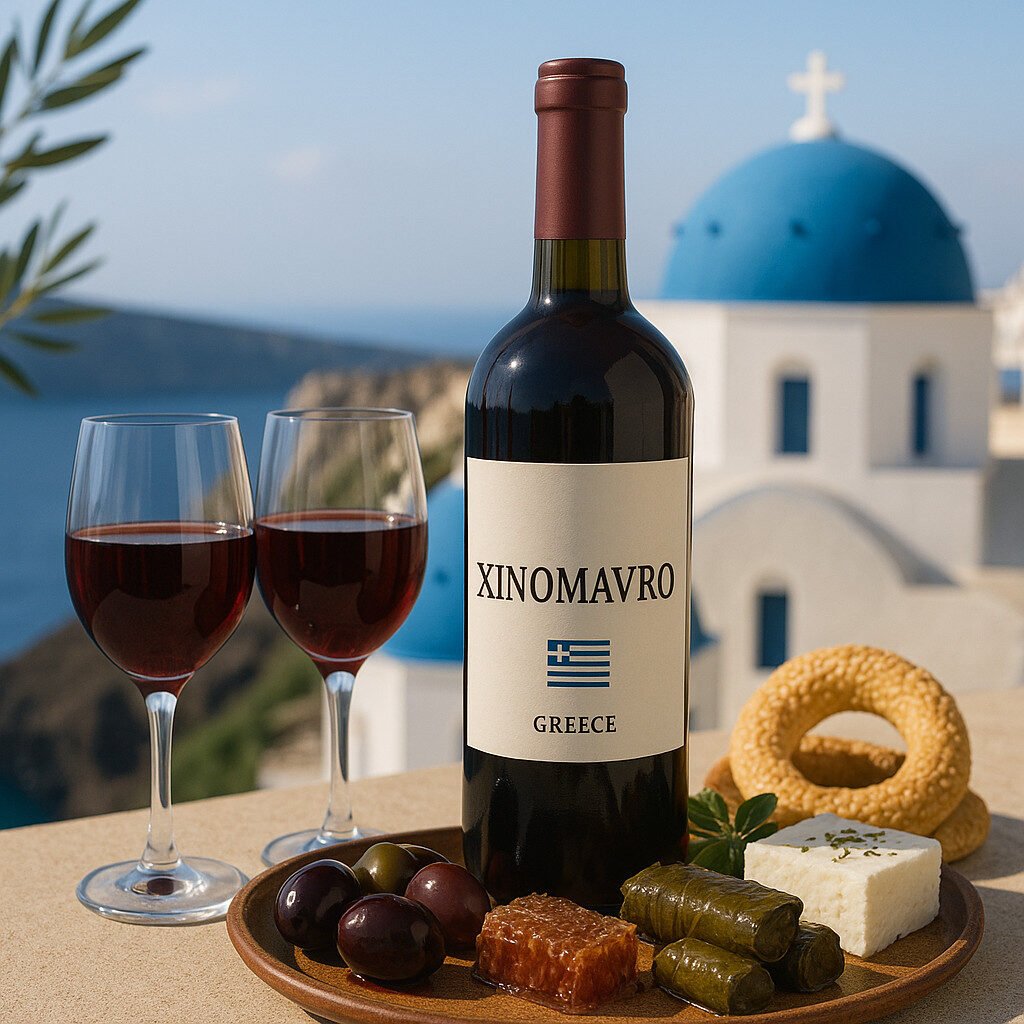
Xinomavro
Xinomavro is one of Greece's most noble and distinctive red grape varieties, often compared to Nebbiolo for its high acidity, firm tannins, and complex aromas.
Grape Characteristics
Xinomavro grapes produce wines with a pale to medium ruby color and a remarkable ability to age. They are known for their high acidity and robust tannic structure, which soften beautifully over time. The name Xinomavro translates to "sour black," reflecting its sharp acidity and dark skin.
In youth, Xinomavro wines can display aromas of red fruits, tomatoes, olives, and dried herbs. With aging, they develop more complex notes of leather, tobacco, truffles, and spices. This evolution makes Xinomavro a fascinating grape for collectors and enthusiasts seeking cellar-worthy wines.
Primary Regions
Xinomavro is predominantly grown in northern Greece, especially in the Naoussa and Amyndeon appellations. Naoussa produces powerful, tannic wines that benefit from extended bottle aging. The region's continental climate with hot summers and cold winters is ideal for developing the grape's structure.
Amyndeon, located at higher altitudes, yields lighter, more aromatic styles of Xinomavro, sometimes with a touch of oak. Other regions like Rapsani and Goumenissa also cultivate Xinomavro, often blending it with other local varieties to create unique expressions.
Wine Styles and Pairing
Xinomavro wines range from fresh, fruity rosés to serious, age-worthy reds that can rival fine Burgundy or Barolo. Traditional reds are full-bodied with pronounced tannins, while modern approaches may produce softer, more approachable versions. Rosé and sparkling wines from Xinomavro are also gaining popularity for their crispness and versatility.
These wines pair excellently with rich, flavorful dishes such as grilled meats, lamb, game, and hearty stews. Their acidity cuts through fatty foods, while their earthy notes complement tomato-based sauces, roasted vegetables, and aged cheeses. Xinomavro is a perfect match for Mediterranean cuisine.