
In this article
What Is Robola from Greece?
Robola is a prominent white wine grape variety indigenous to Greece, specifically the Ionian Islands. It yields dry, still wines celebrated for their crisp freshness and aromatic intensity.
- Colour: Pale straw with green hues
- Wine style: Still, dry white wine
- Main grape varieties: Robola
- Sweetness level: Dry (typically 2-4 g/L residual sugar)
- Acidity: High
- Tannin structure: Very low
- Alcohol range: 12-13.5% ABV
- Body: Light to medium
- Typical serving temperature: 8-10°C
- Protected status: PDO Cephalonia (as far as current information suggests)
Robola wines often display a marked salinity due to the maritime influence and limestone soils of Cephalonia. The grape’s thick skin provides resistance to humidity and disease in the island climate. Winemakers typically avoid oak aging to preserve the wine’s pure fruit expression and zesty acidity.
Where and How Robola from Greece Is Made
Robola is predominantly grown on the island of Cephalonia in the Ionian Sea. The region features a Mediterranean climate with cooling sea breezes and well-draining limestone and shale soils. Vineyards often sit on mountainous slopes at altitudes up to 600 meters, which helps maintain grape acidity and complexity.
Winemakers in Cephalonia emphasize minimal intervention to highlight the grape’s natural character. Harvest timing is critical to balance sugar development and acid retention, typically occurring in early September.
- Vineyard work: Pruning occurs in winter, followed by canopy management in spring to ensure optimal sunlight exposure and air flow.
- Grape selection: Hand-harvesting targets clusters with uniform ripeness and high acidity, often in the cool early morning.
- Harvest: Grapes are picked quickly to avoid oxidation, usually within a short window to preserve freshness.
- Destemming and crushing: Gentle destemming and light crushing extract juice without excessive skin contact.
- Maceration: Cold maceration may last 4-6 hours at 8-10°C to enhance aromatic extraction before pressing.
- Fermentation: Fermentation takes place in stainless steel tanks at 14-16°C for 10-14 days using selected yeasts.
- Malolactic fermentation: This is typically prevented to retain the wine’s crisp, high acidity.
- Maturation: Wines age on fine lees in stainless steel or neutral oak for 3-6 months to develop texture.
- Clarification: Bentonite fining and light filtration stabilize the wine without removing delicate flavors.
- Bottling: Bottling occurs within 6-12 months after harvest, often with screw caps to preserve aroma.
Traditional producers might use wild ferments and avoid filtration for a more rustic profile. Modern winemakers focus on temperature control and hygiene to achieve consistency and purity in Robola wines.
Flavor Profile: What Makes Robola from Greece Special?
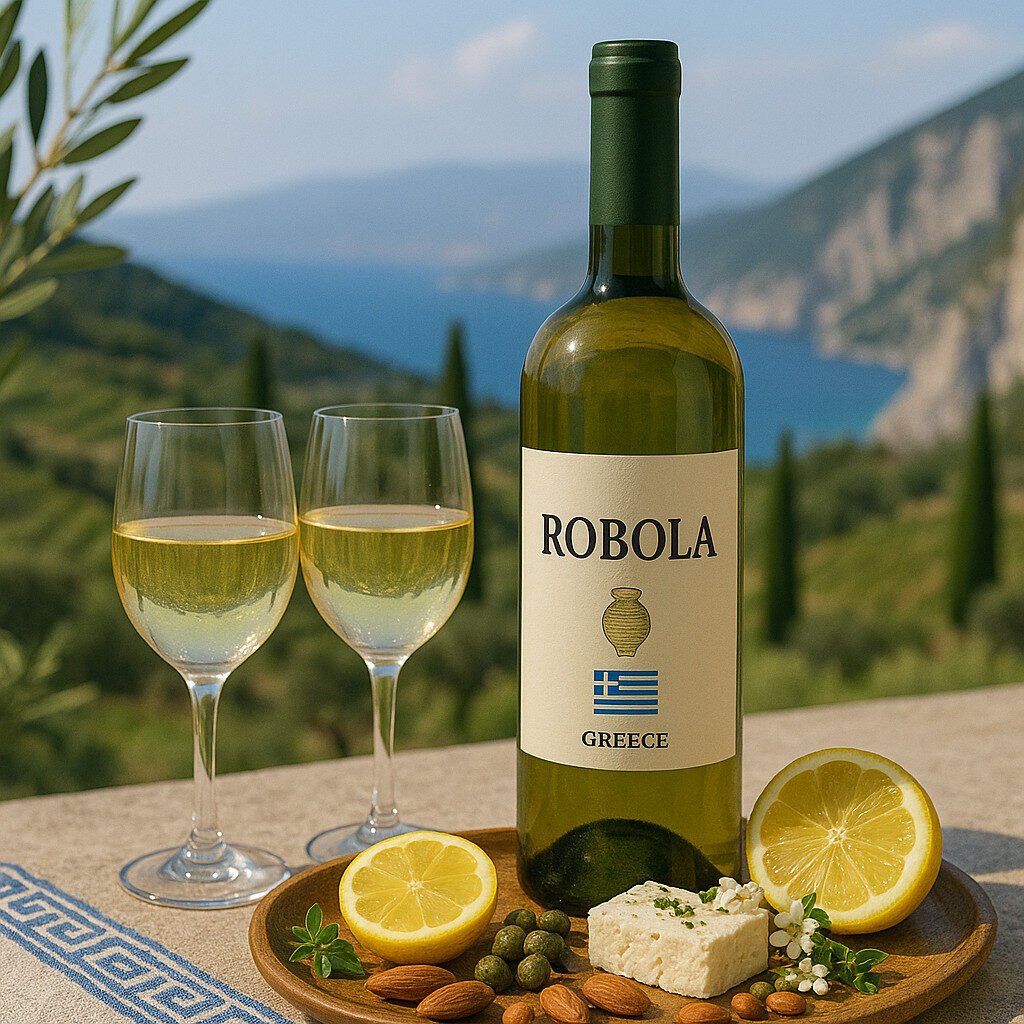
Robola exhibits a pale straw color with green reflections and moderate viscosity. Its aroma bursts with citrus notes like lemon and grapefruit, complemented by white flowers, fresh herbs, and a distinct flinty minerality. The high acidity makes the wine feel lively and refreshing from the first sniff.
On the palate, Robola delivers crisp flavors of green apple, pear, and subtle peach, with a saline edge. The body is light to medium, supported by zesty acidity and a clean, dry finish that lingers with citrus zest. Minimal oak treatment allows the pure fruit and mineral character to dominate, making it a versatile and food-friendly wine.
Quality Labels and Certifications for Wine from Greece
As far as current information suggests, Robola from Cephalonia often holds Protected Designation of Origin (PDO) status under Greek wine regulations. This certification guarantees the wine’s origin from specific delimited zones and adherence to strict production methods. It ensures that only grapes from designated vineyards in Cephalonia are used, preserving the wine’s authenticity.
Some producers may also pursue organic certifications, as far as can be verified at present, which prohibit synthetic pesticides and fertilizers. Sustainability initiatives are gaining traction, though specific eco-labels vary by winery and region.
Cheese Pairings
Robola pairs excellently with Greek cheeses like feta and graviera. The wine’s high acidity cuts through the saltiness and fat of feta, while its citrus notes complement the nutty flavors of graviera. These local pairings create a harmonious balance, enhancing both the cheese and the wine’s refreshing qualities.
Internationally, Robola works well with fresh goat cheese and mild brie. The wine’s acidity contrasts with the creamy texture of brie, and its herbal notes align with the tanginess of goat cheese. Avoid strongly aged or blue cheeses, as they can overwhelm Robola’s delicate profile.
Suitable Fruit and Vegetables
Fresh fruits like lemons, limes, and green apples complement Robola’s citrusy core. Their bright acidity mirrors the wine’s zesty character, making them ideal in salads or as garnishes. Olives and capers also pair well, adding a salty contrast that highlights the wine’s mineral notes.
Vegetables such as artichokes, asparagus, and leafy greens work beautifully with Robola. Steamed or grilled, these vegetables enhance the wine’s herbal undertones without masking its freshness. Dishes with tomato-based sauces should be avoided, as their acidity can clash with the wine.
Suitable Meat and Fish dishes
Robola excels with light fish dishes like grilled sea bass or baked snapper. The wine’s acidity cleanses the palate after each bite of oily fish, while its mineral notes echo the briny flavors. Seafood pasta with lemon and herbs is another classic pairing that underscores Robola’s versatility.
For meats, consider roasted chicken or pork tenderloin with herb sauces. Robola’s crispness balances the richness of the meat, and its fruit flavors complement subtle seasonings. Charcuterie plates with mild sausages also work, provided the meats are not too spicy or smoked.
Questions and Answers About Robola from Greece
How should I store Robola wine? Store Robola in a cool, dark place at 12-15°C with consistent humidity. Keep bottles horizontal if cork-sealed to prevent drying. Avoid light and vibration to maintain quality.
What is the ideal serving temperature for Robola? Serve Robola chilled between 8-10°C. This temperature highlights its acidity and aromatic intensity. Do not over-chill, as it can mute the flavors.
Should I decant Robola wine? Decanting Robola is generally unnecessary due to its youthful nature. However, a quick swirl in the glass helps release its aromas. Older vintages might benefit from brief aeration.
How long can I keep an opened bottle of Robola? An opened bottle of Robola stays fresh for 2-3 days if recorked and refrigerated. Use a vacuum seal to extend its life slightly. Drink it soon to enjoy its vibrant character.
Does Robola improve with age? Robola is best consumed young, within 2-4 years of vintage, to appreciate its freshness. Some premium examples can age for 5-7 years, developing honeyed notes, but most are meant for early drinking.
What foods pair best with Robola? Robola pairs well with seafood, salads, and light Mediterranean dishes. Its acidity complements grilled fish and citrus-based sauces. Avoid heavy, spicy foods that overwhelm its delicate profile.
Where can I buy Robola wine? Purchase Robola from specialty wine shops, online retailers, or importers focusing on Greek wines. Look for labels from Cephalonia to ensure authenticity. Availability may vary by region.
Can I cook with Robola? Yes, use Robola in cooking for dishes like fish stews or lemon-based sauces. Its acidity adds brightness without sweetness. Avoid boiling it vigorously to preserve flavor.
What makes Robola different from other Greek white wines? Robola stands out for its high acidity and distinct mineral salinity from Cephalonia’s soils. It is less aromatic than Assyrtiko but more rounded than Moschofilero. Its profile is uniquely tied to its island origin.
How do I handle leftover Robola? Use leftover Robola in vinaigrettes or seafood marinades within a day. Alternatively, freeze it in ice cube trays for cooking. Do not reuse it for drinking if oxidized.
Similar Wines and Alternatives to Robola from Greece
Assyrtiko from Santorini is a close Greek alternative to Robola, sharing high acidity and mineral depth. Assyrtiko often has more pronounced citrus and volcanic notes, with a leaner body. Both wines suit seafood pairings, but Assyrtiko can handle more robust dishes due to its intensity.
Internationally, Sauvignon Blanc from cool climates like New Zealand offers similar zesty acidity and herbal aromas. However, Sauvignon Blanc tends to be more aromatic with grassy notes, while Robola emphasizes minerality. For a lighter option, Pinot Grigio from Italy provides crispness but lacks Robola’s complexity and saline finish.