
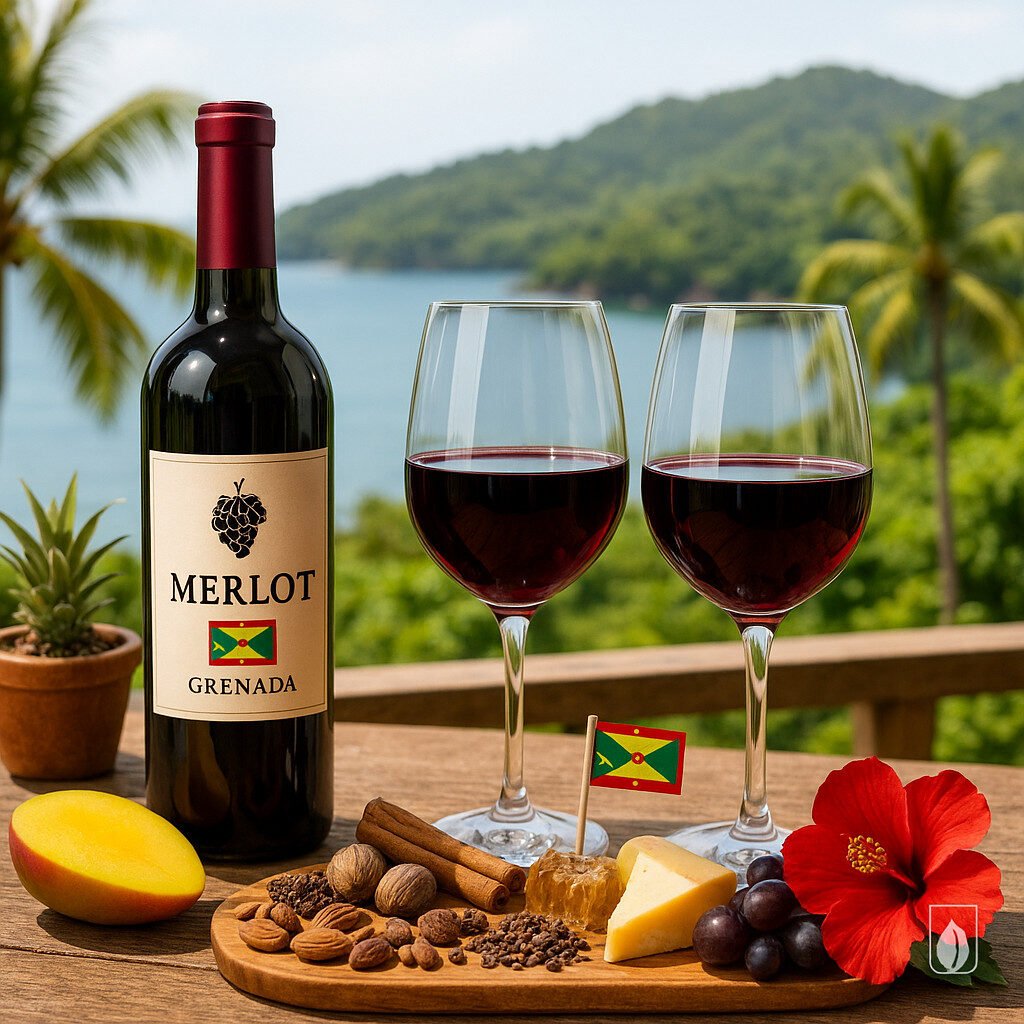
Merlot from Grenada offers a bold and fruit-forward red wine with distinct tropical influences. This Caribbean expression showcases the adaptability of the Merlot grape in warm climates.
In this article
Merlot of Grenada
Grenada’s wine culture is emerging with a focus on tropical viticulture. Merlot plays a key role in demonstrating the island’s potential for quality red wine production.
- Colour: Deep ruby red with purple hues
- Wine style: Still red wine
- Main grape varieties: 100% Merlot
- Sweetness level: Dry
- Acidity: Medium to high
- Tannin structure: Soft and rounded
- Alcohol range: 13-14% vol
- Body: Medium to full-bodied
- Typical serving temperature: 16-18°C
- Protected status: None currently
Grenada’s Merlot benefits from volcanic soils and consistent sunshine. The grapes achieve high ripeness levels with abundant natural sugars. This results in wines with intense dark fruit flavors and a smooth, approachable texture.
Test Your Knowledge:
Where and How Merlot Is Made in Grenada
Merlot production in Grenada concentrates on hilly regions like Grand Etang and the western slopes. The tropical climate features high humidity, abundant rainfall, and warm temperatures year-round. Volcanic and clay-rich soils provide excellent drainage and mineral content for vine health.
- Vineyard work: Pruning occurs from June to August to manage canopy density. Trellising systems maximize air flow to reduce fungal diseases.
- Grape selection: Hand-harvesting takes place from January to March during the drier season. Workers select only fully ripe, healthy clusters.
- Harvest: Grapes are picked in the early morning to retain acidity. Yields are controlled to ensure concentration of flavors.
- Destemming and crushing: Grapes are destemmed and gently crushed. This process avoids excessive extraction of bitter compounds.
- Maceration: Skin contact lasts 5-10 days at 25-30°C. This step enhances color intensity and soft tannin development.
- Fermentation: Alcoholic fermentation occurs in stainless steel tanks at 28-30°C. Selected yeast strains promote fruit expression.
- Malolactic fermentation: This secondary fermentation is often induced for softness. It typically completes in tanks over 2-4 weeks.
- Maturation: Wine ages in French or American oak barrels for 6-12 months. Barrel aging adds vanilla and spice notes.
- Clarification: Fining with egg whites or bentonite clay ensures clarity. Light filtration may be applied before bottling.
- Bottling: Bottling is done on-site with minimal sulfur dioxide. The wine may undergo brief bottle aging before release.
Traditional methods in Grenada might use open-top fermenters and wild yeasts. Modern practices incorporate temperature control and cultured yeasts for consistency. Artisanal producers emphasize organic farming and minimal intervention in the cellar.
Flavor Profile: What Makes Merlot from Grenada Special?
Merlot from Grenada displays a vibrant ruby color with noticeable viscosity. Aromas of ripe blackberries, plums, and hints of tropical fruit like banana emerge. The wine’s medium to high acidity provides a refreshing balance to the fruit sweetness.
On the palate, flavors of dark cherry, cocoa, and subtle spice from oak aging dominate. Soft, rounded tannins contribute to a smooth and velvety mouthfeel. The finish is medium in length with lingering notes of vanilla and ripe fruit.
Quality Labels and Certifications of Merlot from Grenada
As far as current information suggests, Grenada does not have specific protected designations of origin for wine. However, some producers may follow organic or sustainable farming guidelines. The island’s agricultural standards could influence labeling practices for local wines.
Potential certifications might include eco-labels for environmental stewardship. As far as can be verified at present, no PDO or PGI status exists for Grenadian Merlot. Winemakers often prioritize quality through meticulous vineyard and winery practices.
Cheese Pairings
Merlot from Grenada pairs excellently with semi-hard cheeses like Gouda or Edam. The wine’s acidity cuts through the fat content of these cheeses. Saltier varieties enhance the fruit-forward character of the Merlot.
For local pairings, try Grenadian pepper cheese or aged cheddar. In international contexts, blue cheeses like Stilton can work if the wine has sufficient body. The smooth tannins complement creamy textures in dishes like baked brie or cheese sauces.
Suitable Regional Fruit and Vegetables
Fresh fruits like mangoes and papayas balance Merlot’s richness with their natural acidity. Grilled plantains or sweet potatoes add earthy sweetness that harmonizes with the wine. Leafy greens in salads provide a bitter contrast that cleanses the palate between sips.
Dried fruits such as figs or dates enhance the wine’s berry and spice notes. Cooked vegetables like eggplants or bell peppers in stews marry well with Merlot’s body. The vibrant colors and textures of local produce create visually appealing and flavorful combinations.
Suitable Meat and Fish dishes
For meat dishes, grilled lamb or beef burgers complement Merlot’s tannins and fruitiness. Stews with slow-cooked meats allow the wine’s flavors to integrate seamlessly. Charcuterie plates featuring salami or prosciutto are classic cold pairings.
With fish, oily varieties like salmon or tuna stand up to the wine’s medium body. Grenadian dishes like oil-down with salted meat and breadfruit offer a traditional match. The wine’s acidity cuts through rich sauces in pasta dishes or casseroles.
Merlot from Grenada: Questions and Answers
How should I store Merlot from Grenada?
Store Merlot from Grenada in a cool, dark place at 12-14°C. Keep the bottle horizontal to maintain cork moisture. Avoid temperature fluctuations to preserve the wine’s integrity.
What is the ideal serving temperature for Merlot from Grenada?
Serve Merlot from Grenada at 16-18°C for optimal enjoyment. This temperature range highlights the wine’s fruit and soft tannins. Chilling it slightly can enhance freshness in warmer climates.
Does Merlot from Grenada need decanting?
Decant Merlot from Grenada for 30 minutes before serving. This aeration helps to open up the aromas and flavors. It is especially beneficial for younger vintages of this wine.
How long can I age Merlot from Grenada?
Merlot from Grenada can age for 3-5 years in proper conditions. The wine develops more complex tertiary notes over time. However, it is best enjoyed young for its vibrant fruit character.
What food pairs best with Merlot from Grenada?
Merlot from Grenada pairs well with grilled meats, hearty stews, and semi-hard cheeses. The wine’s acidity and tannins complement rich, savory dishes. Local Grenadian cuisine like pepperpot stew is an excellent match.
Where can I buy Merlot from Grenada?
Buy Merlot from Grenada at specialty wine shops or online retailers focusing on Caribbean products. Availability may be limited outside Grenada. Check with local importers for stock updates.
How long does opened Merlot from Grenada last?
Opened Merlot from Grenada lasts 3-5 days if re-corked and refrigerated. Use a wine preserver to extend its life. The wine may lose some freshness but remains drinkable.
Should Merlot from Grenada be chilled?
Merlot from Grenada benefits from slight chilling in warm weather. Serve it at 14-16°C if preferred cooler. Avoid over-chilling to prevent muting the flavors.
What makes Merlot from Grenada unique?
Merlot from Grenada is unique due to its tropical climate influence. It exhibits ripe fruit flavors with a smooth, approachable profile. The volcanic soils contribute to its distinct mineral undertones.
Are there any alternatives to Merlot from Grenada?
Alternatives to Merlot from Grenada include Merlot from California or Australia. These share similar ripe fruit and soft tannin characteristics. Grenadian Merlot offers a unique tropical twist not found elsewhere.
Similar Wines and Alternatives
Similar wines to Merlot from Grenada include other Merlots from warm climates like Chile or South Africa. These wines share ripe dark fruit flavors and soft tannin structures. However, Grenadian Merlot may have unique tropical notes due to its specific terroir.
Alternatives from the same region could include other red wines like Syrah or Cabernet Sauvignon from Grenada. In terms of price and availability, Grenadian wines might be niche but offer good value. For broader access, consider Merlot from France’s Bordeaux region as a classic substitute.