
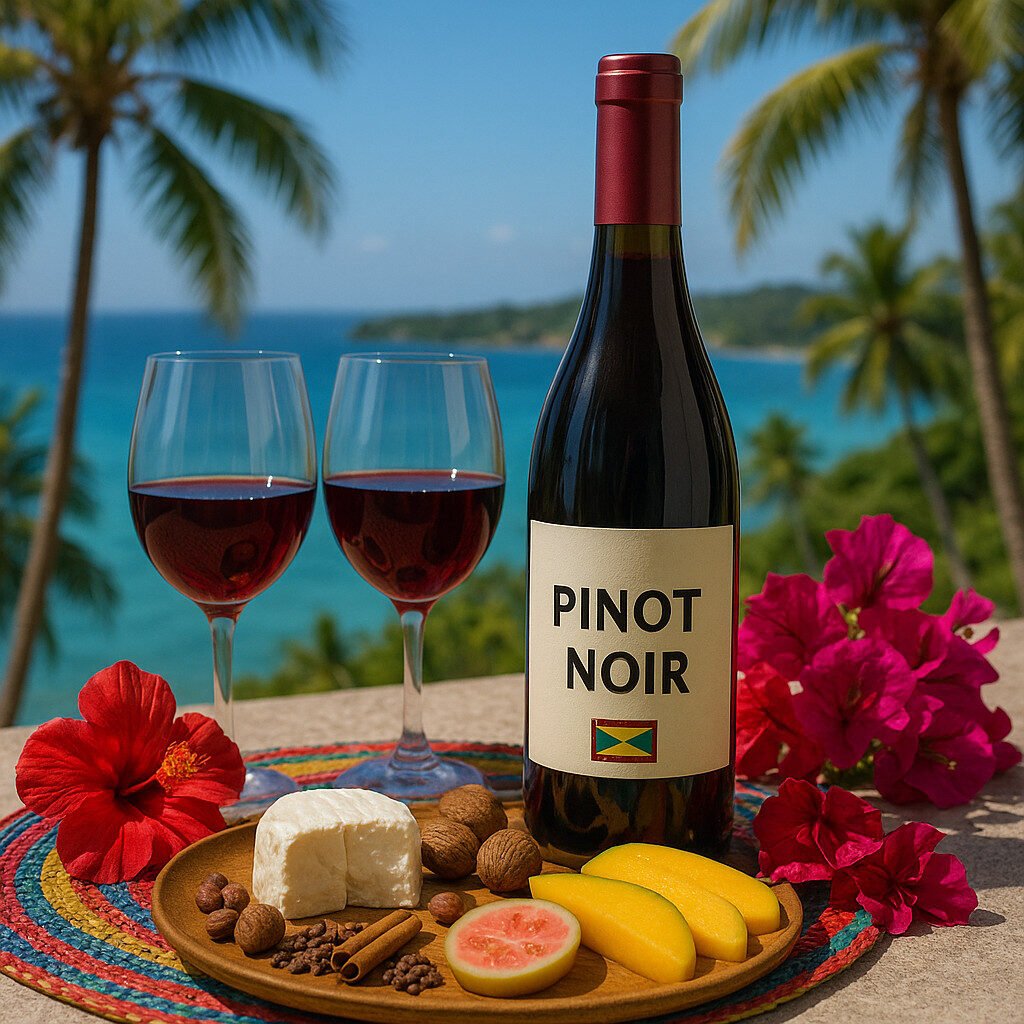
Pinot Noir from Grenada presents a distinctive tropical interpretation of this revered grape, cultivated on the island’s volcanic slopes. Its vibrant acidity and silky texture make it an exciting choice for pairing with diverse cuisines, appealing to sommeliers and wine lovers seeking new experiences.
In this article
What Is Pinot Noir from Grenada?
Pinot Noir is a red wine grape variety celebrated for its elegance and complexity. It adapts uniquely to Grenada’s warm climate, yielding wines with intense fruit character.
- Colour: Pale to medium ruby red, often with garnet hues.
- Wine style: Still, dry red wine.
- Main grape varieties: 100% Pinot Noir.
- Sweetness level: Typically dry, with residual sugar under 4 grams per litre.
- Acidity: Medium to high, providing freshness.
- Tannin structure: Low to medium, soft and silky.
- Alcohol range: 12.5% to 14% vol.
- Body: Light to medium-bodied.
- Typical serving temperature: 14 to 16°C.
- Protected status: As far as current information suggests, no specific PDO or PGI applies in Grenada, but some producers follow organic practices.
Pinot Noir grapes have thin skins that make them susceptible to disease and climate variations. In Grenada, growers often use canopy management to protect grapes from intense sun. This careful viticulture results in wines that balance ripe fruit with refreshing acidity, offering a unique expression compared to cooler regions.
Where and How Pinot Noir in Grenada Is Made
Grenada’s Pinot Noir thrives in elevated areas like the Grand Etang region, where volcanic soils and ocean breezes moderate the tropical heat. The island’s rich, well-drained soils impart mineral notes to the wine, while the humid climate requires diligent vineyard management to prevent fungal issues. Producers focus on sustainable methods, often harvesting earlier to retain acidity in the warm conditions.
- Vineyard work involves year-round pruning and canopy management to optimize sun exposure and air flow, reducing disease risk in the humid environment.
- Grape selection occurs by hand, choosing clusters with uniform ripeness, typically harvested in January or February during the dry season.
- Harvest is manual to avoid bruising the delicate grapes, with picking often done in the cool early morning.
- Destemming and crushing are gentle processes to minimize tannin extraction, preserving the wine’s elegance.
- Maceration lasts 5 to 10 days at 18 to 22°C, allowing colour and flavour extraction without harsh tannins.
- Fermentation uses native or selected yeasts in stainless steel tanks, maintained at 20 to 25°C for about one week.
- Malolactic fermentation commonly occurs, softening acidity and adding creamy textures over several weeks.
- Maturation takes place in neutral oak barrels or stainless steel for 6 to 12 months, enhancing complexity without overpowering oak flavours.
- Clarification involves light fining or filtration to achieve brightness while retaining character.
- Bottling happens after maturation, with wines often aged briefly in bottle before release.
Traditional methods in Grenada emphasize minimal intervention, using open-top fermenters for gentle extraction. Modern producers may employ temperature-controlled tanks to manage fermentation precisely, ensuring consistency. Artisanal wineries focus on small batches with hand-harvesting, while larger operations might use mechanical aids for efficiency, though both aim to highlight the grape’s purity.
Flavor Profile: What Makes Pinot Noir from Grenada Special?
Grenada’s Pinot Noir displays a bright ruby colour with moderate viscosity, signaling its medium body. Aromas burst with red fruits like cherry and raspberry, complemented by floral hints of violet and subtle earthy notes from the volcanic soil. The palate offers a harmonious blend of ripe fruit, zesty acidity, and soft tannins, leading to a clean, persistent finish that reflects the island’s unique terroir.
Factors such as extended maceration enhance the wine’s depth, adding layers of spice and mild oak if barrel-aged. The warm climate intensifies fruit sweetness, balanced by the grape’s natural high acidity. This combination makes Grenadian Pinot Noir versatile and approachable, with a flavour profile that evolves beautifully over a few years of bottle aging.
Quality Labels and Certifications
As far as can be verified at present, Grenada does not have a formal appellation system for wine, but some Pinot Noir producers adhere to organic or sustainable farming practices. These may include certifications like “Green Globe” for tourism-related sustainability, which can extend to vineyards. Additionally, wines might carry general labels indicating origin, though no specific PDO or PGI protections are established for Grenadian Pinot Noir based on current regulations.
International standards, such as ISO for winemaking, are occasionally followed by larger estates to ensure quality control. As far as current information suggests, there is growing interest in developing local quality seals, but consumers should look for producer-specific assurances on labels. This lack of formal certification means that trust in the winery’s reputation is key when selecting Grenadian Pinot Noir.
Cheese Pairings
Pinot Noir from Grenada pairs excellently with semi-soft cheeses like Brie or Camembert, whose creamy textures and mild flavours complement the wine’s red fruit notes and soft tannins. The cheese’s fat content coats the palate, balancing the wine’s acidity and enhancing its silky mouthfeel. Local Grenadian options might include fresh goat cheese, which mirrors the wine’s earthy undertones and adds a tangy contrast that highlights its vibrancy.
For more intense pairings, aged Gouda or Comté work well, as their nutty and crystalline qualities stand up to the wine’s structure without overwhelming it. In cooked dishes, incorporating Pinot Noir into cheese sauces for pasta or gratins allows the wine’s acidity to cut through the richness, creating a harmonious balance. This versatility makes it ideal for cheese boards that feature a range of textures and intensities, from soft bloomy rinds to firm, salty varieties.
Suitable Fruit and Vegetables
Fresh fruits like strawberries and cherries mirror the red berry flavours in Grenadian Pinot Noir, making them perfect for salads or desserts. Roasted vegetables such as beetroot or mushrooms enhance the wine’s earthy notes, while their natural sugars caramelize to add depth. The wine’s acidity also pairs well with tomato-based dishes, cutting through the fruit’s brightness and creating a refreshing contrast.
Dried fruits like figs or apricots offer a concentrated sweetness that balances the wine’s dry profile, ideal for charcuterie boards or stuffings. Leafy greens with vinaigrettes benefit from Pinot Noir’s zesty character, which cleanses the palate between bites. In main courses, grilled eggplant or bell peppers absorb the wine’s flavours, adding a smoky dimension that complements its medium body and fruit-forward style.
Suitable Meat and Fish Dishes
Pinot Noir from Grenada excels with lighter meats like roast chicken or duck, where its acidity cuts through the richness and enhances herbal seasonings. Grilled salmon or tuna pairs beautifully, as the wine’s soft tannins and red fruit notes complement the fish’s oiliness without overpowering it. For cold servings, prosciutto or smoked turkey on a charcuterie plate highlights the wine’s versatility, with the saltiness balancing its fruitiness.
In hot dishes, beef bourguignon or lamb stews allow the wine’s complexity to shine, as slow cooking melds its flavours with the meat’s juices. Pasta with mushroom ragout or pork tenderloin also works well, leveraging the wine’s earthy undertones. The key is to match the dish’s intensity with Pinot Noir’s medium body, ensuring neither overpowers the other and creating a balanced dining experience.
Questions and Answers
How should I store Pinot Noir from Grenada?
Store Pinot Noir in a cool, dark place with a consistent temperature of 12 to 14°C and humidity around 70%. Keep bottles horizontal to keep the cork moist, protecting the wine from oxidation.
What is the ideal serving temperature for Pinot Noir?
Serve Pinot Noir slightly chilled at 14 to 16°C to highlight its acidity and fruit flavours. Avoid over-chilling, as it can mute the aromas and texture of the wine.
Should I decant Pinot Noir before serving?
Decanting Pinot Noir for 30 minutes can open up its aromas, especially for younger bottles. Older vintages may benefit from minimal decanting to preserve delicate notes.
How long does opened Pinot Noir last?
Opened Pinot Noir stays fresh for 2 to 3 days if recorked and refrigerated. Use a vacuum pump to remove air and slow oxidation, maintaining its quality.
Can I age Pinot Noir from Grenada?
Yes, Pinot Noir can age for 3 to 7 years, developing more complex earthy and spice notes. Store it properly to allow gradual evolution in the bottle.
What foods pair best with Pinot Noir?
Pinot Noir pairs well with grilled meats, mushroom dishes, and soft cheeses. Its acidity and light body make it versatile for various cuisines, from Mediterranean to Asian.
Where can I buy Grenadian Pinot Noir?
Buy Pinot Noir from specialty wine shops, online retailers, or directly from Grenadian wineries. Look for imports that specialize in Caribbean wines for authenticity.
How does Pinot Noir handle temperature changes?
Pinot Noir is sensitive to temperature fluctuations, which can cause expansion and contraction, leading to cork issues. Always store it in a stable environment to preserve its integrity.
What is the alcohol content of Pinot Noir?
Pinot Noir typically has an alcohol content of 12.5% to 14% vol, contributing to its medium body and smooth finish. Check the label for specific details from the producer.
How do I handle leftover Pinot Noir?
Use leftover Pinot Noir in cooking, such as deglazing pans for sauces, or freeze it in ice cube trays for future recipes. Avoid wasting it by incorporating it into dishes that benefit from its flavour.
Similar Wines and Alternatives
If you enjoy Grenadian Pinot Noir, consider Gamay from Beaujolais, which shares a light body and red fruit profile but often has higher acidity and fewer tannins. Another alternative is Grenache from Spain, offering similar berry notes but with a spicier, fuller body that might appeal in warmer climates. These wines provide comparable versatility at similar price points, typically ranging from 15 to 30 euros per bottle in shops.
For a New World comparison, Pinot Noir from Oregon or New Zealand mirrors the elegance but may have more pronounced earthy notes due to cooler growing conditions. In contrast, Grenadian versions stand out with their tropical fruit hints and softer structure, making them unique substitutes. Availability varies, with Grenadian options being rarer but worth seeking for their distinct character and food-friendly nature.