
In this article
What Is Müller-Thurgau from Germany?
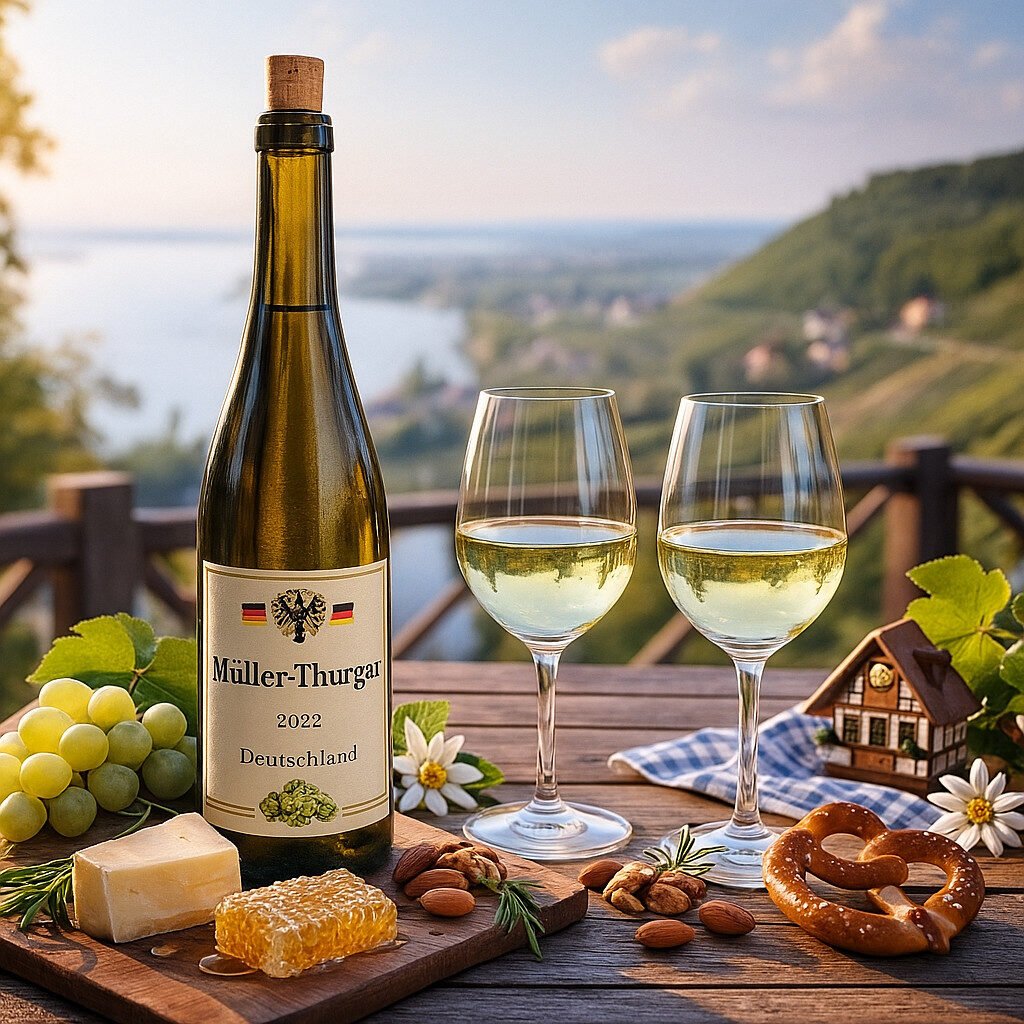
Müller-Thurgau is a white grape variety developed in Germany by Hermann Müller from the Swiss canton of Thurgau. It produces light, aromatic wines that are typically consumed young to preserve their vibrant fruit notes.
- Colour: Pale yellow with green reflections.
- Wine style: Still white wine.
- Main grape varieties: Müller-Thurgau (primarily a single varietal).
- Sweetness level: Ranges from dry (trocken) to off-dry (halbtrocken) and semi-sweet (lieblich).
- Acidity: Moderate, generally lower than Riesling.
- Tannin structure: Very low, as it is a white wine with minimal skin contact.
- Alcohol range: 10% to 12% by volume.
- Body: Light to medium-bodied.
- Typical serving temperature: 8°C to 10°C.
- Protected status: Often classified under German Qualitätswein or Prädikatswein designations, such as in regions like Rheinhessen or Mosel.
Müller-Thurgau vines adapt well to various German terroirs, contributing to its consistent production across multiple appellations. The grape’s early ripening allows harvest before adverse weather, ensuring reliable quality and freshness in most vintages. Its parentage influences its floral and fruity profile, making it a staple in German viticulture.
Where and How Müller-Thurgau from Germany Is Made
Müller-Thurgau is cultivated extensively in German wine regions like Rheinhessen, Pfalz, Mosel, and Franken, where temperate climates with moderate rainfall and sunny days prevail. These areas feature diverse soils, including slate in Mosel and loess in Rheinhessen, which impart mineral nuances to the wine. Producers emphasize sustainable vineyard practices to maintain the grape’s delicate aromas and balance.
The production philosophy focuses on preserving the variety’s inherent fruitiness through careful handling from vineyard to bottle. Many winemakers prioritize minimal intervention to highlight regional characteristics, with some embracing organic or biodynamic methods for enhanced expression.
- Vineyard work: Winter pruning and spring canopy management ensure optimal sun exposure and air circulation, reducing disease risk.
- Grape selection: Harvest occurs in early to mid-September, with hand-picking or machine harvesting based on desired ripeness and quality.
- Harvest: Grapes are picked in the cool morning hours to retain acidity, targeting specific sugar levels for the intended wine style.
- Destemming and crushing: Gentle destemming and crushing avoid excessive skin contact, preserving freshness and preventing bitterness.
- Maceration: Minimal skin contact, typically 2 to 4 hours if used, to extract subtle aromas without tannins.
- Fermentation: Conducted in stainless steel tanks at controlled temperatures of 14°C to 18°C for 10 to 14 days, often with selected yeasts for consistency.
- Malolactic fermentation: Rarely applied, as it can reduce acidity; if used, it occurs at 18°C to 20°C for a buttery texture.
- Maturation: Mainly in stainless steel tanks for 3 to 6 months to retain fruit notes; some versions use large oak casks for added complexity.
- Clarification: Fining with bentonite or filtration ensures clarity and stability before bottling.
- Bottling: Typically within 6 months of harvest to capture youthful vibrancy, with screw caps or corks based on market preferences.
Traditional methods might involve spontaneous fermentation and extended lees contact for richness, whereas modern approaches favor temperature control and neutral vessels to emphasize purity. Artisanal producers often hand-harvest and avoid additives, contrasting with mass-market versions that prioritize efficiency and broad appeal through technological interventions.
Flavor Profile: What Makes Müller-Thurgau from Germany Special?
Müller-Thurgau exhibits a pale yellow hue with slight green tints, indicating its youth and freshness, while its low viscosity suggests a light-bodied structure. The aroma profile is intensely floral, featuring elderflower, rose, and honeysuckle, complemented by fruity notes of grapefruit, peach, and lychee. On the palate, it delivers a balanced acidity with a hint of sweetness, creating a smooth and approachable mouthfeel that appeals to a wide range of drinkers.
Factors like cool-climate ripening preserve the wine’s crisp acidity, while the absence of oak aging maintains its fruit-forward character, allowing flavors of apricot and citrus to shine. The finish is clean and refreshing, with a subtle minerality from slate or loess soils that adds depth. This profile makes Müller-Thurgau exceptionally versatile, suitable for sipping alone or pairing with diverse cuisines without overwhelming the senses.
Quality Labels and Certifications for Wine from Germany
German wine law includes rigorous quality classifications, such as Qualitätswein and Prädikatswein, which apply to Müller-Thurgau and ensure origin and production standards. As far as current information suggests, wines from designated Anbaugebiete like Mosel or Rheinhessen must meet specific must weight and sensory criteria, often indicated on labels for consumer trust. These certifications, including protected designations of origin, help maintain the wine’s reputation for quality and typicity across regions.
Additionally, organic certifications like EU Bio or Demeter are increasingly common, reflecting a shift toward sustainable viticulture with minimal chemical use. As far as can be verified at present, these labels guarantee environmentally friendly practices, appealing to sommeliers and chefs who value transparency and eco-conscious production in their selections.
Cheese Pairings
Müller-Thurgau pairs excellently with fresh, mild cheeses such as goat cheese or burrata, where its acidity cuts through the creaminess and enhances the dairy’s subtle flavors. The wine’s slight sweetness balances saltier varieties like feta or halloumi, creating a harmonious contrast that cleanses the palate. In cooked applications, it complements cheese-based dishes like quiche or pasta alfredo, adding a fruity lift without dominating the richness.
Classic German pairings include semi-hard cheeses like Bergkäse or Tilsiter, which mirror the wine’s regional origins and highlight its floral notes. Internationally, it works well with soft-rind cheeses such as Brie or Camembert, as the wine’s lightness contrasts their buttery texture while the acidity refreshes the mouth. For adventurous combinations, blue cheeses like Gorgonzola can be matched if the Müller-Thurgau has sufficient residual sweetness to counter the pungency.
Suitable Fruit and Vegetables
Fresh fruits like apples, pears, and citrus segments accentuate Müller-Thurgau’s aromatic profile in salads or raw preparations, with the wine’s acidity highlighting their natural sweetness. Bitter vegetables such as arugula or radicchio benefit from the wine’s crispness, which balances their intensity and adds a refreshing counterpoint. Cooked dishes featuring asparagus or artichokes pair well, as the wine’s lightness cuts through their earthy tones and enhances overall harmony.
Dried fruits like apricots or figs echo the wine’s stone fruit flavors in compotes or stuffings, creating cohesive flavor layers in meals. Roasted root vegetables such as carrots or parsnips complement Müller-Thurgau’s body and slight sweetness, making them ideal for autumnal pairings. In main courses, grilled peppers or zucchini bring out the wine’s herbal undertones, while their textures align with its smooth mouthfeel for a satisfying experience.
Suitable Meat and Fish dishes
For cold servings, Müller-Thurgau is ideal with smoked fish like trout or salmon on charcuterie boards, where its acidity cleanses the palate between bites. It also pairs well with poultry-based terrines or pâtés, enhancing their delicate flavors without overpowering them. In hot dishes, grilled chicken or pork chops are excellent matches, as the wine’s balanced acidity cuts through the meat’s richness and complements herb seasonings.
Fish preparations such as baked cod or seafood pasta allow Müller-Thurgau to shine, with its lightness supporting the subtle tastes of the ocean. Heavier meats like duck or lamb can be paired if the wine has enough body, though it is best with lighter sauces to maintain balance. Stews or casseroles with white meat benefit from the wine’s fruitiness, which adds depth without adding weight to the dish.
Questions and Answers about Müller-Thurgau
How should I store Müller-Thurgau?
Store Müller-Thurgau in a cool, dark place at 10°C to 15°C to maintain its freshness and prevent premature aging. Keep bottles horizontal if sealed with cork, and avoid exposure to light or temperature fluctuations for optimal preservation of Müller-Thurgau’s delicate aromas.
What is the ideal serving temperature for Müller-Thurgau?
Serve Müller-Thurgau chilled between 8°C and 10°C to enhance its floral and fruity characteristics. This temperature range highlights the wine’s crisp acidity and makes Müller-Thurgau refreshing as an aperitif or with meals.
Does Müller-Thurgau need decanting?
Müller-Thurgau generally does not require decanting, as it is best enjoyed young and vibrant to appreciate its primary fruit notes. However, if you have an aged bottle of Müller-Thurgau, a brief decant of 10-15 minutes might help open up subtle aromas.
How should I chill or temper Müller-Thurgau?
Chill Müller-Thurgau in the refrigerator for about two hours before serving, or use an ice bucket for 20-30 minutes to reach the ideal temperature. Avoid over-chilling Müller-Thurgau, as it can mute its aromatic complexity and balance.
What is the best way to drink Müller-Thurgau?
Drink Müller-Thurgau young, within 1-3 years of the vintage, to experience its full aromatic potential and freshness. Serve it in a standard white wine glass to concentrate the aromas, and enjoy Müller-Thurgau with light dishes or on its own.
How can I combine Müller-Thurgau with food?
Combine Müller-Thurgau with salads, seafood, or mild cheeses to complement its acidity and fruitiness. The wine’s versatility allows it to pair well with spicy Asian cuisines, where Müller-Thurgau’s slight sweetness balances heat.
Where can I buy Müller-Thurgau?
Buy Müller-Thurgau from specialized wine shops, online retailers, or supermarkets with a good selection of German wines. Look for reputable producers in regions like Rheinhessen for quality examples of Müller-Thurgau.
What is the shelf life of Müller-Thurgau after opening?
After opening, consume Müller-Thurgau within 2-3 days, storing it in the refrigerator with a stopper to preserve its flavors. The wine may lose its vibrant aromas over time, so enjoy Müller-Thurgau promptly for the best experience.
What is the aging potential of Müller-Thurgau?
Müller-Thurgau has limited aging potential and is typically best consumed young to appreciate its fruity and floral notes. While some high-quality examples might age for up to 5 years, most Müller-Thurgau wines are not intended for long-term cellaring.
How should I handle leftovers of Müller-Thurgau?
For leftovers, recork the bottle tightly and refrigerate it to slow oxidation and maintain quality. Use leftover Müller-Thurgau in cooking, such as deglazing pans for sauces, to add a subtle fruitiness to dishes.
Similar Wines and Alternatives
Müller-Thurgau shares similarities with German Riesling, but it generally has lower acidity and more pronounced floral aromas, making it a softer alternative for those seeking approachable white wines. Silvaner from Germany offers a comparable light body and mineral edge, though it tends toward earthier flavors, while Grauburgunder (Pinot Gris) provides a slightly richer texture and higher alcohol. From other countries, Austrian Grüner Veltliner delivers similar crispness and peppery notes, and Italian Pinot Grigio matches its refreshing quality, though these may be drier and more widely available in international markets. These alternatives often fall in the same price range, making them accessible for enthusiasts exploring versatile white options beyond Müller-Thurgau.