
In this article
What Is Demerara Red from Guyana?
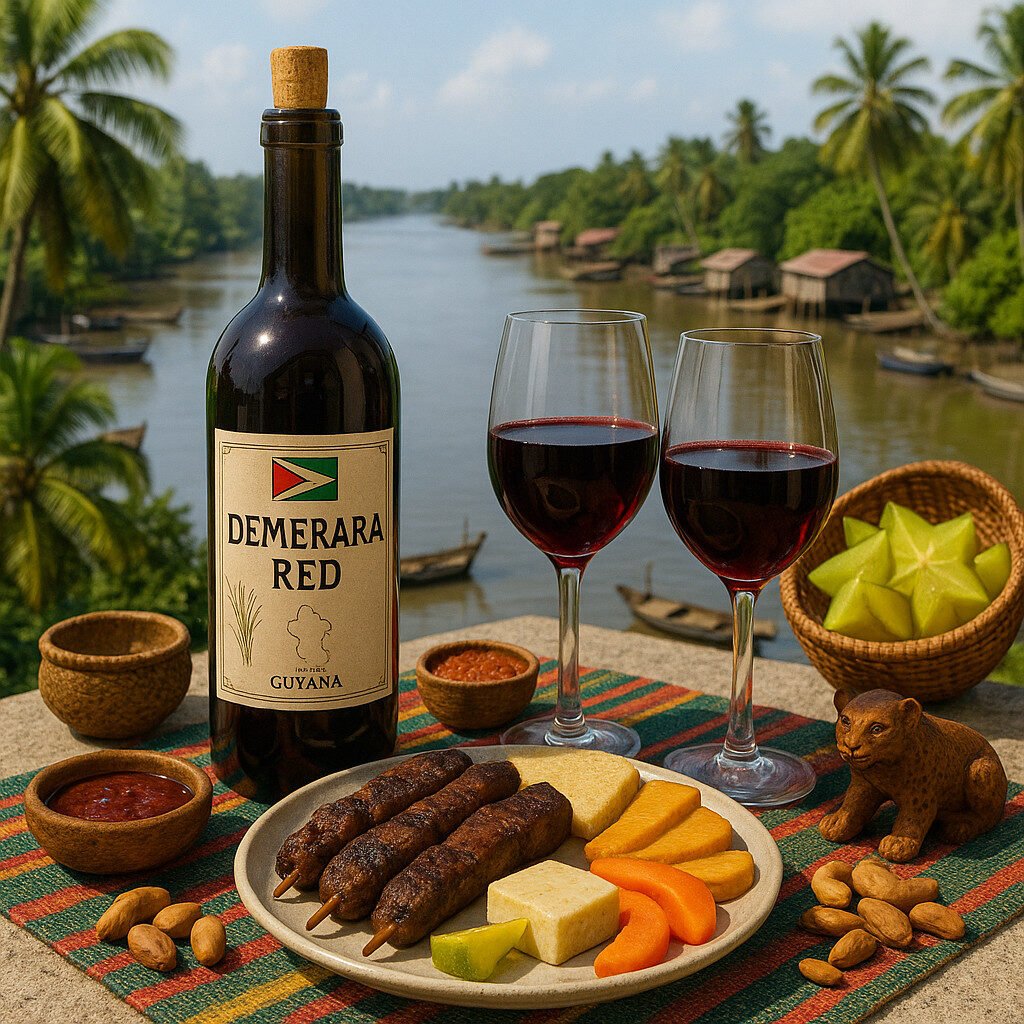
Demerara Red is a still red wine produced in Guyana’s Demerara-Mahaica region. It represents a growing category of tropical climate wines gaining international attention.
- Colour: Deep ruby with purple hues
- Wine style: Still wine
- Main grape varieties: Hybrid varieties like Isabella and local Vitis labrusca crosses
- Sweetness level: Off-dry with 5-8 g/L residual sugar
- Acidity: Medium to high, around 6-7 g/L tartaric acid
- Tannin structure: Soft and rounded
- Alcohol range: 12-13.5% vol
- Body: Medium-bodied
- Typical serving temperature: 16-18°C
- Protected status: No formal PDO or PGI as far as current information suggests
Winemakers craft Demerara Red using early-harvested grapes to preserve acidity in Guyana’s warm climate. The wine typically undergoes brief maceration and stainless steel fermentation to highlight its fruit-forward character. Many producers blend small portions of other tropical fruits like cherry for complexity, though grape content remains dominant according to local standards.
Where and How Demerara Red from Guyana Is Made
Demerara Red originates primarily from vineyards along the Demerara River basin in northern Guyana. This region features alluvial soils rich in clay and sand, with a hot humid tropical climate averaging 27°C year-round. Producers employ canopy management and selective irrigation to counter heavy rainfall exceeding 2000 mm annually.
The wine’s production philosophy emphasizes freshness and drinkability over extended aging. Most vineyards sit at low elevations near sea level, requiring careful pest management due to high humidity. Artisanal producers often use traditional bush vine training, while larger estates employ vertical shoot positioning for better air circulation.
- Vineyard work involves manual pruning between January and February, with green harvesting in March to control yields below 8 tonnes per hectare.
- Grape selection occurs manually at veraison, typically in late May, focusing on clusters with uniform coloration and minimal botrytis.
- Harvest takes place during early morning hours in June to preserve acidity, with grapes picked at 20-22° Brix.
- Destemming and crushing happen immediately after harvest using pneumatic presses to avoid excessive skin tearing.
- Maceration lasts 3-5 days in temperature-controlled vats maintained at 18-20°C to extract color without harsh tannins.
- Fermentation proceeds for 7-10 days using selected yeast strains at 24-26°C in stainless steel tanks.
- Malolactic fermentation is typically prevented to retain the wine’s natural malic acidity.
- Maturation occurs for 3-6 months in neutral oak barrels or concrete tanks for stabilization.
- Clarification uses bentonite fining followed by coarse filtration.
- Bottling happens under inert gas protection, with most wines released within 12 months of harvest.
Traditional methods involve foot-treading grapes and spontaneous fermentation in clay pots, yielding wines with earthy, funky notes. Modern producers favor temperature-controlled stainless steel and cultured yeasts for cleaner fruit expression. Mass-market versions often see shorter maceration and earlier bottling, while artisanal batches may include skin contact extensions and minimal intervention techniques.
Flavor Profile: What Makes Demerara Red from Guyana Special?
Demerara Red presents a brilliant ruby color with medium viscosity and slow-forming legs. Its aroma bursts with ripe red fruits like stewed plum and wild cherry, complemented by floral hints of hibiscus and subtle earthy undertones of wet clay. The wine’s flavor intensity is moderate yet persistent, carrying through to a clean finish with no overt oak influence due to limited barrel aging.
On the palate, Demerara Red offers off-dry sweetness balanced by vibrant acidity around 6.5 g/L. Its tannins are soft and silky, contributing to a smooth mouthfeel without astringency. The medium body and 12.5% alcohol make it exceptionally quaffable, while the flavor profile evolves with slight chilling to enhance its refreshing qualities. This combination results from the hybrid grapes’ natural disease resistance and the tropical climate’s effect on phenolic ripening.
Quality Labels and Certifications for Wine from Guyana
As far as can be verified at present, Guyana does not maintain a formal appellation system specifically for wine production. The country’s food safety standards, overseen by the Government Analyst Food and Drug Department, provide basic production guidelines that Demerara Red wineries typically follow. Some producers may adhere to general agricultural certifications, though these are not wine-specific as far as current information suggests.
A few estates have begun exploring organic certification through international bodies, given the low pesticide requirements of hybrid grapes in Guyana’s ecosystem. There are no documented protected geographical indications for Demerara Red at this time, though regional identity remains important for marketing. Sustainability initiatives are emerging, focusing on water management and renewable energy in winery operations.
Cheese Pairings
Demerara Red pairs beautifully with semi-soft cheeses like Gouda or Edam, where its acidity cuts through the fat content. The wine’s off-dry character complements the slight saltiness in these cheeses, creating a harmonious balance on the palate. For local pairings, try it with Dutch-style cheeses historically found in Guyana, which mirror the colonial influences in the region.
International matches include young Manchego or Fontina, where the wine’s fruit notes enhance the nutty flavors. Avoid strongly blue-veined cheeses that could overwhelm Demerara Red’s delicate structure. In cooked dishes, incorporate the wine into cheese sauces for pasta or gratins, as its acidity helps brighten rich, melted cheese textures.
Suitable Fruit and Vegetables
Fresh fruits like mango, pineapple, and papaya highlight Demerara Red’s tropical fruit profile in salads or salsas. The wine’s acidity balances the sweetness of ripe fruits, while its soft tannins prevent clashes with fibrous textures. Roasted bell peppers or grilled eggplant work well, as their smoky notes resonate with the wine’s subtle earthy undertones.
Dried fruits such as apricots or raisins can be incorporated into stuffings or tagines served with Demerara Red. The wine’s off-dry nature complements the concentrated sweetness without becoming cloying. For vegetable sides, consider sautéed mushrooms or caramelized onions, which add umami depth that aligns with the wine’s medium body and fruit-forward character.
Suitable Meat and Fish Dishes
Demerara Red excels with grilled chicken or pork dishes, especially those marinated with citrus or mild spices. The wine’s acidity cleanses the palate between bites of richer meats, while its fruit notes enhance caramelization from grilling. For charcuterie, pair with mild sausages or cured ham rather than strongly smoked varieties to maintain balance.
Fish preparations like baked snapper or shrimp curry benefit from Demerara Red’s versatility. Its soft tannins avoid overwhelming delicate fish flavors, and the slight sweetness counters mild heat in sauces. In stews or casseroles, the wine can be used as a braising liquid for tougher cuts of meat, imparting fruitiness and tenderizing through its acidity.
Questions and Answers About Demerara Red
How should I store Demerara Red?
Store Demerara Red horizontally in a cool, dark place at 12-14°C with 70% humidity. Keep Demerara Red away from vibrations and strong odors to preserve its quality.
What is the ideal serving temperature for Demerara Red?
Serve Demerara Red slightly chilled at 16-18°C to enhance its fruit character. Do not over-chill Demerara Red, as cold temperatures mute its aromas.
Should I decant Demerara Red?
Decant Demerara Red for 15-20 minutes before serving if it is a young vintage. Older bottles of Demerara Red may not require decanting.
How long can I keep an opened bottle of Demerara Red?
An opened bottle of Demerara Red lasts 2-3 days when recorked and refrigerated. Use a vacuum pump to extend Demerara Red’s shelf life slightly.
What is the aging potential of Demerara Red?
Demerara Red is best consumed within 2-3 years of release for peak fruitiness. Long-term aging is not recommended for Demerara Red due to its structure.
Can I use Demerara Red in cooking?
Yes, Demerara Red works well in deglazing pans or making sauces for meat dishes. Avoid boiling Demerara Red excessively to preserve its flavor.
Where can I buy Demerara Red?
Demerara Red is available in specialty wine shops in Guyana and through online importers. Check for distributors specializing in Caribbean wines for Demerara Red.
What glassware is best for Demerara Red?
Use a standard Bordeaux glass for Demerara Red to concentrate its aromas. A wide bowl allows Demerara Red to breathe properly.
How does Demerara Red pair with spicy food?
Demerara Red’s slight sweetness cools the heat in mildly spicy dishes. Pair Demerara Red with curries or jerk seasoning for a balanced experience.
Is Demerara Red suitable for vegetarians?
Most producers of Demerara Red use vegan-friendly fining agents like bentonite. Always check the label of Demerara Red for specific production methods.
Similar Wines and Alternatives
For those seeking similar profiles, Brazilian Tannat offers comparable body and fruit intensity with slightly firmer tannins. Uruguayan Tannat shares the medium-bodied structure but typically exhibits higher alcohol around 13.5-14.5% vol and more robust tannic grip. These alternatives might be more widely available in international markets than Demerara Red.
Closer to home, other Caribbean reds like Cuban Pinar del Río blends provide analogous tropical fruit notes with soft acidity. In terms of value, Portuguese Dão reds deliver similar drinkability at often lower price points. Demerara Red distinguishes itself through its unique hybrid grape expression and distinct Guyanese terroir influences.