
In this article
What Is Assyrtiko?
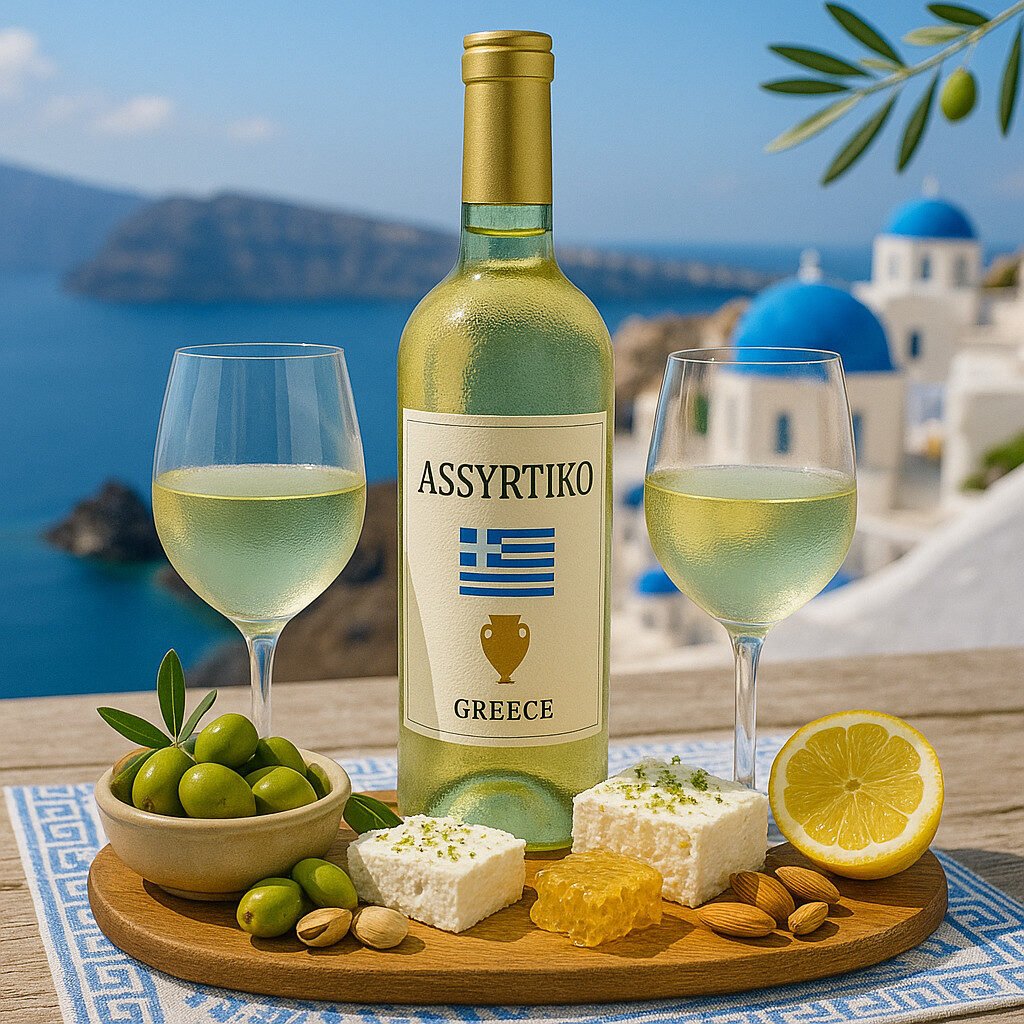
Assyrtiko is a native Greek white grape variety that produces world-class dry wines. It is renowned for its ability to retain acidity even in warm climates.
- Colour: White, often pale straw with green hints.
- Wine style: Still.
- Main grape varieties: Assyrtiko (typically monovarietal).
- Sweetness level: Dry.
- Acidity: High.
- Tannin structure: Low, as is common in white wines.
- Alcohol range: 12-14% vol.
- Body: Medium to full.
- Typical serving temperature: 8-10°C.
- Protected status: Santorini Protected Designation of Origin (PDO).
Assyrtiko wines display a vibrant acidity that balances their alcohol content. They often show citrus and mineral notes on the nose and palate. The grape’s thick skin helps it resist disease and maintain structure in challenging growing conditions.
Test Your Knowledge:
Where and How Assyrtiko Is Made
Assyrtiko is chiefly cultivated on Santorini, a Cycladic island with a PDO designation. The arid, windy climate and volcanic soil rich in ash and pumice define its terroir. Winemakers here focus on low-yield viticulture to concentrate flavors in the grapes.
- Vineyard work: Winter pruning shapes vines into low baskets called kouloura to shield them from strong winds. Canopy management in spring ensures optimal sun exposure and air flow.
- Grape selection: Hand harvesting occurs from late August to early September. Workers carefully choose only the healthiest, ripest clusters for quality.
- Harvest: Grapes are picked in the cool early morning to preserve acidity and prevent oxidation. This timing helps maintain the wine’s fresh character.
- Destemming and crushing: Gentle destemming and crushing avoid extracting bitter tannins from the skins. The process is quick to minimize skin contact.
- Maceration: Cold maceration may last 4-8 hours at 8-10°C to enhance aromatic compounds. This step is optional and used for more aromatic styles.
- Fermentation: Fermentation takes place in temperature-controlled stainless steel tanks at 14-18°C for 10-15 days. Yeasts are often selected to highlight varietal character.
- Malolactic fermentation: This secondary fermentation is typically blocked to retain the wine’s crisp acidity. It is avoided in most Assyrtiko productions.
- Maturation: Aging occurs in stainless steel, concrete vats, or neutral oak barrels for 3-6 months. Vessel choice influences the wine’s texture and complexity.
- Clarification: Fining with agents like bentonite removes impurities. Filtration follows to ensure stability and clarity before bottling.
- Bottling: Bottling happens 6-12 months after harvest, and the wine is often released young. Screw caps or corks are used based on producer preference.
Traditional Assyrtiko winemaking uses concrete tanks and minimal intervention to express terroir. Modern methods incorporate temperature control and stainless steel for fruit purity. Artisanal producers hand-harvest and avoid additives, while commercial ones may use enzymes for faster processing.
Flavor Profile: What Makes Assyrtiko Special?
Assyrtiko presents a pale yellow color with green tints and noticeable viscosity. Its aroma profile includes citrus fruits like lemon and lime, floral hints of orange blossom, and distinct mineral notes of wet stone. The palate is crisp with high acidity, medium to full body, and a long, saline finish that reflects its coastal origins.
Grape ripeness affects flavor intensity, with cooler vintages emphasizing citrus and herbs. Oak aging, when applied, adds subtle vanilla and toast nuances without overpowering the fruit. The wine’s high acidity and mineral core allow it to age gracefully, developing honey and petrol notes over 5-10 years.
Quality Labels and Certifications
As far as current information suggests, Assyrtiko from Santorini holds a Protected Designation of Origin (PDO) under EU regulations. This label guarantees production in delimited areas with specific methods, ensuring authenticity. Other Greek regions may use Protected Geographical Indication (PGI) status for Assyrtiko wines from areas like Crete or Macedonia.
Some producers also obtain organic certifications, such as the Greek organic logo, which verifies sustainable farming practices. These certifications, as far as can be verified at present, promote environmentally friendly viticulture and appeal to eco-conscious consumers. Sustainability programs in Greece sometimes include additional seals for water conservation and biodiversity.
Cheese Pairings
Assyrtiko excels with salty, brined cheeses like Greek feta, where its acidity cuts through the fat and salt. The wine’s mineral notes complement aged hard cheeses such as kefalotyri or graviera. For international pairings, fresh goat cheese highlights Assyrtiko’s citrus aromas without overwhelming its structure.
In cooked dishes, Assyrtiko balances rich, creamy cheeses in pastas like saganaki or baked brie. The high acidity refreshes the palate when paired with pungent blue cheeses such as Roquefort or Gorgonzola. Cheeses with high fat content, like camembert, benefit from the wine’s crispness, creating a harmonious balance.
Suitable Fruit and Vegetables
Fresh salads with bitter greens like arugula and citrus-based dressings enhance Assyrtiko’s zesty profile. Roasted vegetables such as bell peppers, zucchini, and eggplants bring out its mineral undertones. Fruits like figs, olives, and capers in meze platters align well with its Mediterranean roots.
Cooked dishes with artichokes or asparagus work due to the wine’s ability to handle slight bitterness. Dried fruits like apricots or dates in tagines balance Assyrtiko’s acidity with their natural sweetness. The wine’s crispness cuts through oily preparations like fried eggplant or stuffed vine leaves, making it versatile.
Suitable Meat and Fish Dishes
For cold servings, Assyrtiko pairs beautifully with Greek meze like octopus salad or sardine bruschetta. Charcuterie plates with prosciutto, salami, or smoked salmon are balanced by the wine’s acidity. Grilled seafood such as prawns, squid, or sea bass highlights its saline finish and freshness.
Hot dishes include roasted chicken with herbs, where Assyrtiko’s body matches the meat’s richness. Fish stews like kakavia or bouillabaisse allow the wine to cut through the broth’s intensity. Pasta with clams, mussels, or white wine sauces creates a harmonious blend with the wine’s maritime character.
Assyrtiko Questions and Answers
How should I store Assyrtiko? Store Assyrtiko in a cool, dark place at 10-15°C away from light and vibrations. Keep the bottle horizontal if corked to maintain cork moisture. Assyrtiko can age for 3-5 years but is often best enjoyed young.
What is the best way to serve Assyrtiko? Serve Assyrtiko chilled at 8-10°C in a standard white wine glass. This temperature highlights its acidity and aromas. Decanting is generally not needed for Assyrtiko unless it is an aged bottle.
Should I decant Assyrtiko? Decanting Assyrtiko is uncommon but can benefit older vintages to open up aromas. Young Assyrtiko wines do not require decanting. Always taste first to decide if decanting improves the Assyrtiko.
How do I chill or temper Assyrtiko? Chill Assyrtiko in the refrigerator for 2-3 hours before serving. If too cold, let it sit at room temperature for 10-15 minutes. Serving Assyrtiko too cold can mute its flavors.
When is the best time to drink Assyrtiko? Drink Assyrtiko within 1-3 years of release for fresh styles. Aged Assyrtiko can be consumed after 5-10 years for developed notes. Most Assyrtiko is ready to drink upon purchase.
What foods pair best with Assyrtiko? Pair Assyrtiko with seafood, grilled vegetables, and salty cheeses. The wine’s acidity complements oily fish and citrus-based dishes. Assyrtiko also works well with Greek cuisine like souvlaki or tzatziki.
Where can I buy Assyrtiko? Buy Assyrtiko from specialty wine shops, online retailers, or importers focusing on Greek wines. Many supermarkets in Europe and North America stock Assyrtiko. Look for bottles from reputable Santorini producers.
What is the shelf life of Assyrtiko after opening? Opened Assyrtiko lasts 3-5 days in the refrigerator with a cork or stopper. Use a vacuum pump to remove air and preserve freshness. Consume Assyrtiko quickly to enjoy its vibrant character.
Does Assyrtiko have aging potential? Assyrtiko can age for 5-10 years, developing honey and petrol notes. High-acidity examples from Santorini age best. Most Assyrtiko is made for early drinking but gains complexity with time.
How should I handle leftover Assyrtiko? Use leftover Assyrtiko in cooking, such as deglazing pans for sauces. Alternatively, freeze it in ice cube trays for later use in cocktails. Avoid storing Assyrtiko for more than a few days after opening.
Similar Wines and Alternatives
Assyrtiko shares traits with Sauvignon Blanc from New Zealand, both offering high acidity and citrus notes. However, Assyrtiko typically has a more mineral-driven profile due to volcanic soils. Greek alternatives include Moschofilero, which is lighter and more floral, or Robola from Cephalonia with similar crispness.
Internationally, Albariño from Spain provides comparable salinity and freshness but with peach and apricot flavors. Assyrtiko is generally fuller-bodied than Pinot Grigio and has better aging potential. Price-wise, Santorini Assyrtiko is often premium, while versions from other Greek regions are more affordable and widely available.