
In this article
What Is Agiorgitiko?
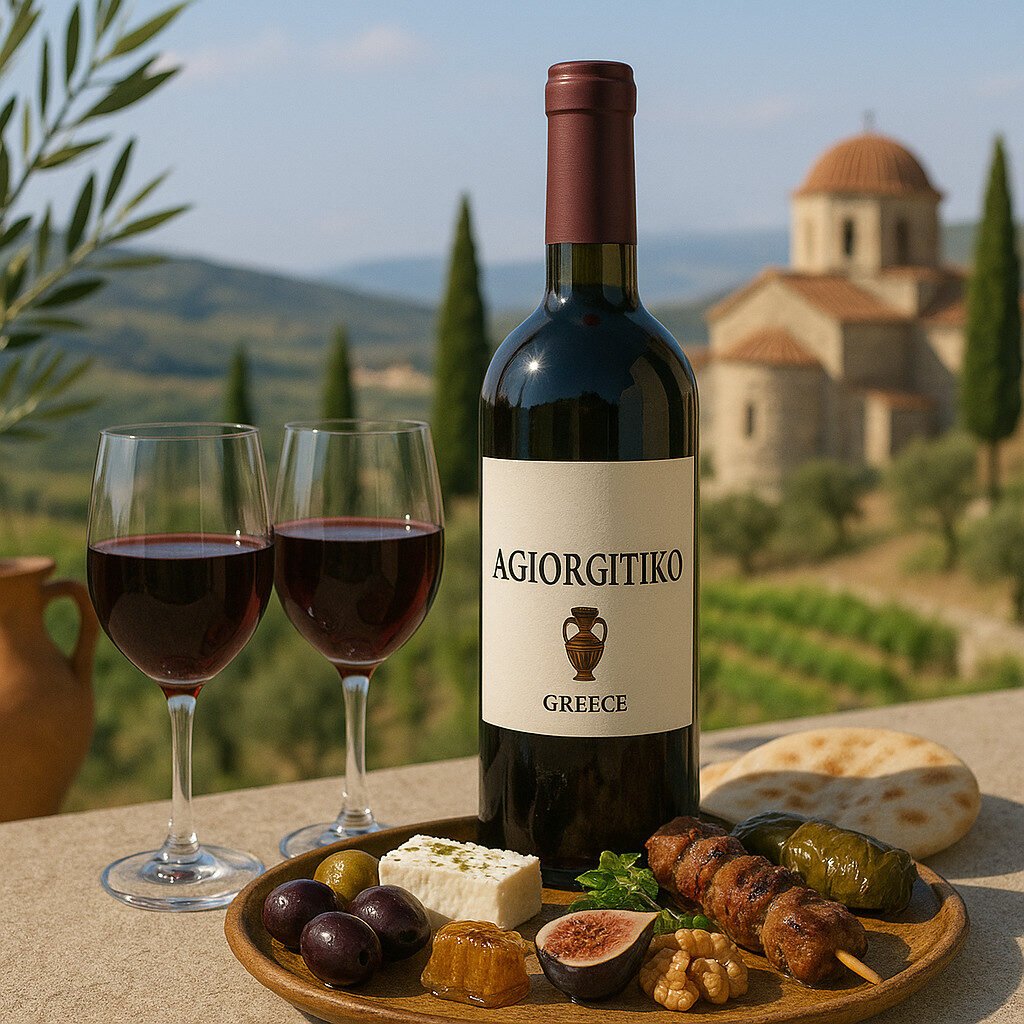
Agiorgitiko is a native red grape variety from Greece, primarily cultivated in the Nemea region. It produces wines that are both aromatic and structurally balanced.
- Colour: Deep ruby red with purple reflections.
- Wine style: Still red wine.
- Main grape varieties: Agiorgitiko (monovarietal).
- Sweetness level: Dry.
- Acidity: Medium to high.
- Tannin structure: Soft to medium, well-integrated.
- Alcohol range: 12.5% to 14% ABV.
- Body: Medium to full body.
- Typical serving temperature: 16°C to 18°C.
- Protected status: PDO Nemea.
Agiorgitiko wines often reveal notes of red cherries, raspberries, and subtle spices. They possess a velvety texture that enhances their drinkability. The grape’s adaptability allows it to express terroir nuances from different vineyard sites.
Test Your Knowledge:
Where and How Agiorgitiko Is Made
Agiorgitiko thrives in the Nemea appellation of the Peloponnese, Greece’s largest dedicated red wine region. The Mediterranean climate features hot, dry summers and mild winters, ideal for ripening. Soils range from clay-limestone to sandy loam, contributing mineral complexity to the wines. Vineyards often lie on slopes at altitudes up to 800 meters, ensuring good acidity retention.
- Vineyard work: Winter pruning shapes vine growth, while spring canopy management optimizes sun exposure. Sustainable practices like dry farming are common in premium zones.
- Grape selection: Hand-harvesting occurs from late August to September, targeting optimal sugar and acidity levels. Workers discard damaged berries to maintain quality.
- Harvest: Grapes are picked in the cool morning hours to preserve freshness. Yield control ensures concentrated flavors in the final wine.
- Destemming and crushing: Modern equipment gently removes stems and lightly crushes grapes. This process minimizes bitter tannin extraction from skins.
- Maceration: Skin contact lasts 5 to 10 days at temperatures of 25°C to 28°C. This step enhances color intensity and soft tannin development.
- Fermentation: Yeasts convert sugars to alcohol over 7 to 14 days in stainless steel or concrete vats. Temperatures are controlled between 22°C and 26°C for aroma preservation.
- Malolactic fermentation: Most wines undergo this process in barrels or tanks. It reduces acidity and adds buttery notes, lasting 2 to 4 weeks.
- Maturation: Aging occurs in French or American oak barrels for 6 to 24 months. This imparts vanilla and spice nuances while rounding out the structure.
- Clarification: Fining with egg whites or bentonite removes sediments. Filtration ensures stability before bottling.
- Bottling: Wines are bottled and may undergo additional bottle aging for 1 to 3 years. This step integrates flavors and improves longevity.
Traditional producers emphasize extended maceration and oak aging for richer styles. Modern wineries often use shorter maceration and stainless steel to highlight fruit purity. Artisanal methods focus on organic viticulture, while mass-market versions may prioritize early drinkability.
Flavor Profile: What Makes Agiorgitiko Special?
Agiorgitiko displays a deep ruby color with medium viscosity in the glass. Its aroma bouquet bursts with red fruits like cherry and strawberry, complemented by floral hints of violet. The palate offers a harmonious balance of medium acidity and soft tannins, leading to a smooth, lingering finish. Oak aging introduces subtle notes of vanilla and cinnamon, enhancing complexity without overpowering the fruit.
Ripeness levels influence the wine’s flavor intensity, with sun-drenched grapes yielding jammier profiles. The grape’s natural low tannins make it approachable young, yet it ages gracefully for 5 to 10 years. Factors like vineyard altitude and harvest timing affect the final body, which ranges from medium to full. This versatility allows Agiorgitiko to pair with diverse cuisines while maintaining its distinctive Greek character.
Quality Labels and Certifications for Agiorgitiko
As far as current information suggests, the primary quality label for Agiorgitiko is the Protected Designation of Origin (PDO) Nemea. This certification guarantees that the wine originates from specific vineyards in the Nemea region and adheres to strict production standards. PDO regulations cover aspects like grape yield limits, winemaking techniques, and alcohol levels to ensure authenticity and quality.
Additional certifications may include organic or sustainable farming labels, as some producers adopt eco-friendly practices. For instance, wines bearing the “Organic” mark avoid synthetic pesticides and fertilizers. As far as can be verified at present, these efforts align with growing consumer demand for environmentally conscious products while maintaining the wine’s traditional profile.
Cheese Pairings with Agiorgitiko
Agiorgitiko pairs wonderfully with semi-hard cheeses like Graviera and Kefalotyri from Greece. The wine’s medium acidity cuts through the fat content of these cheeses, while its soft tannins complement their salty notes. For international options, aged Gouda or Manchego work well, as their nutty flavors harmonize with Agiorgitiko’s red fruit profile. The balance of intensity ensures neither the cheese nor the wine overpowers the other.
In cooked dishes, Agiorgitiko enhances melted cheeses in pastas or gratins. For example, a baked feta with tomatoes and herbs highlights the wine’s herbal undertones. The cheese’s creaminess softens the wine’s acidity, creating a cohesive tasting experience. Always consider serving temperature; slightly chilled Agiorgitiko at 16°C refreshes the palate alongside rich cheese boards.
Suitable Fruit and Vegetables for Agiorgitiko
Fresh fruits like figs and plums make excellent companions to Agiorgitiko in salads or desserts. Their natural sweetness contrasts with the wine’s dry profile, while their juicy texture mirrors its medium body. Roasted vegetables such as eggplants and bell peppers also pair well, as their smoky flavors align with the wine’s subtle spice notes. The acidity in tomatoes, whether in salads or sauces, balances Agiorgitiko’s fruitiness.
Dried fruits like apricots and raisins can be incorporated into tagines or stuffings for a harmonious match. Their concentrated sugars enhance the wine’s red berry aromas without clashing. For green vegetables, asparagus or artichokes may require a squeeze of lemon to bridge their bitterness with Agiorgitiko’s smooth tannins. Overall, the wine’s versatility allows it to shine with both raw and cooked plant-based dishes.
Suitable Meat and Fish Dishes for Agiorgitiko
Agiorgitiko excels with grilled meats like lamb chops and beef burgers, where its soft tannins complement the charred flavors. The wine’s red fruit notes accentuate the richness of roasted poultry or duck. For cold servings, charcuterie plates with salami or prosciutto allow the wine’s acidity to cleanse the palate. Traditional Greek dishes such as moussaka or souvlaki are classic pairings, highlighting regional harmony.
Fish dishes like grilled salmon or tuna steaks also work well, provided they are not too delicate. The wine’s medium body stands up to the oiliness of the fish, while its acidity cuts through any sauces. In stews or casseroles, Agiorgitiko adds depth to rabbit or pork preparations. Avoid overly spicy meats to prevent overwhelming the wine’s subtle spice undertones.
Questions and Answers About Agiorgitiko
How should I store Agiorgitiko?
Store Agiorgitiko in a cool, dark place at 12°C to 14°C with consistent humidity. Keep bottles horizontal to keep corks moist. Agiorgitiko benefits from stable conditions to maintain its flavor integrity over time.
What is the ideal serving temperature for Agiorgitiko?
Serve Agiorgitiko between 16°C and 18°C to highlight its aromas and balance. Chilling it slightly below room temperature enhances its freshness. Agiorgitiko served too warm may lose its delicate fruit notes.
Does Agiorgitiko need decanting?
Decant Agiorgitiko for 30 minutes before serving to aerate it. This process softens tannins and releases aromatic compounds. Younger Agiorgitiko wines benefit more from decanting than aged versions.
Should Agiorgitiko be chilled or tempered?
Chill Agiorgitiko in the refrigerator for 20 minutes if it is too warm. Avoid over-chilling, as temperatures below 14°C can mute its flavors. Agiorgitiko is best enjoyed at its recommended serving range.
How do I drink Agiorgitiko with food?
Drink Agiorgitiko with grilled meats, cheeses, or Mediterranean dishes for optimal pairing. Its versatility allows it to complement a variety of cuisines. Agiorgitiko’s balanced profile makes it a crowd-pleaser at meals.
Where can I buy Agiorgitiko?
Buy Agiorgitiko from specialty wine shops, online retailers, or importers focusing on Greek wines. Look for PDO Nemea labels to ensure authenticity. Agiorgitiko is increasingly available in international markets due to its popularity.
What is the shelf life of Agiorgitiko after opening?
Agiorgitiko lasts 3 to 5 days after opening if recorked and stored in the refrigerator. Use a vacuum pump to remove air and preserve freshness. Agiorgitiko may oxidize over time, so consume it promptly.
What is the aging potential of Agiorgitiko?
Agiorgitiko can age for 5 to 10 years in proper storage conditions. High-quality versions from top vintages may improve further. Agiorgitiko develops earthy and tertiary notes with extended bottle aging.
How should I handle leftovers of Agiorgitiko?
Handle leftover Agiorgitiko by transferring it to a smaller container to minimize air exposure. Refrigerate it immediately and use within a few days. Agiorgitiko leftovers can be used in cooking, such as deglazing pans for sauces.
Can Agiorgitiko be used in cocktails?
Agiorgitiko can be used in wine-based cocktails like spritzers or sangrias. Its fruit-forward profile blends well with citrus and herbs. However, enjoy Agiorgitiko on its own to appreciate its full character.
Similar Wines and Alternatives to Agiorgitiko
If you enjoy Agiorgitiko, consider Greek alternatives like Xinomavro from Naoussa, which offers higher acidity and tannins with notes of tomato and olive. Another option is Mavrodaphne, a fortified wine with similar red fruit flavors but sweeter profile. Internationally, Merlot from France or California shares Agiorgitiko’s soft tannins and plum characteristics, though Merlot often has a smoother finish. These wines provide comparable body and food-pairing versatility at similar price points.
For a different twist, try Sangiovese from Italy, which has higher acidity and cherry notes but less overt fruitiness than Agiorgitiko. Grenache from Spain or Australia offers a spicier profile with comparable alcohol levels. Availability may vary, with Agiorgitiko being more niche but increasingly found in specialty stores. Price-wise, Agiorgitiko often sits in the mid-range, making it an accessible choice for enthusiasts exploring Greek wines.